№ 11 - 2005.
Th
The Editorial Board is glad to inform our Readers that this issue of “Fidelity” has articles in French, English, German, Russian and Spanish Languages.
С
удовлетворением
сообщаем, что
в этом номере
журнала “Верность”
помещены
статьи на
английском,
французском, немецком,
испанском и
русском
языке.
Contents - Оглавление
1. Message du Synode Épiscopal de l’Église Orthodoxe Russe Hors-Frontières
2. Верность православной государственности - или "демократическое" Православие. М.В. Назаров
3. Joseph Stalin - future "saint" of the Moscow Patriarchate? G.M. Soldatow
4. Stalin ist Tod aber die Kommunisten heilen noch immer.
5. Omitting the past's darker chapters. Alex Rodriguez
6. "Московские новости" Радость Пасхи и скорбь победы. А. Солдатов
7. Avoiding participation in the Great Victory Services. Archpriest Fr. Michael Ardov,
8. Церковь и власть в Холодной войне. Н.В. Назаров
9. Митрополит Антоний. Епископ Григорий (Граббе)
10. El Mitropolita Antonio. Obispo Gregorio (Grabbe)
11. Нам пишут. Letters to the Editor.
****************************************************************************
Братья и сестры! Может быть, недалек тот день и час, когда и нам в этом, так называемом "свободном мире", придется, спасая чистоту своей истинно православной веры и Церкви, уйти в катакомбы. Не позволим себе прельститься диавольской ложью, тем "действом льсти", которое уже победно шествует по всему миру, как предрекал об этом св. Апостол Павел, говоря, что настанет время, когда люди "Будут верить лжи" (2 Солун. 2, 11). Будем тверды и непоколебимы в исповедании чистой и неповрежденной веры Христовой, сохраним верность истинной Церкви, постоянно напоминая себе предостерегающие слова св. Апостола, которые мы также слышали сегодня за Божественной литургией: "Итак, смотрите, поступайте осторожно, не как неразумные, но как мудрые" (Ефес.5, 15). Аминь." +Архиепископ Аверкий (Таушев) "Где истинная Церковь Христова?"
**********************************************************************************
Message du Synode Épiscopal de l’Église Orthodoxe Russe Hors-Frontières
25 mai
2005, à Münich, s’est
tenue la session de printemps du Synode Épiscopal de l’Église Orthodoxe
Russe Hors-Frontières (EORHF). Celui-ci a adressé le message suivant au
clergé et aux fidèles.
Au cours de l’histoire longue de 85 ans de l’Église Hors-Frontières nous
avons traversé diverses périodes : de joie et de peine, d’expansion et de
diminution en nombre, de paix ecclésiale et de station en vis-à-vis de forces
ennemies à l’Église, de division et de réunion. Dans toutes ces périodes
notre Église a nous seulement tenu et a non seulement existé, mais elle a également
réagi aux événements, aux défis, aux changements qui l’environnaient, en
se souvenant toujours du but principal de l’Église du Christ : le salut des
âmes des hommes.
Aujourd’hui le Seigneur nous a placé devant de nouveaux objectifs : ces
quinze dernières années des changements énormes ont eu lieu en Russie ; le
monde entier est soumis a un processus de globalisation qui s’accélère ; la
société d’information dans laquelle nous vivons change les modes de
communication des hommes et l’essence même de cette communication ; le rejet
de la loi morale divine est de plus en plus fort – même la notion chrétienne
de ce qu’est une famille est sous la menace. D’autre part, dans la vie ecclésiale,
dans la vie des Églises Locales s’est modifiée la composition des fidèles
de même que les dynamiques intra-ecclésiales. Dans ces circonstances nous
sommes obligés non seulement de donner une estimation de la vie qui nous
environne, mais également de définir comment allons-nous continuer à vivre et
quérir notre salut. A la lumière des nombreux changements positifs qui ont eu
lieu dans la vie ecclésiale en Russie la question des relations entre la partie
de l’Église Russe qui est hors-frontières et l’Église en Russie se pose
avec force. Cette question a toujours été vivant pour l’Église Russe
Hors-Frontières, mais aujourd’hui l’heure est venue d’y réfléchir et de
lui donner une solution définitive.
Le Synode Épiscopal considère qu’il est temps aujourd’hui de réunir le
IVe Concile Pan-Hors-Frontières. [.
L’ordre du jour principal de ce Concile comporte deux points :
1. La question de l’établissement de relations normales entre l’Église en
Russie et l’Église hors-frontières.
2. La mission et la sacerdoce de l’ERHF dans le monde moderne.
Source: site officiel de l’EORHF
**********************************************************************************
Верность
православной
государственности
М.В.
Назаров
Известный
парижский
автор
евлогианской
юрисдикции Н.
Зернов пишет,
что
возглавители
Зарубежной
Церкви
«продолжали
традицию и…
стояли на
твердой
почве того
союза между
Церковью и
государством,
который
начался со
времени
Императора
Константина
в IV веке.
Противники
их считали,
что этот
период
окончился с
отречением
русского
монарха и
церковь
должна по-новому
устанавливать
свои
отношения со
светской
властью»[i]. Поэтому "парижане",
по выражению
митр. Евлогия,
решили «временно
умереть в
политико-национальном
отношении»[ii] и
превратиться
в «странствующих
христиан» (как
говорили
другие
идеологи
этой
юрисдикции).
Заметим
также, что
лишь при этом
условии
можно было
получить
солидную
помощь от
иностранных
организаций.
И в Америке,
как пишет
священник
Американской
Церкви о.
Михаил
Аксенов-Мееерсон,
уже «в годы
Первой мiровой
войны... в
русской
церковной
среде начали
усиливаться
антимонархические
и
антииерархические
настроения»,
которые «находили
благодатную
почву в
американском
стиле
политической
и церковной
демократии». «Возникновение
поместной
американской
Церкви
означало
революцию в
Православии.
В лице
Православной
Церкви в
Америке
православие
преодолело
свой
тысячелетний
плен
государственности
и
национализма»[iii]...
Вот в чем,
собственно
говоря,
коренились
разногласия,
проявившиеся
в связи
призывом I
Всезарубежного
Собора к
восстановлению
законной
власти
православного
Царя: они были
не
политическими,
а мiровоззренческими.
Здесь нужно
заметить, что
Православная
Церковь,
конечно, не
имеет
догматического
определения,
что именно
монархия –
есть тот
государственный
строй,
которого
непременно
требует
православное
учение. Мы
знаем, что
Церковь
существовала
и до
православной
монархии, в
условиях
гонений при
языческих
императорах,
и будет
существовать
до конца мiра в
условиях
гонений в
царстве
антихриста.
То есть,
православная
монархия – не
обязательное
условие для
существования
Церкви.
Однако, не
имея такого
догматического
определения,
Церковь все
же имеет
идеал
государственности,
который
наиболее
облегчает
служение
Церкви по
спасению
человеческих
душ. Этот
идеал еще со
времен
Византии
состоял в
симфонии,
сотрудничестве
государственной
и церковной
властей,
служащих
одной цели
разными
средствами:
Церковь
спасает души
людей для
жизни вечной
в Царствии
Божием,
борясь с
внутренним
злом в
человеке;
государство
же защищает
Церковь и
свой народ от
внешнего зла,
в том числе и
мечом.
Такое
симфоническое
государственное
устройство
необходимо
происходит
из осознания
греховности
человеческой
природы,
которая
нуждается
как во
внутреннем
исправлении,
так и во
внешнем
ограждении
от зла
государственной
силою, не
зависимой от
человеческих
греховных
побуждений,
но зависимой
от Бога.
Признание
народом
такой власти
– проявление
не рабскости,
а
самоограничения
в борьбе со
своим
греховным
своеволием.
Таково
богословское
обоснование
православной
монархии как
власти
Помазанника
Божия,
которая
освящается
через особое
церковное
таинство и
которая есть
не самоцель, а
средство для
спасения
людей на пути
соборного
служения
правде
Божией.
Таким
образом,
православная
монархия –
единственный
государственный
строй,
который
раздвигает
критерии
своих земных
задач за
пределы
земных
интересов,
который
видит в
человеке
безсмертное
существо,
созданное по
образу и
подобию
Божию для
вечной жизни
в Царствии
Божием, – и
тогда
успешность и
эффективность
государства
измеряется
не только
выплавкой
стали, курсом
валюты,
уровнем
жизни
населения,
его
политическими
свободами и
проч., но тем,
насколько
оно помогает
своему
народу
спастись для
жизни вечной.
Такой идеал
Православная
Церковь
имела и еще
имеет, и то,
что он был
отброшен
демократическими
юрисдикциями
зарубежного
Православия,
– это было
апостасийное
явление в
среде
русской
эмиграции.
Такое
освобождение
от идеала
православной
государственности
вело
парижскую и
американскую
юрисдикции и
в области
богословия к
новаторскому
освобождению
от некоторых
устоявшихся
догматических
норм, что с
точки зрения
зарубежного
Синода это
было
совершенно
недопустимо.
В этом Синод и
видел «истинную
причину
переживаемой
церковной
смуты» и
происшедшего
в 1926 году
откола
парижан и
американцев,
тогда как
национально-политические
и
монархические
разногласия
сами по себе к
расколу не
привели. В
послании
Синода в 1927
году
говорилось:
«Митрополит
Евлогий стал
явно
покровительствовать
модернизму,
как в области
христианского
вероучения,
так и в сфере
церковной
жизни…
Богословский
Институт в
Париже
учрежден был
Митрополитом
Евлогием без
ведома и
благословения
Заграничного
Синода и
Собора.
Учрежден по
программе,
Синодом не
одобренной, и
с
приглашением
в качестве
преподавателей
лиц, или
высшего
богословского
образования
не получивших,
или таких,
Православие
которых для
Синода и
Собора весьма
сомнительно»;
сотрудники
этого
Института
призывают к
таким
начинаниям, «которые
переступают
грани
простой реформы
и возможны
лишь "в виде
реформации"»,
«то есть к
отступлению
от истины,
хранящейся в
Церкви от
времен апостольских»;
пример тому: «учение
о Софии как о
женственном
начале в Боге»[iv]. (Отметим, что
это учение
тоже имеет
свой
дореволюционный
исток – в
творчестве В.
Соловьева,
который был
подвержен
воззрениям
гностиков и
кабаллистов,
полагавших,
что у Бога
должна быть
некая «женственная
сущность»,
иначе Он «не
мог бы
сотворить мiр»...)
И эту ересь в
Зарубежье
проповедовал
не кто-нибудь,
а сам декан
парижского
Богословского
Института
протоиерей
Сергий
Булгаков, а
митрополит
Евлогий
защищал все
эти
сомнительные
поиски.
Правда,
позже
большинство
сотрудников
этого
Института
поправели и
осудили это
учение. Прот.
В.В.
Зеньковский
писал, что «Булгаков
бывал часто
достаточно неосторожен
в своих
формулах, – у
него на
каждом шагу
найдем мы
противоречия
и трудно
согласимые
выражения – и
именно о
Софии»[v]. А проф. архм.
Киприан (Керн)
заявлял: «Богословский
институт
никогда не
считал
домыслов о.
Сергия своим
официальным
богословием.
Никакой
своей школы о.
Сергий у нас
так и не мог
создать. … он
не оставил в
среде своих
бывших слушателей,
а теперь и
преподавателей,
ни одного
ученика... Его
идеи,
вероятно,
останутся, по
меткому
слову А.В.
Карташева, "продуктом
типографского
станка и
мертвыми
обитателями
библиотечных
полок"...»[vi].
Кстати,
и Карташев, о
котором во
вступительном
слове к нашей
конференции
упоминал
владыка
Даниил, тоже
проделал в
эмиграции
большую
эволюцию. Он
начал свою
карьеру как "религиозный
министр"
антимонархического
Временного
правительства
и член
масонского
Верховного
Совета
России,
призывал не
бояться
реформации
Православия,
– а закончил
книгой "Воссоздание
Св. Руси", в
которой
признал
ценность
православной
монархической
государственности
и тем самым
отмежевался
от
заблуждений
молодости.
Такой
процесс
поправения и
отрезвления
был
характерен в
эмиграции
для многих
людей,
которые
возвращались
на путь
русской
традиции и
создали
немало
ценных
трудов, в том
числе и в
демократических
юрисдикциях
– как,
например,
упомянутые
мною прот. В.
Зеньковский
и прот. Г.
Флоровский.
Да и "Очерки
по истории
Русской
Церкви" у
того же
Карташева,
которую
издательство
YMCA-Press
долго не
хотело
печатать (третий
том так и не
вышел, а "Воссоздание
Св. Руси" было
напечатано в
другом
издательстве).
Однако
до
историософского
осмысления
русской
катастрофы
даже эти
авторы все-таки
не поднялись,
в отличие от
своих коллег
из Русской
Зарубежной
Церкви. В ее
богословских
установках
можно
отметить
следующее
характерное
отличие от
демократического
Православия.
Демократическое
Православие
видело своей
задачей
утверждение
так
называемой "правды
о земле" – это
выражение
возникло еще
в религиозно-философских
собраниях до
революции, о
которых
Зернов пишет
как о «русском
религиозном
возрождении».
Оно ставило
себе целью
социальное
улучшение
земной жизни
в согласии с
евангельской
истиной. То
есть его
вектор был
устремлен
сверху вниз,
доходя порою,
например, у о.
Сергия
Булгакова, до
хилиазма (веры
в «тысячелетнее
царство
праведников
на земле»,
которая была
отвергнута
Церковью еще
в первые века
как ересь, ибо
на
поврежденной
грехом земле
такое
совершенное
царство
невозможно и
не нужно,
поскольку
праведникам
уготовано
совершенное
и вечное
Царство
Небесное).
У
Зарубежной
же Церкви
вектор был
устремлен
вверх – к "правде
о Небе", к
хранению
истины о
смысле жизни
и смысле
истории.
Правда, на
этом пути
тоже могли
быть
крайности в
виде
отрицания
любой земной
активности,
политической
и культурной,
и даже
отрицания
политической
борьбы за
воссоздание
православной
России, – хотя
она вполне
сочетается и
со
стремлением
к "правде о
Небе". Ведь
путь на Небо
начинается и
проходит
именно на
земле, в том
числе и в
рядах
православного
воинства,
которое
всегда было
призвано
защищать
наши святыни
от поругания,
сохраняло
свои идеалы в
эмиграции и
было
оправданно
ими.
[i]
Зернов Н.
Юрисдикционные
споры в
Русской
Церкви
эмиграции и I
Всезарубежный
собор в
Карловцах в 1921
году // "Вестник
РХД". Париж, 1974.
№ 114. С. 120-125.
[ii]
Евлогий (Георгиевский),
митр. Путь
моей жизни.
Париж, 1947. С. 609.
[iii]
Аксенов-Меерсон
М., свящ.
Православие
и свобода.
Бенсон, 1986, с.154,160,171,177, 179.
[iv]
Цит. по: Никон (Рклицкий),
архиеп. Жизнеописание
блаженнейшего
Антония,
митрополита
Киевского и
Галицкого. Н.-Й.,
1961. Т.VII.
С. 172-176.
[v]
Зеньковский
В., прот.
История
русской
философии.
Париж, 1950. Т. II.
С. 435, 444.
[vi]
Цит. по: Варшавский
В. "Незамеченное
поколение".
Нью-Йорк, 1956. С. 151-152.
***************************************************************************
"Saint" of the Moscow Patriarchate I.V. Stalin? - "Святой" М.П. И.В. Сталин?
"Heiliger" der Moskauer Patriarchates I.V. Stalin?
******************************************************************************
Joseph Stalin – future “saint” of the Moscow Patriarchate?
G.M. Soldatow
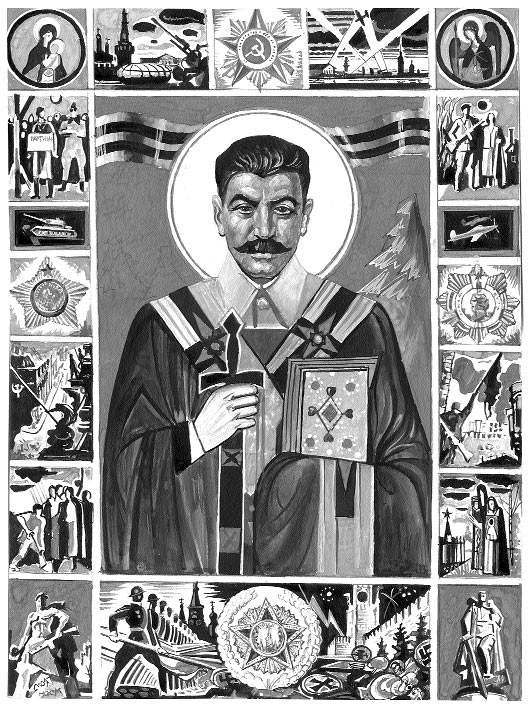
Not long ago on a few websites from the RF, a humorous “icon” appeared of Joseph Stalin, the “father of the people”. On this “icon” Stalin is depicted in clerical vestments with a shining halo surrounding his head. In his left hand, he is holding the Gospel, and in his right – a sword. Above his head are the colors of the ribbons of St. George’s order. On the borders of the “icon” are varous illustrations: the Mother of God with the infant Jesus, Archangel Michael, clergy blessing the Kremlin, an assortment of soviet medals, the celebration of the victory over “fascist” Germany and others.
Many who saw this picture were probably indignant, taking it as blasphemy against Orthodoxy. Others could only envision a sort of humor. However, it is necessary to look seriously at the resurgence of the influence and the strengthening of Communism in the RF and in the former republics of the USSR. In his native Georgia, Stalin continues to be a popular national hero – in some other republics people of the older generation remember with nostalgia the “good old days” when the government provided full employment, took care of, albeit poorly, health care and education, and protected its citizens from external and internal enemies.
The younger generation, ignorant of the horrors of the concentration camps, of the cleansings, and the physical annihilation of the clergy, intelligentsia, military and the agricultural working classes, hears from the older generation of the great victories, space flight, and major accomplishments in the sciences. In their imagination the Soviet period of Russian history is one of the most glorious.
Patriarch Aleksey II and the Bishops of the MP, being henchmen of the Soviet regime, and having been raised on the Marxist-Leninist ideology, continue with their habitual activity, i.e. singing the praises of the former greatness of the USSR and its leaders. This became especially apparent during the festivities of the 60th anniversary of the Soviet victory over “fascist” Germany.
In different publications of the RF, specifically of the MP, articles appeared praising “Comrade” Stalin, raising his image to a height as of yet unprecedented in history.
According to articles in MP publications, the monastic cell-attendant of Metropolitan Sergei recounted to Bishop Benjamin (Fedchenko, Metropolitan in America) what Metropolitan Sergei told him about Joseph Stalin. “He’s so kind. He’s so kind.” And to his comment that Stalin is a non-believer, Metropolitan Sergei replied to his cell mate, “I think that he who is kind, in his heart lives God.” This explanation offered by Metropolitan Sergei is apparently based on an epistle by the Apostle John, who writes “Who does good, he is from God, and he who does evil, has not seen God.” According to Archimandrite Jeremiah, the Treasurer of the “Patriarch” Aleksey I, Stalin had a vision in which Prince Daniil of Moscow, said to him, to the dictator, that he, Prince Daniil, is the ruler of Moscow and should be left there.
According to the memoirs of Molotov, “All three of us were choir members in the church. Joseph Stalin, and Voroshilov, and I. Stalin sang pretty well. Voroshilov sang too. He had a good ear. So all three of us sang "Let my prayer be set forth before thee as incense" (Ps.141.2) and so forth. Very good music, church singing. . . We used to sing church hymns. After dinner.”
According to I. Mikoyan, also a seminarian like Stalin, who graduated from the Tiflis Armenian Theological Seminary and studied in the Egmiadzinsky Theological Academy, soon after the beginning of the war in 1941, the “devout” Stalin called the clergy into the Kremlin to serve a Moleben so that the Red Army would be granted victory over the insidious enemy, and the miraculous Tikhvin icon of the Mother of God, at Stalin’s orders, was flown on an airplane over and around the city of Moscow, thus saving the city from the enemy. Soon, also the city of Tikhvin was freed from the enemy. As it is now known, almost all of those in Stalin’s inner circle were religious. A priest was brought to the deathbed of M.I. Kalinin, to send his soul off properly. Stalin’s closest ally, G.M. Malenkov, ended his life as a Psalm Reader in a church. Stalin’s daughter, Svetlana Alleluyeva, was baptized, although after her father’s death. According to documents still in the RF Archives, Stalin in his later years remembered his friends in the seminary by supporting them financially. The press has also noted that Stalin liked to quote the Bible, and when his personal library was assembled, he gave orders that there should be no atheistic literature in it.
As authors within the MP note, due only to Stalin’s personal involvement, the office of the Patriarchate was resurrected in the USSR, theological schools were opened, publications of religious literature was permitted, and the material well-being of the clergy was guaranteed. The clergy of the MP reciprocated the love from Stalin with their own love. Metropolitan Aleksey would talk about “the God-given Great Leader of ours, Joseph Visarionovich Stalin”. “ Many years" were regularly sung for his health, and upon his death, “Patriarch” Aleksey served a funeral liturgy in the Elokhov Cathedral, and all the churches in the land prayed for Stalin’s “Eternal Memory”. To those who would reproach the serving of panikhidas for an atheist, Archimandrite Jeremiah would remember that the “Patriarch” would reply that he “did not pray for an Atheist.”
In a report to Stalin, the Colonel of the NKVD, G.G. Karpov stated that on July 1, 1946, in the territory of the Soviet Union, there were 13,215 working Orthodox churches and chapels, only 27% of the number in existance in 1916, with 61 Bishops and 9,434 parish clergy. In a conversation with Metropolitan Sergei, during the resurrection of the office of Patriarch, Stalin asked why the Church had a deficit of clergy for its parishes. The Metropolitan replied that the Church had educated them but they became marshals instead, to which Stalin, who liked a good joke, smiled. Frequently the press notes that until the end of her life, Stalin’s mother, who was very religious, regretted that her son had not become a priest.
Talking about himself, Stalin said, “I know that after my death, they will bring a pile of rubbish onto my grave. However, the winds of history will disperse it.” As we can see, the hierarchs of the MP are now trying to fulfill the legacy of their benefactor by trying to whiten his memory and by describing him as a deeply religious Christian, who cared about the well-being of the Church and the country.
The leadership of the MP recalls with great nostalgia its former life in the USSR. That is why it did not protest over the increasingly communist influence in the RF in the form of symbols, monuments, and soviet songs. The “Holy Patriarch” recently even accepted a medal from the head of the Medal Committee of the Government Duma of the RF, General N.D. Kovalev – a star with a hammer and sickle on a red ribbon.
In the event that the administration of ROCOR would decide to ratify an agreement of unification with the MP, could we, Russian descendants and inhabitants of various countries around the globe, agree to the glorification of Stalin and/or his executioners in our ROCOR churches? Could we possibly agree to the dissemination of literature glorifying the Soviet period of history in our church bookstores? And even if, in time, the MP does add Stalin and others of his ilk to its roster of “saints”, will the descendants of those who fled to freedom from the “Soviet paradise” be able to accept an “icon” of Stalin or icons of “All saints of the MP” in the churches of ROCOR?
If some are hoping that our generation will gradually die off, then we must warn not only the hierarchy of the MP, but also their colleagues in ROCOR, that we not only have children, but we also have grandchildren, who will take up their necessary places in the battle to protect our Church. At the present time, our Society of the Memory of the Blessed Metropolitan Anthony already counts its membership in the hundreds across the globe. In the event of a unification of ROCOR and the MP, it will not cease fighting against the infiltration of Communism and heretical innovations in the Russian Church.
*************************************************************
Stalin ist Tod aber die Kommunisten heilen noch immer.
Als
Stalin krank wurde, ordnete der Patriarch Aleksij in allen Kirchen der UdSSR
Bittgottesdienste "um die Genesung des teueren Erkranken" an:
"
.. Unsere Kirche kann nicht jenes Wohlwollen vergessen, die ihr unsere Regierung
und Iosif Vissarionovich persönlich entgegengebracht
haben und das sich in einer Reihe von Maßnahmen äußerte, die für sie
Wohlergehen und Ruhm bedeuteten; es ist ihre Pflicht - auf die ihr eigene Weise,
d.h. durch inbrünstiges Beten - auf die Heimsuchung unseres Volkes zu
reagieren, sowie auf die Erkrankung des von uns allen geliebten Führers und
weisen Schöpfers des Volksglückes.."
Nach
dem Tode Stalins sprach der Patriarch der Sowjetregirung im Namen der Russischen
Kirche sein Beileid aus, wobei er betonte, daß das lichtvolle Gedenken an
Stalin ständig in den Herzen der Gläubigen leben wird. "Mit einem
besonderen Gefühl nie aufhörender Liebe ruft ihm unsere Kirche zu "Ewiges
Gedenken!" (Izvestija No.59, 1953). Die Delegation des Moskauer
Patriarchates legte am Sarge
Stalins einen Kranz
nieder; der damalige Leiter des Außenamtes der Russish-Orthodoxen Kirche,
Metropolit Nikolaj, stand auch Ehrenwache an der Bahre. Patriarch Aleksij hielt
eine Totenmesse (Panichida) für Stalin, mit einer Ansprache an die Anwesenden:
"..Entschwunden
ist die große moralische, soziale Kraft, in der unser Volk seine eigene Kraft
erkannte... und durch die es im Laufe vieler Jahre getröstet wurde. Keinen
Bereich gibt es, der nicht vom Blick unseres Führers durchdrungen war. Die Männer
der Wissenschaft staunten über seine tiefen Kenntnisse auf den verschiedensten
Gebieten, über seine genialen wissenschaftlichen Zusammenfassungen; die
Feldherren staunten über sein militärisches Genie; die Menschen der
verschiedensten Arbeitsgebiete erhielten von ihm stets mächtige Unterstützung
und wertvolle Anweisungen. Als ein Genie entdeckte er in jeder Sache das, was
unsichtbar und unzugänglich für den gewöhnlichen Verstand war.."
Dann sprach der Patriarch
davon, was Stalin für die Kirche getan hatte:
"...
Kein Anliegen, das wir ihm vortrugen, wurde von ihm abgewiesen; er erfüllte
alle unsere Bitten. Viel Gutes und Nützliches wurde dank seiner Autorität für
unsere Kirche von der Regierung getan. Das Gedächtnis an ihn ist für uns
unvergeßlich.."
Der
Mythos von Stalin als Beschützer der Orthodoxie, der in den Kriegs- und
Nachkriegsjahren verbreitet wurde, fand Anhänger auch in der freien Welt. Das
sprach aus manchem Beileidstelegramm orthodoxer Hierarchen außerhalb UdSSR an
den Moskauer Patriarchen Aleksij. Oft ging man dabei weit über das zulässige
Maß an Höflichkeit hinaus. So schrieb der
verstorbene orthodoxe Patriarch von Antiochien, Alexander III.:
"..
Die Nachricht von dem vorzeitigen Tod des genialen Führers und Schöpfers der
Macht des Sowjetstaates I.V. Stalin erfüllte unsere Herzen mit tiefstem
Schmerz.. Wir drücken der russisch-orthodoxen Kirche und allen ihrer treuen Söhnen
zu diesem so schweren Verlust unser aufrichtigstes Beileid aus. Wir bitten, den
Ausdruck unseres maßlosen Schmerzes und tiefsten Mitgefühls der
Sowjetregierung mitzuteilen.."
Man
könnte nun denken, daß nach Stalins Tod im Zuge eines gewissen Nachlassens des
furchtbaren Druckes, der auf der Bevölkerung umbarmherzig gelastet hatte, auch
die Gläubigen manche weitere Erleichterungen erhalten würden, um so mehr, als
die Hierarchie, wie wir sahen, bereit war, sich dem Regime gegenüber durchaus
loyal zu zeigen. Es kam aber doch anders.
Schon
nicht allzu lange nach dem Tode Stalins, am 10 November 1954, beschloß das
Zentralkomitee der Kommunistischen Partei der UdSSR eine Verstärkung der
antireligiösen Propaganda. Zwar wurde dabei betont, daß die Propaganda
wissenschaftlich geführt werden soll und die Gefühle
der Gläubigen nicht verletzen dürfe, aber die Tatsache allein, daß das ZK
einen solchen Entschluß faßte, schien dafür zu sprechen, daß das erstarkende
religiöse Leben in der UdSSR die Partei beunruhigte. Vermutlich hatte die
Regierung gehofft, als sie die offene Verfolgung der Religion einstellte
und der orthodoxen Kirche wie auch anderen religiösen Organisationen manche
Erleichterungen gewährte, daß die Religion mit der älteren Generation
zusammen aussterben würde. Als sich aber herausstellte, daß diese
Erleichterungen dem religiösen Leben starken Auftrieb gaben und nicht selten
auch die Jugend beeinflußt wurde, tauchten in der Parteipresse immer häufiger
Artikel auf, die den Kampf gegen die Religion bis zu ihrer vollständigen
Ausrottung forderten. Die Orthodoxe Kirche hatte keine Möglichkeit, sich gegen
diese Angriffe zu wehren. Ihr Organ schwieg sich darüber aus.
Besonders
unangenehm mußte aber jene Methode der Gottlosen-Propaganda empfunden werden,
der sich die Kommunistische Partei nun immer häufiger bediente: sie veranlaßte
abgefallene Priester, in der sowjetischen Presse schärfste Angriffe gegen die
Religion und schlimmste Verleumdungen gegen die Orthodoxe Kirche zu veröffentlichen.
Auch das blieb längere Zeit ohne jegliche Reaktion seitens der orthodoxen
Hierarchie.
***************************************************************************
Omitting the past's darker
chapters
By Alex Rodriguez Tribune foreign correspondent
Leaders want Russian youth to feel national pride, so one author's textbook
gives short shrift to thorny topics such as Gulags and Chechnya ...
Basically, they were dissatisfied with chapters devoted to Stalin's regime
and Putin's leadership
Russians remember the Siege of Leningrad - a brutal, 872-day blockade of
Russia's second-largest city by Nazi troops that killed 1.7 million people -
as a dark, crucial moment in their history. Yet one of the most
popular history textbooks in Russian classrooms casually distills the event
into a mere four words.
Glaring omissions abound in Nikita Zagladin's textbook, "History of
Russia and the World in the 20th Century." The Holocaust is never
mentioned. The book barely acknowledges the Gulag labor camps.
And it flits past Russia's 10-year conflict with separatists in Chechnya,
reducing a pivotal episode in modern Russian history to seven paragraphs.
For some Russian academics, Zagladin's penchant for smoothing over the bumps
in Russian history is precisely the reason his textbooks have become
mainstays in Russian classrooms.
In recent years, authorities have increasingly sought to whip up patriotic
fervor among Russians, often at the expense of illuminating Russian
history's darker chapters.
Josef Stalin oversaw a murderous regime that killed millions of Russians.
But with the country's celebration of the 60th anniversary of the defeat of
Nazi Germany, the Georgian-born ruler has enjoyed a resurgence in
popularity. The Siberian city of Mirny erected a statue of Stalin earlier
this month, calling him "a great son of Russia who gave the people
everything he had." The city of Orel recently asked the federal
government for permission to change street names to honor Stalin.
It is in Russian classrooms, however, where authorities particularly want a
renewed sense of national pride to take root.
When President Vladimir Putin met with historians at the Russian State
Library in late 2003, he stressed that history textbooks should
"cultivate in young people a feeling of pride for one's history and
one's country."
A month later, Putin asked the Russian Academy of Sciences to scrutinize the
country's history textbooks "at the earliest possible date."
At the time, one of the most widely used history texts was Igor Dolutsky's
"National History: 20th Century." For years, the book had been
favored by teachers for its upfront discussion of sensitive topics,
including Stalin's purges, Chechnya and anti-Semitism in Russia.
Dolutsky's textbook also did not shy away from talking about Putin,
challenging students to discuss whether the former KGB colonel should be
considered an authoritarian leader.
The Kremlin leader's comments were heeded by Education Ministry officials,
who suddenly pulled Dolutsky's book from classrooms after having given it
their endorsement for seven straight years.
"They said my book was `blackening' Russian history," Dolutsky
said during a recent interview. "It was the first prohibition of a
textbook in schools in 25 years."
The offending portions
Later, Dolutsky's publisher told him which historical references in the book
irked authorities: Stalin's non-aggression pact with Hitler in 1939; Soviet
occupation of the Baltic states; the execution of thousands of Polish
officers by Russian intelligence agents at Katyn in 1940; Stalin's
deportation of legions of Chechens to Kazakhstan in 1944.
"Basically, they were dissatisfied with chapters devoted to Stalin's
regime and Putin's leadership," said Dolutsky, 51. "Sections that
dealt with [Nikita] Khrushchev and [Mikhail] Gorbachev, they ignored."
Dmitry Ermoltsev, a Moscow teacher who has used Dolutsky's book, said he
believes Kremlin attempts to polish the history taught in classrooms simply
reflect a national reluctance to examine and learn from low points in
Russian history.
"Russians don't like sharp criticism of their country's history - it
makes them feel humiliated," Ermoltsev said. "Revising history and
history books helps them overcome this discomfort. And Putin reacts to these
signals from society."
Dolutsky, who teaches at a private school in Moscow, says his students have
little appetite for lectures on human-rights abuses or Stalin's repressions.
Recently, when he tried to rouse students into a discussion about the human
toll that World War II took on the Soviet Union--26 million Soviet citizens
died in the war - they appeared bored.
"Their reaction was, `Let it be 100 million--we don't care about
that,'" Dolutsky said. When he explained the war's impact in terms of
the number of tanks and fighter planes destroyed, his students sat up in
their seats.
"That's what really impressed them," Dolutsky said. "They
didn't care about human life, but they cared about equipment."
Should textbooks shame?
Author Zagladin's view of history in the classroom differs radically from
Dolutsky's. He agrees with Putin--a history textbook should make a pupil
feel proud about Russia. It shouldn't depress, and it shouldn't shame.
"If a young person finishes school and feels everything that happened
in this country was bad, he'll get ready to emigrate," Zagladin said
during a recent phone interview. "A textbook should provide a patriotic
education.
"It's necessary to show Russian youths," Zagladin continued,
"that industrial development during the Stalin era was successful, and
that the repressions and terror during that era did not touch all of the
population."
Zagladin acknowledged making mistakes in "The History of Russia and the
World in the 20th Century."
He said he barely mentioned the Siege of Leningrad because he believed he
didn't have enough space. In hindsight, he said, "that's my
mistake."
He added he should have included material about the Holocaust: "I
decided to delete it because, if I mentioned it, I would have had to mention
other repressions, also in detail," Zagladin said. "And I didn't
have enough space in this book."
Despite such omissions, Zagladin's book has fans. Irina Safanova, a teacher
at School 818 in Moscow, called the textbook "a very calm book, which
tries to avoid shocking or extreme remarks. It's a strong point of the book.
"History books should not condemn," Safanova said. "It's
important to avoid provoking feelings of shame in students."
Zagladin's critics say Russian students do not need to be shamed, merely
enlightened about history's darker chapters, especially in a country where
the truth has been lacquered over for so many years.
"According to polls, the majority of the population still considers
Stalin to have played a positive role in Russian history," said Yuri
Samodurov, director of the Andrei Sakharov Museum. "And the problem
here is, our schools don't do anything to change this attitude."
****************************************************************************
"МОСКОВСКИЕ НОВОСТИ"
А. Солдатов
Радость Пасхи и Скорбь Победы. 60-летие Победы РПЦ отметила торжественнее, чем главный церковный праздник - Пасху.
Обращаясь к президенту Путину в пасхальную ночь на клиросе храма Христа Спасителя, патриарх Алексий II вспомнил, что 60 лет назад, в 1945 году, Пасха тоже была поздней, "и пасхальная радость соединилась с радостью победы над фашизмом". Но едва ли когда-нибудь, за исключением того же победного 45-го, День Победы отмечался в нашей стране так торжественно, как в этом году. Стремясь занять место главного идеологического департамента нынешнего российского режима, РПЦ фактически отодвинула Пасху на второй план, чтобы "сберечь силы" для достойного празднования юбилея Победы.
Кого поминать 9 мая?
За пафосом праздничных речей трудно расслышать голос сердца высших церковных иерархов, трудно понять, чем на самом деле является для них этот праздник. Вероятно, большинство иерархов искренне радо его возрождению, потому что жить по привычкам, усвоенным в советское время, для них значительно легче, чем "вырабатывать церковную позицию" в условиях "стихийной демократии". Но всякий, кто хотя бы поверхностно знаком с биографией патриарха Алексия II, согласится, что для этого человека День Победы - "праздник со слезами на глазах". Юный Алеша Ридигер вырос в свободной Эстонии, в семье православного священника, который, скажем мягко, не сочувствовал советской оккупации своей страны по пакту Молотова - Риббентропа. Более того, Алеша был алтарником у священника Александра Киселева, в годы войны ставшего духовником Русской Освободительной Армии генерала Власова. Патриарх до сих пор благоговейно чтит память этого выдающегося священника-эмигранта, скончавшегося в самом конце прошлого века и похороненного в московском Донском монастыре.
Память "власовцев" дорога и для многих чад Русской Зарубежной Церкви (РПЦЗ), которая, как известно, находится ныне в затяжном процессе "воссоединения" с Московской Патриархией. На мемориальном кладбище РПЦЗ в Новом Дивеево под Нью-Йорком стоит обелиск, увековечивающий память всех офицеров и солдат Русской Освободительной Армии (РОА), погибших "во имя идеи России, свободной от коммунизма и фашизма". Каждый год в июне РПЦЗ молитвенно вспоминает трагедию в австрийском Линце, где английские оккупационные власти выдали Сталину на верную смерть несколько десятков тысяч казаков, сражавшихся в последние месяцы войны на стороне Германии. Очевидцы той драмы вспоминают, как выдача началась прямо во время прощальной литургии, которую не дал окончить Смерш. Многие казаки попытались броситься в пропасть, чтобы не достаться коммунистам, а первые выстрелы послышались из советской оккупационной зоны уже через несколько минут после выдачи. Интереснго, что тогдашний глава РПЦЗ митрополит Анастасий благословил отпевать казаков, формально покончивших жизнь самоубийством, не желая попасть в руки красных. "Их действия, - писал он, - ближе к подвигу святой Пелагии Антиохийской, выбросившейся из высокой башни, чтобы избежать поругания".
В русской православной среде жива память о том, что "церкви стали открывать немцы" на оккупированных территориях Советского Союза. В церковно-исторической литературе отмечается, что к началу Второй мировой войны на территории Советского Союза оставалось лишь немногим более ста легальных храмов. В первые же месяцы войны на оккупированных территориях возобновились службы в четырех тысячах церквей. Даже после окончания войны, в разгар которой Сталин восстановил Московскую патриархию, наблюдалась резкая диспропорция между числом храмов на бывших оккупированных территориях и в остальной части страны.
Разумеется, лишь очень небольшая часть храмов на оккупированных территориях признавала Московскую патриархию во главе со сталинским митрополитом Сергием (Страгородским). Подавляющее большинство приходов подчинялось вновь созданным Украинской и Белорусской Церквам, а многие окормлялись духовенством Катакомбной (Истинно-Православной) Церкви, чудом уцелевшим в подполье в эпоху репрессий конца 30-х годов. В Катакомбной Церкви уцелело предание о схимонахе Леонтии (Мымрикове), который благословлял истинно-православных христиан на войну против коммунистов. Они сражались без оглядки на немцев - например, при обороне Бреслау, уже после 9 мая 1945 года, прижатые к Балтийскому побережью русские отряды шли в бой во главе со своими священниками. Когда по ним стали стрелять из катюш зарядами с жидкостью для огнеметов, русские обмазывались глиной и, пылая огнем, продолжали поливать из пулеметов большевиков, пока не падали обугленными.
"Святый праведный Иосифе..."
Однако в последние годы церковное предание о возрождении церковной жизни под немцами активно вытесняется новой мифологией, которую сами ее создатели окрестили "православным сталинизмом". Наиболее радикальные последователи этого учения, объединившиеся вокруг газеты "Жизнь вечная", добиваются церковной канонизации Сталина, распространяют его иконы. Усилиями "православных сталинистов" в среде мирян РПЦ распространяется убеждение о том, что во время войны Сталин тайно ездил молиться в один из московских храмов, завел себе старца-духовника, а перед смертью причастился и даже принял схиму. Существует поверье, будто Сталин стал тайным епископом Московской патриархии.
В более мягких формах эта мифология представлена в сборниках типа "Россия перед Вторым Пришествием" или новонаписанных "житиях святых" советской эпохи - например, блаженной Матроны Московской (Матренушки). Здесь утверждается, что вокруг Москвы и Ленинграда по приказу советского командования постоянно совершались крестные ходы на самолетах, а в штабах фронтов и армий находились чудотворные иконы. Блаженная Матрона в фальсифицированных житиях предстает ярой сталинистской, "простившей" вождю кровь миллионов православных мучеников, усердно молившейся за его победу и называвшей его "праведником".
Если еще несколько лет назад "красное духовенство" было в РПЦ явлением маргинальным и порицаемым, то сейчас оно в почете. Во время парада 9 мая на Красной площади среди ветеранов можно было увидеть сравнительно молодое лицо игумена Киприана, ряса которого была увешана крестами и пятиконечными звездами. Затихли разговоры о наложении канонических крещений на о. Николая Пичужкина, активного участника митингов и шествий "Трудовой России", на которые почтенный батюшка является с портретом "богоданного вождя Иосифа".
Известный "альтернативный" (т.е. не подчиняющийся Московской патриархии) священник Москвы - о. Михаил Ардов - призвал свою паству дистанцироваться от "всенародных торжеств". По его словам, "один тиран победил другого тирана. Сталин, убийца миллионов, при этом миллионов своих соотечественников, победил другого тирана, немецкого, безумного, гораздо менее умного и хитрого, чем Сталин, - Гитлера. И в результате этого половина Европы попала под власть большевиков. И наш народ остался под властью все тех же безнравственных и безбожных правителей. Цена этой победы была несоразмерно высока, потому что Сталин и его приспешники не жалели людей никогда..."
Вертоград №520
****************************************************************************
AVOIDING PARTICIPATION IN THE GREAT VICTORY SERVICES
Sermon of the V. Rev. Archpriest Fr. Michael Ardov,
Thomas Sunday, May 8th, 2005, Moscow,
(Translated by Hegumen Andrew (Maklakov))
Christians should not get
involved in politics. Christians, especially in our sad time in history, should
stand far away from any such thing and from all political matters.
However, we occupy time and space in the real world and,
therefore, we have a certain obligation to the Orthodox Church. This obligation
consists in evaluating what goes on in the world from a moral point of view.
With the passing of the centuries, it is absolutely incumbent upon us to make
a moral assessment, a Christian assessment, of what is happening in the world,
especially now when practically the whole world has fallen away from the Church
and one can now say that we are living in the post-Christian era.
This is something that the Church has done almost from its inception. We know
that our Lord Jesus Christ reprimanded the Jewish high priests and Pharisees for
their immorality. The greatest of the Prophets, St. John the Forerunner,
reprimanded the impious King Herod for his adulterous union with his
sister-in-law. Both our Lord Jesus Christ and St. John the Forerunner paid for
this with their lives. The Pharisees gave our Lord Jesus Christ over to be
crucified, and Herod, at the urging of his mistress and her daughter, commanded
that St. John the Forerunner's head should be cut off. There has never been a
time that wanted for Christian ascetics and martyrs who feared not to call the
powerful of this world to task for their immorality. St. John Chrysostom accused
the empress, and as a result he was sent into exile where, for all practical
purposes, he died a martyr's death. We also know of such instances in Russia.
Let us bring Metropolitan Philip to mind, who accused Ivan the Terrible, and
also paid for it with his life.
But we, of course, are all very far from being confessors or martyrs. We also
cannot fail to mention the New-Martyrs of Russia, who exposed the lie that is
Bolshevism and exposed the Sergianists, Metropolitan Sergius and his cohorts,
who defected to the Bolsheviks, those butchers, and criminals, in order to serve
them, and for this also, many of them paid with their lives. We who have
survived to the present time, of course, do not dare to equate ourselves to such
holy people, but nevertheless, for a Christian, the obligation to speak out
about the immorality that we see in the contemporary world remains.
And although the character of today's feast is such that it is not altogether
fitting for me to speak about the things that I feel I must, I, nevertheless,
consider it my pastoral duty to address you with a special word.
We heard in the reading of the Synaxarion for this day how the Apostle Thomas
came to be convinced of the resurrection of the Lord Jesus Christ. However, let
me now switch to a different topic.
In our country at present, our leaders are celebrating what they call
"Great Victory Day" with extraordinary splendor, and with extreme, I
would even say, pomposity and vulgarity. If we examine this event that they are
celebrating so excessively from not even so much a Christian point of view as a
rational one, then we will see that this celebration is disgraceful. First of
all, let us begin with the word "victory." Who was victorious over
whom, and at what price? And what were the consequences of this so-called
"victory?" And we will see that one tyrant defeated another tyrant.
Stalin, the murderer of millions, (and of his own countrymen at that!), defeated
another, demented, German, tyrant--Hitler--who was, of course, much less
intelligent and clever than Stalin was. And as a result, half of Europe, the
eastern half, fell under the domination of the Bolsheviks. And also as a result
of this "victory," our own nation remained under the dominance of
these same cruel, immoral and godless leaders for many more decades. The price
of this "victory" was disproportionately high because Stalin and his
henchmen couldn't have cared less for the people. Just as at the beginning of
the war they wasted an incalculable number of soldiers, for example, during the
defense of Moscow, so also at the end of the war, in order to be the first to
enter Berlin, General Zhukov, at Stalin's orders, sacrificed something close to
two hundred thousand men of the Soviet military.
But this is only one side of the story. The other side is that to call this
holiday a "Great Victory" and to celebrate it with pomp and
circumstance, is something that was only begun rather recently. It has only been
since the time of "Comrade" Brezhnev that this holiday began to be
celebrated. Stalin never considered this day to be anything special, and he
never thought that there was any great victory. What he wanted, was to take over
all of Europe and make a world-wide revolution, but he failed; all he got was
half of Europe. And now we see the last surviving veterans, to whom they show a
little bit of recognition, they give them a little something to eat, do a little
interview with them, and entertain them a little bit. But even this attention is
something new. I am already a rather elderly person. I remember quite well the
years right after the war, 1945, 1946, and how Moscow was literally flooded with
cripples; soldiers who were missing arms and legs, returning from the war, and
then, suddenly, they all disappeared. Only later did I learn that they were all
picked up and packed off to die on the island of Valaam, in order not to spoil
the view in the capital. There was no monastery there then. You can just imagine
for yourselves the conditions that they had to endure there while living out
their last days. They were so poor, and were reduced to begging in order to
survive. This is how they were treated, just so that the capital should not be
spoiled by their presence! This I remember quite well. Besides this, as we all
know, because of Stalin and his military leaders, an enormous number of Soviet
citizens were taken out of the country as prisoners. The government immediately
disowned them; they were immediately branded traitors. And the consequences of
this were that when they, for some reason or another, came back to our country,
most of them were whisked off to Stalin's labor camps. This is how they treated
the veterans then. In general, if we want to talk about their version of the
history of this "Great Victory," it's all one lie after another, or
else there's complete silence about what happened. For example, we all know,
(and the historians know this too), Moscow was not defended by Zhukov at all; it
was defended by General Vlasov, before he was taken captive and went over to the
opposing side. But no one says a word about this! Again, in May of 1945, Prague
was liberated from the Germans by Gen. Vlasov and his Russian forces. But you
won't read about that anywhere today, and you won't hear anyone even talking
about it, because all that the Bolsheviks and their progeny, the so-called
Democrats, are saying now about the "Great Victory," bears witness to
the fact that the Communists are still in power. They have just had a face lift
and have rearranged things so that it is easier to steal now. But in essence,
their way of thinking hasn't changed at all. And no more than two days ago,
President Putin, in Europe, proclaimed loudly that it is impossible to compare
Hitler to Stalin, because Stalin, although he was also a tyrant, and considered
by many to be a criminal, was never a Fascist! Here again is a deliberate lie.
Hitler was never a Fascist, and could not have been. There was no Fascist party
in Germany. The Fascists were in Italy. In Germany, there were the
National-Socialists. But in order not to soil the holy name of
"socialism" in the minds of the people, the Communists, naturally,
started calling the Germans "Fascists," and this name has stuck,
although for an educated person, to speak this way is just plain silly.
I could say much more in this vein. I could talk about how
"Comrade" Stalin, to an enormous degree, is responsible for having
started the war, which appropriately, of course, should not be called the
"Great Patriotic War," but World War II. He is the one who raised
Hitler. He is the one who helped the Germans build an army. Their pilots trained
here. Their planes were built here, etc. And he is the one who sicced Hitler on
the western countries. His intention then was to stab him in the back and grab
all of Europe. However, as it turns out, it didn't happen this way, and being
unprepared for armed conflict, the Soviet Union at first suffered a humiliating
defeat at the hands of the Germans. This is what really happened.
But I don't want to talk to you anymore about this. I only want to tell you
that we all belong to the Church of Christ. We shouldn't get involved in any
political matters. Having said that, I should tell you that I, in no way, mean
to insult those of our veterans who are still with us. My own father and
grandfather were both at the front. They were men of integrity and went there
out of necessity and out of a sense of duty. But that the truth continues to be
hidden, and that Brezhnev's fairy tales concerning these terrible events
continue on, these are very, very bad signs.
There are those among us, and there are some also in the Moscow Patriarchate,
who say that our country must repent. But repentance is a very exalted state. It
is attainable only by Christians; conscious Christians. The repentance that they
are so pointlessly talking about must be accompanied by a certain recognition of
what really happened. If our government really wanted to cleanse itself from its
Communist filth and restore Russia's nationalism and spirituality, then, first
of all, this is what it should do: it should shoot 200 full length television
movies about all of the crimes of the Soviet authorities, starting with the
firing squads in 1918, the Kronstadt mutiny, the quelling of the uprising in
Tambov, the removal of the Kulaks, oh, and by the way, they should tell the
truth about the war, not to mention 1937 and all of those horrors. If people
could see that, and all of that could be shown, then maybe someone might really
come to repentance.
For us, the most important thing, I repeat, is not to get involved with any
of this. We can't stop it. No one will hear our voice; no one even wants to. The
television and radio stations are now under the control of the government, and
they are bound and determined to toot their own horns about the "Great
Victory." One can only imagine how much money has already been poured into
all of the disgraceful decorations around the city, and on all the foreign
guests, instead of helping those who are truly poor, the orphans, or some old
retirees.
And so, may the Lord preserve us from ever taking part with them in their
celebrations; under any circumstances. We have our own Christian holy days, we
have our own Christian celebrations, we have our own Christian commemorations,
such as holy Pascha which we are celebrating now, together with all of its
accompanying feasts. These are, precisely, ours. And may God help us to remain
within the bosom of the True Church till our last breaths leave us. Amen.
Credo-ruredo-ruCredo.ru
*****************************************************************************
Церковь и
власть в
Холодной
войне
Помещаемый
ниже
материал был
подготовлен
как основа
для доклада
автора для
предполагавшейся
третьей
совместной
конференции
историков,
которая,
однако, не
состоялась,
ибо вместо
научных
конференций
процесс
диалога
перешел в
визиты
зарубежных
архиерейских
делегаций в
РФ и
переговоры.
Тем не менее,
для
хронологической
полноты
советского
периода
истории
Церкви этот
материал
уместно
привести в
данном
сборнике.
Итак,
вспомним
недавние
слова
митрополита
Иоанна
Петербургского
и Ладожского
о сталинском
использовании
Церкви в
советско-германской
войне: «Антихристианская
диктатура в
СССР не
изменила
своей
внутренней
сущности, она
лишь
приспособилась
к новым
условиям»[i].
Так что
победа
народа над
внешним
врагом не
привела к
существенным
изменениям
на
внутреннем
фронте – это
мы уже
показали в
предыдущем
докладе.
Единственное,
что еще
заставляло
Сталина
терпеть
Церковь и
дальше, – это
начавшаяся
во второй
половине 1940-х
годов
Холодная
война, также
требовавшая
опоры на
патриотизм (только
еще более
советский). В
Холодной
войне Церкви
был отведен
специфический
участок
фронта: "борьба
за мир",
точнее –
проведение "советской
миролюбивой
политики".
Кроме того,
поскольку в
становлении
послевоенной
Европы и
протестантская
церковь, и
особенно
католическая
играли
немалую роль,
в том числе в
Восточной
Европе,
Сталин видел
в западных
конфессиях
политического
противника и
потому
поощрил
созыв в 1948 году
московского
совещания
восточных
Церквей,
которое
осудило
католицизм
как
еретический
центр
международных
интриг.
Критика
западных
конфессий за
"пособничество
империализму"
встречается
и в "Журнале
Московской
Патриархии"
за те же годы.
Нет
оснований
видеть в этом
самостоятельную
инициативу
Московской
Патриархии в
борьбе за
христианскую
истину. Еще
одной шумной
акцией в этом
же
внешнеполитическом
русле "советской
миролюбивой
политики"
стала в 1952 году
"Конференция
церквей и
религиозных
объединений
СССР в защиту
мира",
которая
протестовала
против
милитаризации
Западной
Германии и
послала
приветственную
телеграмму
Сталину.
В то же
время
церковные
структуры в
СССР, заново
созданные в 1943
году,
подвергались
все
усиливавшемуся
атеистическому
давлению
сначала
Сталина (это
мы отметили в
предыдущем
докладе), а
затем
особенно его
преемников,
объявивших о
возвращении
к ленинским
нормам.
1. Новая "безбожная
пятилетка"
В июле 1954
года ЦК КПСС
приняло
постановление
"О крупных
недостатках
в научно-атеистической
пропаганде и
мерах ее
улучшения",
предписавшее
«насытить
атеистическим
содержанием»
всю систему
образования.
В 1958 году было
принято
секретное
постановление
о
наступлении
на "религиозные
пережитки";
статьи с
глумлением
над
духовенством
стали обычны
в
центральной
и местной
печати;
особую роль в
этом играли
несколько
бывших
священнослужителей,
отрекшихся
от Бога.
В связи с
объявленной
в 1959 году XXI
съездом КПСС
«полной и
окончательной
победой
социализма»,
начались
суды над
духовенством
и
повсеместное
закрытие и
разрушение
храмов[ii].
Особенный
размах
репрессии
приняли в 1961
году, когда ХХII
съезд КПСС
провозгласил
построение к
1980 году
коммунизма, в
котором для
Церкви как «единственного
легально
существующего
врага
марксизма»
места не
предусматривалось.
Если в 1959 году в
стране
закрыли 364
прихода (это
были средние
сталинские
темпы
закрытия), то
при Хрущеве в
1960-м – 1398, в 1961-м – 1390, в 1962-м –
1585. Немало
храмов было
варварски
взорвано –
как, например,
собор св.
Александра
Невского в
Харькове. (В
этом ряду
стоит и
кощунственная
"апельсиновая
сделка" в 1964
году на
Святой Земле,
когда
антихристианскому
государству
были за
безценок
незаконно
отданы
русские
православные
святыни,
отнятые
ранее у
Русской
Зарубежной
Церкви, в
обмен на
апельсины
для
номенклатурных
распределителей.)
Помимо
того, были
запрещены
традиционные
паломничества,
закрыт
доступ к
святым
источникам (было
засыпано,
разрушено
или
огорожено 700
источников и
подобных
святых мест).
Был запрещен
колокольный
звон. Была
введена
принудительная
регистрация
крещений,
венчаний,
отпеваний с
предоставлением
списков
властям – в
результате
чего
верующие
подвергались
увольнениям
с работы,
исключениям
из учебных
заведений
или
взысканиям;
поступить в
вуз и сделать
профессиональную
карьеру
верующему
стало
невозможно.
Началось
судебные
процессы по
лишению
верующих
родительских
прав. Местным
властям были
развязаны
руки для
произвола
вплоть до
заключения
верующих в
психиатрические
больницы как
носителей "бредовых
идей".
В итоге,
если в 1958 году в
СССР
действовало 13
372 прихода и 63
монастыря, то
к 1966 году
осталось 7 523
храма и 18
монастырей.
Были закрыты
великая
святыня
Киево-Печерская
Лавра (1963) и
духовные
семинарии:
Волынская (в
Луцке),
Жировицкая,
Киевская,
Саратовская,
Ставропольская
– после чего
на всю страну
осталось три
семинарии и
две духовные
академии.
Отбор
студентов в
них,
рукоположение
священников
и епископов
стали
проводиться
под еще более
жестким
контролем "уполномоченных
по религии".
Архиерейский
Собор 1961 года
утвердил
требования
власти о
перестройке
приходской
жизни, сделав
священника
наемным
работником "двадцатки"
прихожан,
контролируемых
"уполномоченными".
При этом
прихожане не
имели прав
владения
церковным
имуществом,
приобретенным
на
пожертвования
верующих, –
оно после
закрытия
храма
конфисковывалось
государством,
включая
богослужебные
предметы.
Это
воспринималось
верующими (они
тогда
составляли
около трети
населения)
как
святотатство
и заставляло
их выступать
на защиту
храмов; кое-где
это
выливалось в
столкновения
тысячных
толп с
войсками, как
в Клинцах
Брянской
области.
Очень редко
удавалось
отстоять
церкви, как
Почаевскую
лавру в 1964 году.
Чаще
сопротивление
заканчивалось
судебными
процессами: с
1961 по 1964 годы по
таким делам к
заключению и
ссылке были
приговорены
1234 человек, в
том числе
сотни
священнослужителей.
Таким
образом, в эти
годы
проходила
третья
крупная
битва в
богоборческой
войне
компартии
против
православного
народа (первая
– в 1917-1923, вторая – в
1932-1940). В
результате
произошел
значительный
отток
верующих из
официально
разрешенной
Церкви в
Катакомбную,
существовавшую
еще с 1920-х годов,
что
значительно
укрепило ее: в
1960-е годы к ней
принадлежали
миллионы
верующих.
Могла ли
Русская
Зарубежная
Церковь
молча
взирать на
происходившее?
Разумеется,
нет: она
пыталась
привлечь к
защите
русского
церковного
народа
западную
христианскую
общественность
и все
организации,
которые были
способны
повлиять на
советскую
политику.
Эмигранты
устраивали
демонстрации
у советских
посольств,
публиковали
в СМИ
информацию о
преследованиях
верующих,
направляли
им
материальную
помощь.
Особое
возмущение
при этом
вызывали
заявления
выездных
советских
архиереев,
что "никаких
преследований
за веру нет" –
в этом многие,
как, например
архимандрит
Константин (Зайцев)
видели
вероотступничество
и даже
перерождение
церковных
структур в
СССР в некую
безблагодатную
"советскую
церковь",
нередко
называя ее "сатанинской",
"женой
прелюбодейной"
и т.п. (Недавно
в РФ выпущен
сборник
работ о.
Константина
с тщательным
сокращением
подобных
мест[iii],
в первом
проекте
предисловия
к сборнику
они даже
объяснялись
составителем
как "умопомрачение"
о.
Константина.
Однако для
понимания
взаимоотношений
РПЦЗ и МП было
бы более
правильно
эти места
сохранить
несмотря на
их излишнюю
резкость и
прокомментировать,
иначе
оказалась
искажена не
только
история
Церкви
советского
периода, но и
рассмотренная
о.
Константином
проблема
всемiрной
апостасии,
затрагивающая
и
Православную
Церковь.)
При этом
нужно
отметить, что
и некоторые
архиереи в
СССР не
согласились
с решениями
Архиерейского
Собора 1961 года,
пытались
сопротивляться
вмешательству
властей. За
это, например,
были
отправлены в
заключение
архиепископ
Казанский
Иов (Кресович)
и
архиепископ
Черниговский
Андрей (Сухенко),
пытались
судить
архиепископа
Иркутского
Вениамина (Новицкого),
был уволен на
покой
епископ
Ульяновский
Иоанн (Братолюбов).
Архиепископа
Ермогена (Голубева)
дважды
увольняли на
покой: в 1960 году
с
Ташкентской
кафедры,
затем в 1965 году
с Калужской;
он пытался
собрать
подписи
десяти
архиереев
под
коллективным
протестом, но
эта его
деятельность
была
осуждена
Синодом...
В 1961 году
Московская
Патриархия
по
инициативе
коммунистической
власти
вступила в
экуменический
Всемiрный
Совет
Церквей для
проведения
все той же "советской
миролюбивой
политики".
Кое-кто из
духовенства
пытался
использовать
это для
защиты
Церкви со
стороны
зарубежных
религиозных
деятелей.
Широкую
известность
на Западе
приобрели
священники
Глеб Якунин и
Николай
Эшлиман,
обратившиеся
в 1965 году с "Открытым
письмом" к
патриарху
Алексию с
критикой в
его адрес, за
что были
запрещены в
служении.
Более
трагична
была судьба
русского мiрянина
Б.В. Талантова,
чьи письма о
гонениях
также были
опубликованы
на Западе –
его уморили в
лагере в 1971
году, а
нескольких
его
сподвижников
затравили до
смерти и без
лагеря.
В то же
время
выездных
архиереев
заставляли
опровергать
протесты
Зарубежной
Церкви, как,
например это
делал
патриарх
Пимен: «Я
должен
заявить – и я
беру на себя
полную
ответственность
за свои слова,
– что в
Советском
Союзе не было
ни одного
случая, когда
бы человек
преследовался
или
заключался в
тюрьму за
свои
религиозные
убеждения.
Скажу больше:
советское
законодательство
не
предусматривает
наказания за
религиозные
убеждения»[iv].
И хотя
при Брежневе
грубые
насильственные
действия
против
верующих
ослабели,
антирелигиозная
политика
продолжалась.
В 1966 году
ужесточили
применение
статьи 142 УК
РСФСР с
наказанием
за
религиозное
обучение
детей,
проведение
религиозных
собраний,
распространение
слухов о
чудесах. За
распространение
и тем более
размножение
религиозной
литературы,
включая
Евангелие,
давали
лагерные
сроки[v].
Закрытие
приходов с
репрессиями
против их
защитников
продолжалось
вплоть до
горбачевской
"перестройки"
(к 1986 году в СССР
оставалось
лишь 6794
открытых
храма)...
Тем
не менее,
ничего не
бывает
безсмысленным
в Божием
промысле,
писал в годы
хрущевских
гонений на
веру тот же
архимандрит
Константин (Зайцев),
сравнивая
духовное
состояние
людей на
либерально-демократическом
Западе и при
богоборческом
коммунистическом
режиме: в СССР
русский
народ насильственно
загоняется в
атеизм,
западный же мiр
«свободно
идет по пути
погибели,
употребляя
данный
человеку дар
свободы – во
зло – уходя от
Бога и ставя
себя на
службу силам
зла... Где
легче спасти
свою душу?
Ответ не
может
вызывать
сомнения!
Отсюда
заключение.
Свершившееся
над нашим
отечеством
есть не
отвержение
его Богом, а,
напротив,
есть проявление
того же
избранничества,
которое
лежало на
челе России
во все ее
историческое
существование.
Господь, снимая
всякий
покров
обманный и
прельстительный
с сатаны,
открывает
максимально
благоприятные
возможности
для спасения»[vi]. То есть
результат
богоборческой
активности
Хрущева
получился
обратным: сам
того не желая,
он укрепил
веру во
многих людях.
Даже в
среде
епископата,
хотя
открытые
протесты
почти
прекратились,
всё же не все
архиереи
были
одинаково
лояльны
богоборческому
законодательству.
Зато
посредством
строгого
отбора и
шантажа
многие стали
более чем
лояльны.
2. «Лояльны
и на словах, и
на деле»
Опубликованный
в эмиграции
секретный
отчет Совета
по делам
религии
членам ЦК
КПСС за 1974 год,
подписанный
В. Фуровым[vii],
разделил
епископов на
три группы: 17
лояльных к
советской
власти «и на
словах, и на
деле» (в их
числе
патриарх
Пимен и его
будущий
преемник –
митрополит
Таллинский
Алексий); 23
лояльных, но
выступающих
за «повышение
роли Церкви в
личной,
семейной и
общественной
жизни» (тем не
менее из
таковых в 1977
году нашумел
своим
письмом
протеста
Брежневу
епископ
Полтавский и
Кременчугский
Феодосий /Дикун/);
17 пытающихся «обойти
законы о
культах,
некоторые из
них
религиозно
консервативны»
(в их числе
епископ
Куйбышевский
Иоанн [Снычев],
который
станет
духовным
вождем
патриотической
оппозиции в
годы
ельцинской
Великой
криминальной
революции).
Тогдашний
лидер
либерально-экуменического
и
прокатолического
крыла в
Церкви
–
митрополит
Ленинградский
Никодим (Ротов)
– был включен
во вторую
группу,
однако, тоже
обходил
законы о
культах,
тайно
рукополагая
в священники
своих
воспитанников
и
единомышленников...
Упомянутая
лояльность
архиереев к
богоборческому
режиму
заключалась
уже не в
непротивлении
ему, а в
активном
насаждении
его
идеологии.
Например, в 1974
году
митрополит
Таллинский
Алексий,
руководивший
также и
учебным
комитетом
РПЦ, по
собственному
почину ввел в
подведомственных
ему духовных
семинариях
преподавание
следующих
дисциплин: "Воспитание
паствы в духе
любви к
Родине,
советского
патриотизма,
честного,
добросовестного
отношения к
труду на
благо
Отчизны –
задача
православного
пастыря", "Что
такое
советская
Родина,
советский
гражданин". В
рамках этого
обучения
читались
лекции: "В.И.Ленин
и культурная
революция", "Коммунистическая
мораль об
отношении к
труду и
социалистической
собственности",
"Воспитание
нового
человека –
важнейшая
задача
коммунистического
строительства".
Удовлетворенный
Совет по
делам
религий при
Совете
Министров
СССР отмечал
в 1975 году, что
благодаря
проделанной
митрополитом
Алексием
работе
появилась «возможность
воздействовать
на будущих
служителей
культа в
необходимом
для нас
направлении,
расширить их
теоретические
и
практические
познания в
материалистическом
духе. А это
будет
подрывать
религиозно-мистические
идеалы
будущего
пастыря;
может
привести ... к
пониманию
собственной
безполезности
как
служителя
культа»[viii].
Не
удивительно,
что
митрополит
Алексий был
награжден
несколькими
советскими
орденами.
Немало
архиереев,
лояльных к
советской
власти «и на
словах, и на
деле», стали
даже
агентурными
сотрудниками
КГБ, получив
секретные
клички, – это
признал
позже
архиепископ (ныне
митрополит)
Виленский и
Литовский
Хризостом,
заявивший в 1992
году на
Архиерейском
Соборе: «У нас
в Церкви есть
настоящие
кагебешники,
сделавшие
головокружительную
карьеру»; он
назвал в виде
примера и
одного
конкретного
митрополита,
ныне
действующего[ix].
В
условиях
Холодной
войны это
особенно
касалось
зарубежного
духовенства
МП. Например,
архиепископ
Венский и
Австрийский
Ириней (Сусемил)
участвовал в
вербовке
полковника
американской
армии
Трофимова,
платил ему за
передаваемую
информацию;
ранее он был
лишен
священнического
сана в
зарубежной
Церкви за
многоженство
и совершение
абортов, но
был принят в
клирики МП,
где вырос до
митрополита[x].
Этот
вопиющий
случай очень
сильно
повлиял на
отношение
Зарубежной
Церкви к МП,
особенно в
Австрии и
Германии,
куда Сусемил
часто
наведывался
в
патриархийные
приходы.
К
сотрудничеству
с КГБ
принуждали и
всех
выездных
архиереев,
которые на
различных
международных
форумах
должны были
влиять на
кадровую
политику
этих
структур, на
принятие
нужных СССР
документов,
распространять
дезинформацию,
дискредитировать
неугодных
религиозных
деятелей. В
официальном
документе
комиссии
Верховного
Совета РФ,
распространенном
в марте 1992 года,
говорится:
«По линии
ОВЦС
выезжали за
рубеж и
выполняли
задания
руководства
КГБ агенты,
обозначенные
кличками "Святослав",
"Адамант", "Михайлов",
"Топаз", "Нестерович",
"Кузнецов", "Огнев",
"Есауленко"
и др. Характер
исполняемых
ими
поручений
свидетельствует
о
неотделенности
указанного
Отдела от
государства
и его
трансформации
в скрытый
центр
агентуры КГБ
среди
верующих»[xi].
Этот "центр"
с тех пор и по
сей день
возглавляет
митрополит
Кирилл (Гундяев)
– второе лицо
в нынешней
иерархии МП.
В первые
годы после
падения
власти КПСС
некоторые
архивы КГБ
были на
короткое
время
открыты для
исследователей
и отдельные
документы
были
опубликованы,
даже, как
видим,
обсуждались
в высшем
законодательном
органе. В
прибалтийских
архивах
подобные
документы
доступны и
сейчас. В
частности, в
одном из
опубликованных
отчетов 4-го
отдела КГБ
Эстонской
ССР об одном
таком
архиерее
говорится:
«Агент "Дроздов",
1929 года
рождения,
священник
православной
церкви, с
высшим
образованием,
кандидат
богословия, в
совершенстве
владеет
русским,
эстонским и
слабо
немецким
языками.
Завербован 28
февраля 1958
года на
патриотических
чувствах для
выявления и
разработки
антисоветского
элемента из
числа
православного
духовенства,
среди
которых он
имеет связи,
представляющие
для органов
оперативный
интерес. При
вербовке
учитывалось
в будущем (после
закрепления
на
практической
работе)
выдвижение
его через
имеющиеся
возможности
на пост
епископа
Таллинского
и Эстонского.
За
период
сотрудничества
с органами
КГБ "Дроздов"
зарекомендовал
себя с
положительной
стороны, в
явках
аккуратен,
энергичный и
общительный.
Хорошо
разбирается
в
теоретических
вопросах
богословия и
международной
обстановке. К
выполнению
наших
заданий
относится с
желанием и
уже
представил
ряд
заслуживающих
внимания
материалов,
по которым
проводится
документация
преступной
деятельности
члена
правления
Иыхвиской
православной
церкви
Чуркина и его
жены,
злоупотребляющей
служебным
положением
при
оформлении
пенсий
некоторым
гражданам (брала
взятки).
Проведением
этого
мероприятия
предоставится
возможность
закрепить "Дроздова"
на
практической
работе с
органами КГБ.
Кроме
того, "Дроздов"
представил
также ценные
материалы на
разрабатываемого
по делу-формуляр
священника
Поведского. В
настоящее
время он
работает над
совершенствованием
знаний
немецкого
языка.
После
закрепления
агента на
практической
работе с
органами
госбезопасности
в конкретных
агентурных
разработках
намечаем
также
использование
его в наших
интересах
путем
направления
в
капиталистические
государства
в составе
церковных
делегаций»[xii].
В
архивной
информации,
обнаруженной
в начале 1990-х
годов
комиссией
Верховного
Совета и
опубликованной
ныне на
многих
сайтах в
интернете,
отмечается,
что "Дроздов"
многократно
направлялся
в
заграничные
командировки
(Израиль,
Англия, ФРГ –
всего около
десяти стран)
и в 1988 году был
награжден
почетной
грамотой
КГБ
"за особо
активную
оперативно-розыскную
деятельность"[xiii].
Поскольку
трудно
сомневаться
в том, кто
такой "Дроздов",
– эту широко
опубликованную
информацию
высшее
руководство
МП не должно
было
оставлять
без внимания,
ведь это
подрывает
авторитет
Церкви как
духовной
власти. Столь
серьезные
обвинения («выявление
и разработка
антисоветского
элемента из
числа
православного
духовенства»)
надо либо
опровергать (если
это ложь),
либо
покаянно
разъяснять (и
в этом случае
слагать с
себя
властные
полномочия).
Первоиерарх
и все другие
архиереи с
кличками
предпочли
отмолчаться.
Конечно, чье-то
прошлое
сотрудничество
с КГБ сегодня
не
препятствует
работе
человека в
большинстве
профессий,
даже среди
офицеров КГБ
не все
боролись со
своим
народом, но
все-таки
профессия "Святейшего"
требует иных
критериев. И в
диалоге РПЦЗ
с МП эту тему
никак не
вынести за
скобки. Тем
более, если в
результате
объединения
нам,
зарубежникам,
тоже
придется
возносить
молитвы за
такого
первоиерарха,
занявшего
свою
должность с
помощью
коммунистических
властей.
Можно ли
предположить,
что кто-то по
совести
будет готов
на это*? Одни
архиереи шли
на такое
сотрудничество
с КГБ без
каких-либо
угрызений
совести из
соображений
"советского
патриотизма"
и личных
карьерных
интересов,
другие,
возможно, –
ради "церковной
пользы",
третьи из
запуганности.
Каждый
ответит за
свои дела
перед Богом,
поэтому не
будем
настаивать
на
непременном
судебном
разбирательстве
их
сотрудничества
– важнее то,
как оно, не
обезвреженное
покаянием,
сказывается
в нынешней
деятельности
этих
архиереев на
руководящих
постах в
Церкви. Не в
этом ли
основная
причина того,
что Церковь
не
настаивает
на
освобождении
нашей страны
от
коммунистического
наследия ни в
преподавании
истории, ни в
облике наших
городов, ни в
государственной
символике (масонско-сатанинской)?
Подаст ли
Господь Бог
Свою помощь
такой России? Это
особо важный
не
политический,
а духовный
вопрос,
который
никак не
обойти в
нашем
диалоге. Не
говоря уже о
том, что
подобный
компромат
может быть
средством
давления
власти на
Церковь,
чтобы
сделать ее
своей
идеологической
служанкой, к
чему такие
архиереи и
сами
стремятся. 3.
Зарубежная
Церковь и
антирусские
силы Теперь
необходимо
рассмотреть
вопрос,
который
ставится с
патриархийной
стороны: а
Зарубежная
Церковь в
годы
Холодной
войны разве
не
сотрудничала
с ЦРУ и
другими
антирусскими
силами? Хотя
документальных
подтверждений
(аналогичных
цитированным
выше
советским)
такого
сотрудничества
с ЦРУ еще
никто не
предъявил,
теоретически
не исключено,
что
отдельные
зарубежные
священнослужители,
считая
коммунизм
главным
врагом, могли
пойти на это (как
нередко шли
эмигрантские
политические
деятели). Но
столь же
массовым и
принудительным,
как в СССР,
это
сотрудничество
быть не могло
и по причине
разных
общественных
систем (в
демократических
странах
никто не мог
насильно
обязать
духовенство
к такому
сотрудничеству),
и по
самосознанию
самой
Зарубежной
Церкви и ее
пониманию
апостасийной
сути
западного мiра. В то же
время, в годы
Холодной
войны перед
русской
православной
эмиграцией
вновь стала
проблема
выбора
меньшего зла
для создания
русской "третьей
силы". Западная
либеральная
демократия
не выглядела
для русских
правых
эмигрантов
желанным
обществом,
которое они
хотели бы
видеть в
освобожденной
от
коммунизма
России. С
западным мiром
приходилось
считаться
как с
географическим
местом
проживания и
фактом, не
подлежащим
изменению.
При этом
огромную
роль играло
то
обстоятельство,
что в
послевоенные
годы
богоборческая
коммунистическая
система
объявила в
своей
программе
глобальную
экспансию,
захватывая
одну страну
за другой, и
Запад,
несмотря на
все свои
пороки и
русофобию
своей
закулисы, был
де факто
единственным
сдерживающим
препятствием
для
превращения
всего мiра в
единый
богоборческий
коммунистический
лагерь, когда
ни русской
эмиграции, ни
надежд на
освобождение
России не
осталось бы. А
пока Запад (в
самом
широком
понимании
этого слова;
он был
достаточно
разнообразным
и не сводился
к одной лишь
Америке)
одним своим
существованием
давал
надежду на
продолжение
борьбы и
сохранение
идеи "третьей
силы",
конечно, уже
не военной, а
только
идеологической
и духовной,
для чего
эмиграция
пыталась
искать в
своем
иностранном
окружении
какие-то
возможности
и союзников. И
находила. Опасность
была не в чьем-то
теоретически
возможном
сотрудничестве
с западными
спецслужбами,
а в том, что
русская
эмиграция в
целом не
всегда
различала в
западной (американской)
политике
пропагандируемую
антикоммунистическую
составляющую
от скрытой
антирусской
и порою
позволяла
западным
стратегам
манипулировать
собой в их
пропагандных
целях.
Атмосфера
Холодной
войны, к
сожалению,
часто
приводила
многих
активных
антикоммунистов
в эмиграции к
упрощению
этой
проблемы.
Многим
казалось, все,
что делает
против СССР "свободный
мiр" –
оправданно,
потому что
богоборцы-коммунисты
хуже... Так,
самозванный
"Великий
князь"
Владимир
Кириллович
выпустил в 1952
году
заявление,
что
внутренние
перемены в
России невозможны
«без применения
силы... без
внешней
вооруженной
помощи»[xiv]...
Фактически
это означало
оправдание
возможной
войны США против
СССР. А
его
сторонник И.Л.
Солоневич в 1950
году прямо
призвал
эмиграцию «помочь
победе США
над СССР... – да
здравствует
война!»[xv]
(тогда уже
атомная
)... Но
Солоневич
был
человеком
малоцерковным,
а Владимир
Кириллович,
следуя
традиции
своего отца,
еще и
безпринципным
конформистом,
который
находил все
меньше и
меньше
поддержки у
архиереев
Зарубежной
Церкви, и в
начале 1990-х
годов его
семья совсем
перешла в МП. Зарубежную
Церковь в
подобных
высказываниях
упрекнуть
нельзя.
Постоянно
приписываемый
первоиерарху
РПЦЗ
Анастасию (Грибановскому)
призыв «бросить
атомные
бомбы на
Советский
Союз»[xvi],
якобы
произнесенный
в пасхальном
Послании 1948
года, – не
соответствует
действительности.
Такая
трактовка
послания
могла быть
сделана
только
людьми
неверующими
и не
желающими
освобождения
Отечества от
богоборческой
власти.
Поскольку
обвинение
серьезное,
приведем
соответствующие
обширные
цитаты из
этого
Послания. Оно
начинается с
пастырского
увещевания –
как жить
христианину
в тогдашней
атмосфере
апокапипсических
страхов в
связи с
появлением у
США ядерного
оружия и его
применением
против
японского
гражданского
населения: «Фиалы
божественного
гнева не
перестают
изливаться
один за
другим на
грешную
землю. На
наших глазах
отверзаются
таинственные
апокалипсические
печати – и мы
как бы видим
те страшные
знамения,
какие
созерцал
некогда Св.
Иоанн
Богослов...
Наше время
изобрело
свои особые
средства
истребления
людей и всего
живого на
земле... Но
этот
страшный
опустошительный
огонь имеет
не только
разрушительное,
но и свое
очистительное
действие: ибо
в нем сгорают
и те, кто
воспламеняет
его, и вместе
с ним все
пороки,
преступления
и страсти,
какими они
оскверняют
землю. Представьте
себе, что
современные
Калигулы и
Нероны, все
тираны,
развратники,
убийцы не
поражались
бы смертью:
жизнь на
земле стала
бы
невыносимой,
превращаясь
в преддверие
ада. Есть
непреложный
божественный
закон, по
которому зло
само в себе
несет свое
возмездие. "Плодом
греха, –
говорит Св.
Григорий
Богослов, –
была смерть,
пресекающая
грех, дабы зло
не было
безсмертным". Но вы
скажете, что
истребительный
меч смерти
падает не
только на
развращенных
и злых, но и на
людей
добродетельных,
и даже на
святых, и на
последних
чаще, чем на
первых. Но для
таких людей
смерть не
является
бедствием,
ибо
открывается
для них путь к
безконечной
блаженной
истинной
жизни,
приобретенной
для нас
смертию и
воскресением
Христовым». Далее в
этом
Послании – не
забудем –
пасхальном (связанном
с
Воскресением
Христа)
говорится об
угрозах и
опасностях
для
порабощенного
богоборцами
нашего
народа и о
пути его
воскресения. «С чувством
душевной
горечи и
невольным
негодованием
за
оскорбительное
надругательство
над правдой
прочли мы
недавно
сообщение о
том, что
нынешний
возглавитель
Русской
Церкви, желая
возвеличить
имя Сталина и
поднять его в
глазах
народа на
особую
высоту,
дерзнул
назвать его в
своем
послании "Избранником
Господним,
ведущим наше
отечество к
благоденствию
и славе"... Не значит
ли это
возводить
клевету и
хулу на
Самого Бога
Всевышнего,
Который в
таком случае
являлся бы
ответственным
за все зло,
какое
творится уже
много лет на
нашей земле
большевицкой
властью,
возглавляемой
Сталиным?.. [Далее
в Послании
следует
описание
продолжающихся
страданий
русского
народа.] Атомные
бомбы и все
другие
разрушительные
средства,
изобретенные
нынешней
техникой,
поистине,
менее опасны
для нашего
отечества,
чем
нравственное
разложение,
какое вносят
в русскую
душу своим
примером
высшие
представители
гражданской
и церковной
власти.
Разложение
атома
приносит с
собой только
физическое
опустошение
и разрушение,
а растление
ума, сердца и
воли влечет
за собой
духовную
смерть
целого
народа, после
которой нет
воскресения. Чем тяжелее
и
безпомощнее
положение
нынешней
России, чем
большая
опасность
угрожает
самому бытию
Русского
народа как
нации,
получившей
свое особое
призвание
Свыше, тем с
большей
ревностью мы
должны
стремиться
объединить
все наши силы
для
скорейшего
его
освобождения.
Перед
величием
этой
неотложной
исторической
задачи
должны
умолкнуть
все наши
обычные
пререкания и
раздоры,
национальные
страсти,
политические
и бытовые
разделения
или
честолюбивые
притязания и
вожделения
отдельных
людей... Вспоминая
уроки
истории,
будем
учиться у
наших
предков,
которые 300 лет
тому назад по
призыву и
благословению
Церкви
собрались
воедино и
сумели
преодолеть
общим
подвигом
разложение
первой смуты,
освободить
родную землю
от врагов и
воссоздать
разрушенное
государство. Не умолкнем
и не
успокоимся
ради родного
Сиона, пока
свет
воскресения
не
заблистает
над нашей
поруганной и
распятой
Родиной.
Возрождение
ее нужно не
только для
нас, но и для
всего мiра,
ибо нынешние
властители
ее сделали ее
очагом
губительной
нравственной
заразы для
прочих
народов, тем
кладезем
бездны, по
слову
Тайнозрителя
(Апок. 9, 1-2),
откуда
распространяется
удушливый
дым по всей
земле,
помрачающий
солнце и
воздух... Древнерусский
боевой клич "да
воскреснет
Бог и
расточатся
врази Его"
ныне
получает для
нас сугубое
значение, ибо
мы имеем дело
подлинно с
воинствующими
врагами
Божиими...
Наша борьба с
ними носит
священный
характер. Это
не борьба за
утраченные
нами земные
блага, как
клевещут на
нас наши
враги, и даже
не за внешнее
величие и
славу России,
ибо все это
преходящее и
суетное, а за
торжество
поруганной
истины и
правды
Божией, за
восстановление
разумной
человеческой
свободы на
Руси, без
которой не
может быть
правильного
развития
человеческого
общества, за
возрождение
любви,
справедливости
и искреннего
братства
между людьми
и прежде
всего за
укрепление
веры и
благочестия
и за
восстановление
дома
Богородицы,
созданного
нашими
предками на
нашей земле и
оскверненного
руками
нечестивых... Как бы ни
тяжела была
эта брань,
пусть никто
не усумнится
в конечной
победе света
над тьмою,
если нам
будет
споборать
Сам
Воскресший
Спаситель,
который
силен
восстановить
нашу Отчизну
даже и тогда,
когда к ней
прикоснулся
уже дух
тления, как
некогда к
четверодневному
Лазарю. Настанет
определенный
Провидением
час, и она
восстанет из
праха
обновленной
и
просветленной,
как бы
очнувшись от
тяжкого сна...»[xvii]. Можно ли
это Послание
назвать "призывом
к атомной
войне"? Именно в
среде правой
эмиграции,
связанной с
Зарубежной
Церковью,
было
распространено
критическое
отношение к
западной
политике,
смешивающей
антикоммунизм
с русофобией,
и к
эмигрантскому
упрощению
сути
советско-американского
противоборства.
Философ И.А.
Ильин,
прихожанин
Зарубежной
Церкви в
Швейцарии,
выразил это в
своем цикле
статей "Наши
задачи" уже в
начале
Холодной
войны. В этих
статьях,
рассылавшихся
как
информационные
листки
Русского
Обще-Воинского
Союза по всей
эмиграции,
авторитетно
прозвучало
предупреждение
о
своекорыстной
мiровой
закулисе и о
ее
антирусских
геополитических
и
идеологических
целях,
маскируемых
под
антикоммунизм.
Думаю,
сегодня все
знакомы с
этими, к
сожалению,
осуществившимися
предсказаниями-предупреждениями,
так что не
стану их
цитировать. Но для
предотвращения
этого разве
не вправе
была русская
эмиграция
искать на
Западе
союзников
своих
русских
целей, пусть и
в какой-то
ограниченной
мере? Нельзя
упускать из
виду, что
тогдашний
западный мiр –
это не только
мiровая
закулиса, а
очень
сложное
общество,
состоящее из
разных сил, в
том числе и во
властных
структурах.
Этот мiр
предоставил
русской
эмиграции
убежище и
защиту,
возможность
сносной
жизни и
несомненную
свободу
вероисповедания
и этим
выгодно
отличался от
богоборческого
режима СССР.
Было бы
неблагодарным
не ценить
всего этого –
вот почему в
эмигрантских
храмах
практиковалась
молитва «о
стране сей,
властех и
воинстве ея и
всех верою
живущих в ней».
Кроме того, к
чужим
странам
духовные
требования
русских
эмигрантов
не могли быть
такими же, как
к своей
родной,
имевшей
важную
миссию в
плане Божия
Промысла, и не
дело русской
эмиграции
было
провозглашать
своей целью (явно
утопической)
менять
западные
демократические
режимы на
православные
монархии –
достаточно
было того, что
Русская
Зарубежная
Церковь
имела в них
возможность
свободного
существования
и
предоставляла
возможность
личного
спасения
достойным
людям из всех
тех народов, в
среду
которых
попала. С помощью
таких
достойных
людей и
просто
сочувствующих
русская
эмиграция
постоянно
пыталась
использовать
различные
западные
структуры (политические,
информационные,
общественные,
церковные)
для защиты
политзаключенных
и
преследуемых
за веру в СССР.
Никто другой
им тогда
помочь не мог.
Западные
радиостанции
были
единственным
инструментом
гласности в
этом вопросе
и
единственным
средством
массовой
информации,
через
которое
можно было
также, пусть и
в
ограниченном
виде,
доносить
своему
народу
историческую
правду и
основы
Православия.
Священники
выступали в
русскоязычных
религиозных
радиопередачах,
нередко даже
были их
ведущими
редакторами,
и разве можно
такое "сотрудничество"
считать
предосудительным? В то же
время явно
антирусские
тенденции в
американской
политике всегда
подвергались
критике как
со стороны
эмигрантских
политических
организаций,
так и со
стороны
Зарубежной
Церкви.
Достаточно
упомянуть
протесты
против
американского
Закона о
расчленении
России (1959),
многочисленные
обращения
архиереев и
даже всего
Архиерейского
Собора с
критикой
антиправославных
тенденций на
радио "Свобода"[xviii].
В конечном
счете эта
критика
оказалась
безрезультатной,
но она
доказывает,
что
Зарубежная
Церковь не
подлаживалась
конформистски
под политику
Запада, а
стремилась
так же
нравственно
воздействовать
на его
общественность,
как это было в
обращении к Мiровой
конференции
на I
Всезарубежном
Соборе в 1921
году. Неужели
лучше было бы
не пытаться
воздействовать
на западное
общество и
вообще
ничего не
делать для
своего
народа из
эмиграции? Правда,
иногда наши
архиереи
допускали
наивность,
полагая,
например, что
более
консервативный
и
религиозный
американский
лидер, Р.
Рейган,
приславший
приветствие
Архиерейскому
Собору РПЦЗ с
добрыми
пожеланиями
свободы
русскому
народу,
способен
понять
Православие,
отказаться
от русофобии
и может быть
поставлен
Богом «для
исполнения
его
Божественной
воли», – так
митрополит
Филарет
отвечал на
это
приветствие:
«мы молимся,
чтобы
Господь...
подал Вам
силы для
Вашей
деятельности»[xix].
Но подобные
ответные
наивные
пожелания
все же вряд ли
можно
поставить в
один ряд с
патриаршими
поздравлениями
руководству
КПСС в
годовщины "Великого
Октября". В годы
Холодной
войны
Русская
Зарубежная
Церковь
предоставила
церковному
народу на
родине и
мощную
духовную
поддержку,
совершив
прославление
ряда
всенародно
почитаемых
святых: св.
прав. Иоанна
Кронштадтского
(1964), прп. Германа
Аляскинского
(1970), св. блаж.
Ксении
Петербургской
(1978) прп. Паисия
Величковского
(1982), свв.
Оптинских
старцев (1990).
Особое
значение
имело
прославление
в 1981 году
Новомучеников
и
исповедников
Российских
во главе с
Царем
Мучеником
Николаем II
и его Семьей,
после чего
началась
агония
богоборческого
режима. В целом
именно
Русская
Зарубежная
Церковь весь
ХХ век была
для русской
эмиграции
оплотом «подвига
русскости в
условиях
апостасии».
Это означало
и правильное
отношение к мiровой
закулисе, к
еврейскому
вопросу. Хотя
надо
признать, что
в
послевоенное
демократическое
время, в
отличие от 1930-х
годов,
Соборных
посланий с
откровенным
и конкретным
упоминанием
главных
носителей
сатанинской
"тайны
беззакония"
уже не было,
были лишь
общие
предупреждения
о мiровой
антихристианской
системе зла и
готовящемся
царстве
антихриста (о
чем много
писал в 1960–1970-е
годы
архимандрит
Константин
как главный
редактор "Православной
Руси", будучи
сам, кстати,
по отцу
еврейского
происхождения). К сожалению,
по мере ухода
старших
поколений и в
Зарубежной
Церкви стал
постепенно
меняться ее
стиль и дух. В
частности,
монархическая
идеология, а,
значит, и
связанное с
нею
восстановление
удерживающего
призвания
России, все
больше
становилась
частным
делом
клириков.
Холодная
война
сыграла в
этом свою
роль, ибо в
этой войне
советская
система
запрещала
Православие
и карала за
распространение
религиозной
литературы, а
американская
демократия
могла
выступать в
роли
защитника
христианских
ценностей и
потому на
практике для
многих
выглядела
меньшим злом
и терпимой
формой
государственности
для миссии
Церкви в
апостасийное
время. Разумеется
отношение мiровой
закулисы к
консервативной
Зарубежной
Церкви
всегда было
настороженным,
предпочтение
отдавалось "парижской"
и "американской"
либеральным
юрисдикциям.
Издания РПЦЗ
американская
система
распространения
литературы
среди
советских
граждан
закупала в
минимальных
количествах,
лишь для
демонстрации
плюрализма,
тогда как
издания
демократических
юрисдикций
своей
преобладающей
безплатной
массой
оказывали
основное
воздействие,
в том числе на
эмиграцию.
Основное же
содержание
распространяемой
американскими
службами
литературы и
радиопередач
были лишь
антисоветско-критическими,
без духовной
альтернативы,
а с
появлением в
этих службах
еврейской
эмиграции, с 1970-х
годов, стало и
антирусским,
направленным
также и на
поддержку "своих
людей" в СССР. В то же
время в 1970-1980-е
годы
параллельно
с пестрым
движением
инакомыслящих
в СССР
возникло
религиозное
движение в
защиту прав
верующих. В
числе
наиболее
заметных его
вех назовем "Великопостное
письмо"
патриарху
Пимену А.И.
Солженицына
(1972), работу
члена-корреспондента
АН СССР И.Р.
Шафаревича "Законодательство
о религии в
СССР" (1973) и
деятельность
"Христианского
Комитета
защиты прав
верующих" (создан
в 1977 году). В
движении
возрождения
Церкви
участвовали
и многие
клирики,
например,
монахи
Почаевской
лавры,
нелегально
печатавшие
православную
литературу.
Архимандрит
Тихон (Агриков)
пытался
сделать
Троице-Сергиеву
лавру
центром
притяжения
для
православных
деятелей, но
был изгнан.
Много
патриотов
собиралось
вокруг
священника
Димитрия
Дудко,
крестившего
ежегодно до 400
взрослых
людей,
публиковавшего
статьи и
книги за
границей (где
его права и
интересы
представляли
сотрудники
издательства
"Посев") и
издававшего
в 1978-1979 годах
газету "В
свете
преображения";
церковные
власти
заставили
его публично
раскаяться.
Было много
православных
кружков,
инициативных
групп по
открытию
храмов,
издавалось
много
самиздата, в
том числе
православно-патриотического
(например, "Вече"
В.Н. Осипова),
за который
особенно
жестоко
стали карать
при
Андропове.
Очень важно
было
восстановление
православных
норм
нравственности
писателями-деревенщиками.
Но это
низовое
сопротивление
русского
православного
народа
архиереи, к
сожалению, не
поддерживали,
а «лояльные и
на словах, и
на деле» даже
помогали
душить. Можно
сказать, что в
послехрущевское
время
сложилась
новая "симфония"
церковных
структур МП с
коммунистической
властью: для
поддержки "миролюбивой
советской
внешней
политики" и
для "свободного
отправления
культов" как
отмирающей
туземной
резервации в
условиях
обязательного
государственного
атеистического
воспитания. (Достаточно
подробно это
было описано
о. Глебом
Якуниным в
работе "О
современном
положении
Русской
православной
Церкви"[xx].
Последующее
скандальное
поведение
Якунина,
лишенного
сана, как и
некоторых
других "религиозных
диссидентов"
не означает,
что в своей
тогдашней
критике они
были неправы.) 4.
Капитуляция
КПСС и В таком
состоянии
Московская
Патриархия и
вошла
сначала в "перестройку",
а затем в
Великую
криминальную
революцию 1990-х
годов, к
сожалению, не
оказав
должного
здорового
влияния на
ход событий и
лишь
подстроившись
под новую
власть. В
последний
период
Холодной
войны
коммунистическая
номенклатура
все больше
разлагалась,
переориентируясь
на западные
материалистические
жизненные
идеалы,
которые
стали
доминировать.
В эмиграции
архимандрит
Константин (Зайцев)
проницательно
писал об этом
уже в
хрущевское
время,
сравнивая
его со
сталинским: «Тогда
Россия
правилась настоящими
коммунистами.
А сейчас?
Можно с
уверенностью
сказать, что
таких коммунистов
сейчас в
России нет.
Они в прошлом.
Они уже
сделали свое
дело... Некий
общий язык
слагается у
современных
"коммунистов",
правящих
Россией, со
свободным мiром,
свободно
идущим
навстречу
антихристу. И
в этой
атмосфере и
слагается в
СССР некий
новый режим, в
котором
рядом с
официальным
коммунистическим
доктринерством,
формально
господствующим,
право
гражданства
получает
всякое самоублажение,
не только
попускаемое,
но и
поощряемое
вождями –
самоублажение,
особенно
прельстительное
в СССР в силу
его новизны, а
потому
способное
покупать
людей по
такой
дешевке,
которая для
свободного мiра
даже мало
понятна. Вот
тот "климат",
который
обещает
объединить
весь, и
свободный и
коммунистический
мiр...»[xxi]. Официальная
Церковь в
СССР
препятствовать
этому не
могла и лишь
плыла по
течению
событий,
оставаясь
подконтрольной
коммунистическим
властям.
Разумеется, и
избрание
Алексия II
патриархом в
1990 году при
посредстве
властей
Зарубежная
Церковь
признала
неканоничным:
«Ввиду
продолжающегося
рабского
подчинения
Московской
Патриархии
безбожной
власти,
попрания
канонических
и
догматических
основ
Православной
Церкви и
нежелания
покориться
Истине и
желаниям и
чаяниям
верующих
Российской
Церкви, мы не
находим для
себя
возможным
признать
назначение
нового главы
Московской
Патриархии
соборным
волеизъявлением
Русской
Церкви...
Поскольку
ему трудно
приобрести
народное
доверие
вследствие
прежнего
сотрудничества
с властями,
лучше ему
найти в себе
смелость и
решимость,
чтобы
признать, что
он слишком
скомпрометирован,
чтобы
получить
общее
доверие
верующих чад
Церкви»[xxii]. На
демократической
волне "перестройки"
экуменизм
священноначалия
МП дошел до
братания с
антихристианской
религией: 13
ноября 1991 года
в
выступлении
в Нью-Йорке
перед
раввинами
первоиерарх
Алексий II
даже говорил
им о "едином
Боге" и общем
"законе" («совместными
усилиями мы
построим
новое
общество,
демократическое»)
– эта речь,
напечатанная
и в
российских
изданиях[xxiii],
вызвала
повсеместные
протесты
верующих в
России. В
ответ на это в
1994 году
решением
Архиерейского
Собора МП
была
осуждена
успешно
развивавшаяся
деятельность
Союза
православных
братств –
естественной
формы
самообороны,
не раз
проявившей
себя в
истории
Русской
Церкви. Именно из-за
такого
поведения
священноначания
в те годы, в
условиях
большей
свободы,
начались
переходы
неудовлетворенного
духовенства
и верующих из
МП под омофор
Зарубежной
Церкви.
Подчеркнем:
не она стала "открывать"
свои приходы
в России, она
просто не
могла
отвергнуть
эти просьбы с
точки зрения
пастырского
долга,
особенно
когда
причиной
перехода
были
протесты
против
серьезных
нарушений в
церковной
жизни МП,
невозможность
исправить их
изнутри и
наступавшие
вследствие
этого
гонения. Тот
факт, что
нередко из МП
в РПЦЗ бежали
и
недостойные
клирики,
спасаясь от
оправданных
прещений, не
отменяет
правомерности
появления
приходов "зарубежной"
юрисдикции в
России.
Фактически
это было не
чем иным, как
установлением
открытого
окормления
Зарубежной
Церковью тех
верующих в
России,
которые еще с
1920-х годов
отказывались
признавать
официальные
структуры
Церкви и
имели тайную
молитвенную
связь с
Зарубежьем. Правда,
следует
признать, что
"Положение о
приходах
свободной
Российской
православной
Церкви" (так
поначалу
назвали эти
приходы) было
составлено в
неудачных
выражениях.
Переход в
зарубежную
юрисдикцию
допускался
через «письменное
и публичное
покаяние»
клириков и «покаяние»
прихожан. «К
клирикам
Московской
Патриархии
отношение
должно быть
как к
отступившим
заблудшим
братиям, не
принимая их в
сослужение,
как бы
находящихся
под
запрещением
"впредь до
покаяния", не
допуская,
впрочем,
надменного
отношения. К мiрянам
должно быть
отношение
снисходительное,
как
отошедшим от
истинного
православия
не волею, но
по
независящим
от них
обстоятельствам»[xxiv].
Этот текст
составлялся
клириками в
России, но их
покаянное
требование к
себе
приобрело
несколько
неуместное
звучание в
документе
Зарубежной
Церкви,
направляемом
верующим на
родине. Однако все-таки
не следует
забывать о
смысле
покаяния: «Абсурдно
утверждение,
что мы
требуем
покаяния
лично перед
собой», – писал
тогда
архиепископ
Марк. – «Такое
утверждение
может
возникать
только
вследствие
неведения
церковной
жизни, то есть
самого
таинства
покаяния и
духа его.
Покаяние
приносится
перед Богом».
К тому же и
эмигрантам
есть в чем
каяться: «И
среди нас не
все и не
всегда жили
одним только
покаянным
духом и
деланием. И
нам следует
принести
покаяние
перед
Церковью
Святой.
Поистине, мы
сами часто
опускали
руки ввиду
непонимания
и явного
безразличия
Запада к
язвам России.
Мы выступали
порой
недостаточно
решительно в
защиту
преследуемых
верующих...»[xxv].
Можно
добавить к
этому: а в
годы "перестройки"
и Великой
криминальной
революции не
всегда четко
различали в
России силы
добра и зла,
руководствуясь
прежним
критерием
антикоммунизма,
хотя
антикоммунистами
могли быть и
враги России
и
Православия,
– но это уже
отдельная
тема. На
тогдашние
обвинения во
вторжении на
каноническую
территорию
МП и внесение
раскола
священник
Николай
Артемов
отвечал в 1991
году: «Суть
этих
разногласий
не
организационно
политическая,
а
экклезиологическая:
что
такое
Церковь...
Вправе ли мы и
сегодня
отнести к
Церкви ту
ложь –
сотрудничество
с гонителями
Православия
и оправдание
их, обвинения
мучеников в
политиканстве..?
Не мы вносим
раскол, а были
и есть люди в
России,
которые не
желают жить с
этой ложью и
плодами ее, с
самого
начала
советской
власти...
Новая
ситуация,
будем
надеяться,
поможет
очищению от
лжи – и таким
образом
преодолению
этой
проблемы»[xxvi]. Независимо
от того, как
сегодня
относятся к
этим людям в
России и к
своим
тогдашним,
цитированным
выше, словам
их авторы,
высокопреосвященнейший
архиепископ
Марк и
секретарь
Германской
епархии
досточтимый
отец Николай,
в России с тех
пор мало что
изменилось к
лучшему. К
сожалению,
упомянутое
очищение
идет слишком
медленно,
процессы
разложения
населения
властью его
опережают.
Боюсь, что
упомянутые
выше
биографические
особенности
многих
советских
архиереев
будут еще
долго
сковывать
Русскую
Церковь, а
через нее и
активность
православного
народа. Сейчас в
идущем
диалоге с МП
некоторые
представители
РПЦЗ сочли
открытие
приходов в
России
ошибкой. С
нашей точки
зрения,
ошибкой было
не это, а то,
что
зарубежное
духовенство
не
воспользовалось
открывшейся
возможностью
возвращения
в Россию и
перенесения
сюда
церковных
структур,
чтобы лучше
понимать
происходящее
и научиться
лучше
разбираться
в людях, а
потому РПЦЗ
оставалась
для основной
части
русского
церковного
народа
иностранной
Церковью,
оторванной
от русской
жизни. В то же
время после
падения СССР
консервативная
Зарубежная
Церковь,
руководящий
центр
которой
находится в
США, стала
весьма
нежелательным
образованием
с точки
зрения мiровой
закулисы и ее
ставленников
в РФ. И
нетрудно
видеть, что
нынешний
процесс
сближения
Зарубежной
Церкви с МП
поощряется
как
демократическими
властями РФ,
так и
американскими
структурами,
которые,
видимо,
надеются на
поглощение
РПЦЗ и таким
образом ее
устранение
как
антиапостасийного
фактора и для
США и
особенно –
для
колонизуемой
ими России.
Мне бы
хотелось,
чтобы диалог
между РПЦЗ и
МП привел не к
осуществлению
этого
поглотительного
плана, а к
укреплению
русского
церковного
народа и
через него к
оздоровлению
Русской
Церкви. А для
этого нужно
откровенно
обсуждать
существующие
проблемы, что
я и пытаюсь
делать. Прошу
прощения,
если кого-то
все это может
задеть лично,
но мы
обсуждаем не
личные
вопросы. 2003 г.
* В ходе дискуссии на Венгерской конференции историков в ноябре 2001 года мы обратили внимание на эту проблему как серьезное препятствие к чаемому соединению двух частей Русской Церкви; текст нашего высказывания был снят с ленты и включен в первоначальный проект сборника материалов конференции, однако в изданной позже книге его не оказалось.
[i]
Иоанн (Снычев),
митрополит. Самодержавие
духа. М., 1994. С. 320.
[ii]
Цыпин
Владислав,
прот.
История
Русской
Церкви. 1917–1997. М., 1997.
С. 378-405;
Православная
энциклопедия.
Русская
Православная
Церковь. М., 2000. С.
188-189. Цифровые
данные в
следующих
абзацах
приведены
по этим
изданиям
РПЦ.
[iii]
Константин
(Зайцев),
архимандрит.
Чудо
русской
истории.
Сост. С. Фомин.
М. 2000.
[iv]
Из интервью
патриарха
Пимена АПН. –
Цит. по:
Заявление
для прессы
канцелярии
Германской
епархии
Русской
православной
Церкви за
границей.
Август 1976 года.
[v]
См:
Сопротивление
религиозным
преследованиям
// Вольное
слово.
Франкфурт-на-Майне,
1976. № 24.
[vi]
Православный
путь.
Джорданвиль,
1963.
[vii]
Из отчета
Совета по
делам
религии –
членам ЦК
КПСС //
Вестник
русского
христианского
движения.
Париж, 1979. № 130.
[viii]
Информация
комиссии
Верховного
Совета. Цит.
по: http://likmp.narod.ru/03.htm.
[ix]
Цит. по:
Обращение
члена
Московской
Хельсинкской
группы,
священника Георгия
Эдельштейна
к
президенту
РФ В.В. Путину
– www.rusprav.ru,
8.6.2003.
[x]
Об этом в 2000
году широко
сообщалось
в западной
печати, что
потребовало
специального
заявления Н.А.
Охотина,
директора
общественной
связи при
Архиерейском
Синоде РПЦЗ. –
См.: www.russia-talk.com,
июль 2000 г.
[xi]
Частное
определение
Комиссии
Президиума
Верховного
Совета
России по
рассследованию
причин и
обстоятельств
ГКЧП. – Цит. по:
Обращение
священника Георгия
Эдельштейна
– www.rusprav.ru;
http://likmp.narod.ru/03.htm.
[xii]
Postimees.
Таллин. 1996. 18
марта. – Цит.
по
факсимильной
публикации
документа 4-го
отдела КГБ
при Совете
министров
ЭССР "Состояние
агентурно-оперативной
работы по
пресечению
враждебной
деятельности
церковников
и сектантов"
(папка "Сов.
секретно".
Эк. 2. Серия "К").
[xiii]
Новая
газета. 1998.13 окт.;
Экспресс-хроника.
М., 2000. 22 апр. См.
также: www.compromat.ru/main/rpc/a.htm
и другие
сайты.
[xiv]
Обращение
Главы Роccийcкого
Императорcкого
Дома Великого
Князя Владимира
Кирилловича
к Cвободному
Мiру // Чаcовой.
Брюccель. 1952. № 318.
Апрель. C. 4.
[xv]
Наша страна.
Буэнос-Айрес.
1950. 14 апр.
(*) Великая Кн. Мария Владимировна от имени Дома Романовых наградила Патриарха Алексия "орденом" Св. Николая а "патриарх" наградил Вел Княгиню орденом Св. Равноапостольной Княгини Ольги.
[xvi]
Голос
Православия
[орган МП].
Берлин. 1953.№ 8-12. С. 28; Гордиенко
Н.С., Комаров П.М.,
Курочкин П.К.
Политиканы
от религии.
Правда о "русской
зарубежной
церкви". М., 1975. С.
68.
[xvii]
Цит. по:
Митрополит
Анастасий и
атомная
бомба //
Вестник
Германской
епархии. 1993. № 2. С.
7-12.
[xviii]
См. сборник:
Радио "Свобода"
в борьбе за
мир... Москва-Мюнхен.
Сост. М.В.
Назаров. 1992. С. 38.
[xix]
См.: "Церковная
жизнь. 1985. № 9-11. С. 255.
[xx]
Якунин Глеб,
свящ. О
современном
положении
Русской
православной
Церкви.
Франкфурт-на-Майне.
1979.
[xxi]
Православная
Русь.
Джорданвиль.
1962. № 11.
[xxii]
Послание
Архиерейского
Синода
Русской
Православной
Церкви за
границей от
14/27 июля 1990 г. //
Православная
Русь. 1990. № 15. С. 2.
[xxiii]
Ваши
пророки –
наши
пророки //
Московские
новости. 1992. № 4. 26
янв. С. 24. – См.
также книгу:
Речь
патриарха
Алексия II к
раввинам г.
Нью-Йорка 13
ноября 1991
года и ересь
жидовствующих.
М., 1992.
[xxiv]
Православная
Русь. 1990. № 12. С. 2.
[xxv]
Марк,
архиепископ.
Свобода
дана для
обретения
Истины \\ Вече.
Мюнхен. 1991. № 43. С.
30-31.
[xxvi] Цит. по: Вече. 1991. № 43. С. 30-31.
*****************************************************************************
Митрополит Антоний.
Епископ Григорий (Граббе). Речь в 1985 г. по случаю исполнившегося 50-летия со дня его кончины).
Блаженнейший Митрополит Киевский и Галицкий Антоний, основатель и возглавитель РПЦЗ, тихо почил в своей келии 50 лет тому назад, на 73-ем году жизни. Все Православные Церкви, даже те, которые казались отдаленными от него, почувствовали утрату и выражали сочувствие преемнику усопшего по возглавлению РПЦЗ, Митрополиту Анастасию.
Выдающаяся личность почившего иерарха уже в детстве обращала на себя внимание многих пастырей, которые видели в нем все данные для того, чтобы вырасти выдающимся церковным деятелем.
Когда в раннем возрасте он со своею матерью посещал святыни Новгорода, многие иноки и пастыри невольно останавливали свое внимание на его живости, вере и горячем интересе к житиям святых и истории святынь, к которым мать приводила его поклогиться. С перездом семьи в Петербург интересы мальчика Алеши Храповицкого постепенно расходились с интересами его семьи, семьи культурной и образованной, верующей, но с культурой более светской, чем церковной. А благочестивый юноша Алеша Храповицкий, постоянно участвуя в службах Исакиевского собора, все больше приобретал церковных знаний и все больше заинтересовывал собою архиереев и духовенство.
Многие молодые тогда архиереи сохранили симпатию к заинтересовавшему их юноше и впоследствии способствовали его дальнейшему продвижению.
Не без большого противодействия родных юный Храповицкий после окончания гимназии поступил по конкурсу в Петербургскую Духовную Академию, которую окончил блестяще.
Своим энтузиазмом он еще в Академии приобрел влияние прежде всего в том, что внес новую струю в ее богослужебную жизнь. Он с юных лет сознательно начал трудиться над укреплением православных церковных убеждений с мечтою о восстановлении в Русской Церкви Патриаршества. Уже тогда у него выработалось определенное мировозрение, которое через его любовь к людям и личную привлекательность всегда распространялось вслед за ним, все более и более приобретая характер движения.
Не всем оно было по вкусу. Так, Московский Митрополит Сергий (Лапидевский) сразу по назначении невзлюбил молодого ректора Академии, видя в его деятельности элементы якобы сомнительного либерализма, далекого от традиционного формализма, который Митрополиту Сергию представлялся в утрированном виде, несогласном и с тем добрым и подлинным благочестием, которое в действительности насаждал в своей епархии Митрополит Филарет Московский.
Устранение молодого, ревностного ректора Академии из Москвы в Казань в то время могло казаться его друзьям и почитателям некоей катастрофой, нео теперь мы видим, что это было скорее благодетельным актом, ибо открывало ему новые пути работы.
Перевод архим. Антония после его обучения и служения в Петербургской Духовной Академии, а затем его ректорства в Московской, казался большим понижением. Служебно это так и было. Но, с другой стороны, приобретя уже прочный круг почитателей и друзей в двух Академиях, он теперь переносил свое влияние еще и на Казанскую Академию. И там тоже он скоро был утешен появлением нового круга последователей. Некоторое уныние в них всех вызвал перевод Епископа Антония в 1901 г. на Уфимскую епархию, которая сравнительно была захолустной, тем более, что православные русские люди на ее территории были в меньшинстве.
Однако, и здесь Преосвященный Антоний все оживил и привязался к своей пастве так, что когда его в 1902 году перевели на большую и ответственную Волынскую епархию, он уезжал не без сожаления.
Переходя к возглавлению Волынской епархии, Преосвященный Антоний оставил Уфимскую епархию несравненно более живой, чем она была, когда он ее принял незадолго до того. Но и новая для него Волынская епархия сразу перешла от прозябания к бурной жизни во всех ее областях. На Волыни он с первых же дней повел церковную жизнь самым энергичным образом, в особенности пользуясь Почаевской Лаврой как духовным центром. Там его ближайшим помощником и близким к простому народу вождем был архимандрит Виталий (Максименко), впоследствии Восточно-Американский Архиепископ.
Волынь помнила своего удивительного Архиерея вплоть до самой его блаженной кончины за границей. Известно, что когда пронесся слух, что из Югославии на Волынь, возможно, приедет Митрополит Антоний, то волыняки просили передать ему, что только бы он доехал до границы, а там они уже на руках донесут его до Почаева. Нередко старые священники отказывались менять обветшавшие свои антиминсы только потому, что они были подписаны Архиепископом Антонием.
Довольно скоро поле деятельности Архиепископа Антония еще расширилось ввиду назначения его членом Синода. Это дало ему возможность шире распространять свои живительные православные идеи. В частности, он смог выдвинуть на первый план проект восстановления Патриаршества.
Этот проект тогда не осуществился, но он был поставлен перед Русской Церковью с такой силой, что после переворота 1917 г. ничто уже не могло его остановить, несмотря на противодействие левых обновленческих кругов и Временного Правительства.
В том же предреволюционном периоде надо отметить проведенную Архиеп. Антонием в Киевской Духовной Академии ревизию, которая остановила начинавшееся уже под влиянием революции 1905 г. разложение наших духовных учебных заведений.
Архиепископ Антоний был самым ярким представителем людей, верных началам Православной Руси. Не удивительно поэтому, что новое правительство поторопилось устранить таких людей от всякого управления. Одним из первых указов новой власти было увольнение ряда архиереев, начиная с трех Митрополитов. Одновременно с ними был лишен кафедры и Архиепископ Антоний. Он не стал бороться за ее сохранение, а безропотно направился в Валаамский монастырь, куда его привлекла монашеская жизнь. Но если устранение других епископов проходило беспрепятственно, подобно прочим революционным переменам, то тут планы убрать Архиепископа Антония не оправдались. Опираясь на новый закон об избрании народом епархиальных епископов, Харьковская епархия подавляющим большинством голосов избрала своим архиереем Архиепископа Антония. Революционная власть не смогла ничего сделать, чтобы воспрепятствовать его возвращению к управлению епархией.
Между тем, он уже прибыл на Всероссийский Собор, но еще не в качестве епархиального архиерея, а в качестве представителя ученого монашества. Возвращение его в Харьков было триумфальным и таким многолюдным, что правительству пришлось с этим мириться. Архиепископ Антоний естественным образом оказался самым влиятельным членом Собора, так сказать, его вождем, конечно, направляя его прежде всего к восстановлению Патриаршества. Как известно, Митрополит Антоний и получил при выборах Патриарха громадное большинство голосов, но меньше 2/3, и, таким образом, не мог считаться избранным без жребия, а жребий пал на Московского Митрополита Тихона.
Вскоре после этого Собор разъехался на каникулы. Вместе с тем, наступили смутные дни для Юга России. Там захватывали власть то коммунисты, то петлюровцы; в Киеве они сменились гетманом, который мог править более или менее спокойно при немецкой оккупации.
В Киеве уже осенью 1917 г. образовалась украинская церковная Рада во главе с заштатным епископом Алексеем Дородницыным. Но им противостали верные Православию элементы. Однако, положение значительно ухудшилось с занятием Киева большевиками. Сразу же начались кощунства и насилия. 25 января ст. стиля в Лавре был арестован и около нее убит Митрополит Владимир. Митрополит Антоний в те дни находился в Житомире, а в Киев приехал после его убийства. Начавшийся было украинский Собор прервался, и Митрополит вернулся в Москву для участия в Соборе. Он смог вернуться в Харьков к Пасхе, когда Юг России был освобожден от большевиков и оккупирован немцами.
Вскоре в Киеве был собран окружной Собор, который избрал Владыку Антония своим Митрополитом. Выборы были немедленно утверждены Патриархом, и Митрополит вступил в управление Митрополией, несмотря на попытки украинских шовинистов этому воспрепятствовать.
В декабре 1918 г. Киевом завладел Петлюра. 4/17 декабря Митрополит Антоний и Архиепископ Евлогий были арестованы. Перед самым арестом Митрополит успел собрать всех Епископов только что закончившегося Собора и с ними подписать обязательство верности Русской Церкви.
Арестованных архиереев держали в самых тяжелых и оскорбительных условиях и отправили в Галицию, где поместили в маленьких кельях в униатском монастыре в Бучаче, где через некоторое время удалось их достигнуть посланцам из Киево-Печерской Лавры. Обращение базилианских монахов с узниками было неплохим. Митрополит Антоний не терял времени и писал разные статьи и руководства, в частности, и "Опыт Православного Катехизиса".
Через несколько месяцев петлюровцы были разбиты, и Митрополит с Архиеп. Евлогием оказались в руках поляков, нисколько не лучших. Положение несколько улучшилось, когда их привезли во Львов к униатскому Митрополиту Шептицкому.
Тем временем о Митрополите Антонии шли хлопоты в Париже, и по настоянию французов поляки его освободили. Он и Архиеп. Евлогий, сначала через Румынию, были доставлены в Константинополь, где были у Патриаршего Местоблюстителя Архиепископа Дорофея, а затем возвращены в Россию, в Новороссийск. В сентябре 1919 г. Митрополит Антоний был радостно встречен в Киеве.
Однако, пребывание там Добровольческой Армии было непрочно, и во время одного налета большевиков Митрополит чуть не попал к ним в руки. В октябре Митрополит Антоний поехал в Новочеркасск и Ставрополь, где происходил Собор с участием Высшего Церковного Управления Юга России. Тем временем Добровольческая Армия стала терпеть поражения, и вместе с ее отступлением Митрополит Антоний двигался к Югу. Он задержался немного в Екатеринодаре, а затем Новороссийске, откуда при общей эвакуации был на греческом миноносце вывезен в Константинополь. Владыка покидать Россию не хотел, но, стараясь спасти его жизнь, в договоре с греческим капитаном, его келейник сообщил ему, что греки празднуют освобождение от турок Константинополя и просят Митрополита отслужить им молебен. Во время молебна миноносец развел пары и отошел от русских берегов.
После краткого пребывания в Константинополе Митрополит прибыл на Афон, где находился до укрепления армии Врангеля в Крыму, когда отправился туда и возглавил там Высшее Церковное Управление до его эвакуации в Константинополь вместе с беженцами на корабле "Великий Князь Александр Михайлович".
Сначала Митрополит Антоний думал, что, прибыв за границу, он сможет передать попечение о множестве беженцев и Армии местным Церквам; но когда стали обсуждать все связанные с этим вопросы, то и он сам, и члены Высшего Церковного Управления увидели, что это практически невозможно, с чем согласилась и Вселенская Патриархия. Немалое влияние в понимании этого дела оказало уважение к Митрополиту Антонию и уверенность, ч то он не допустит ничего неканонического. Впоследствии почти все Православные Поместные Церкви тоже предоставили ему автономное управление русскими беженцами на своей территории, а Сербский Патриарх Димитрий, Король и правительство предоставили гостеприимство Высшему Церковному Управлению во главе с Митрлополитом Антонием, которому вскоре были отведены покои в патриаршей резиденции в Сремских Карловцах. Этим открывалась возможность прочной организации Русской Церкви за рубежом. Однако, очень скоро у нее обнаружились сильные внутренние и внешние враги. С одной стороны сыпались доносы Патриарху на Высшее Церковное Управление, вовлекавшие его в русские зарубежные дела, а с другой стороны Митрополиты Евлогий и Платон создавали местные расколы. Также и правительства пограничных новообразованных после Мировой Войны государств препятствовали русским епархиям на своих территориях находиться в общении с другими частями Русской Церкви. Личной трагедией для Митрополита Антония была необходимость борьбы с его бывшими учениками - Митрополитом Сергием в Москве и Митрополитом Евлогием в Париже.
До конца своей жизни Митрополит Антоний был угнетаем этой борьбой, которая была так противна его миролюбивому характеру. В последние годы своей жизни он еще участвовал в попытках восстановить единство Церкви за рубежом, всегда отстаивая убеждение, что это единство должно покоиться на твердых началах канонического строя.
У него было глубокое убеждение, что за границей должна существовать сильная своим единством Русская Церковь, обличающая антихристову сущность коммунизма и твердо исповедующая Православие перед лицом уклонения от него под влиянием модернизма и экуменизма. Отвергая любые компромиссы, Митрополит Антоний высоко держал знамя Святой Руси и начал православного Царства.
Когда в последний год своей жизни Митрополит почувствовал упадок сил, препятствующий ему с прежней энергией вести дело возглавления Зарубежной Церкви, он предложил Синоду избрать ему полномочного Наместника в лице Митрополита Анастасия. Его же в свое время он рекомендовал как своего преемника, когда сам он переходил с Харьковской кафедры в Киев.
Кончина Митрополита Антония наступила после нескольких дней изнурительной болезни. У одра его находился Патриарх Варнава, Митрополит Анастасий, читавший отходную, Управляющий Синодальной Канцелярией гр. Ю.П. Граббе, келейник архим. Феодосий, Н.П. Рклицкий (впоследствии Архиеп. Никон) и другие.
Весь православный мир откликнулся на это событие, отмечая значение для Вселенской Церкви светлой личности усопшего иерарха. Хочется верить, что Русская Зарубежная Церковь, совершая молитвенную о нем память, будет хранить и верность его заветам.
***************************************************************************
El
Mitropolita Antonio
Discurso del
Obispo Gregorio Grabbe, dicho en 1985
El Beato Mitropolita de Kiev y Galicia Antonio, fundador y cabeza de la Iglesia Rusa en el Extranjero, pacíficamente murió en su celda 50 años atrás, tenía 73 años. Todas las Iglesias Ortodoxas, hasta las que estaban lejos de él, sintieron la pérdida y expresaban condolencias a su sucesor como cabeza de la Iglesia Rusa en Extranjero, Mitropolita Anastasio.
La personalidad
destacable del desaparecido jerarca llamaba atención ya en su infancia a
muchos pastores,
que veían en él dones para crecer como un destacado hombre activo de la
Iglesia.
Cuando en edad temprana él con su madre visitaba los santuarios de Novgorod, muchos monjes y pastores notaban su vivacidad, fe y cálido interés por las vidas de los santos e historia de los santuarios, donde lo traía su madre para venerar. Con la mudanza de la familia a Petersburgo, los intereses del niño Alejo Khrapovitski paulatinamente comenzaron a separarse de los intereses de su familia, una familia culta e instruida, creyente pero con una cultura mas mundana que de la iglesia. En cambio, el piadoso adolescente, participando siempre en los servicios religiosos de la catedral de San Isaquio, adquiría cada vez mas conocimientos eclesiásticos y cada vez mas interesaba a los arzobispos y sacerdotes.
Muchos arzobispos, entonces jóvenes, conservaron la simpatía hacia el joven y luego ayudaron a su adelanto subsiguiente.
No sin una gran contrariedad de sus parientes, el joven Khrapovitski después de terminar la segundaria, entró por concurso a la Academia Teológica de Petersburgo y la terminó en forma brillante.
Con su entusiasmo
él, todavía en la Academia, consiguió la influencia principalmente porque
aportó una nueva corriente en su vida religiosa. Él desde sus años jóvenes
concientemente trabajaba para afirmar las convicciones eclesiásticas
ortodoxas con el sueño de restablecer el Patriarcado en la Iglesia Rusa. Ya
entonces, se formó en él una visión del mundo que a través de su amor a
la gente y su encanto personal, siempre se difundía adquiriendo el carácter
de un movimiento.
No a todos les gustó
esto. Así el Mitropolita de Moscú, Sergio (Liapidevski), enseguida después
de su designación no simpatizó con el joven Rector de Academia, viendo en
su actividad elementos
de dudoso liberalismo, alejado del tradicional formalismo, que le parecía
al Mitropolita Sergio en forma exagerada y en desacuerdo con aquella
buena y verdadera piedad, que en realidad cultivaba
en su diócesis el Mitropolita Filaret de Moscú.
El traslado del
joven y enérgico Rector de Academia de Moscú al Kazan en aquel tiempo podía
parecer a sus amigos y seguidores como una catástrofe, pero ahora vemos que
era un acto positivo,
ya que abría para él nuevos caminos de trabajo.
El traslado del
archimandrita Antonio después de su estudio y servicio en la Academia Teológica
de Petersburgo y luego de su rectorado en la de Moscú parecía un gran
descenso. Desde punto de vista del servicio
era así. Pero, por otro lado, habiendo adquirido un círculo fuerte de
seguidores y
amigos en dos academias, él ahora trasladaba su influencia todavía a la
Academia de Kazan. Allí también él fue consolado por la aparición de un
círculo nuevo de seguidores. Cierta tristeza causó
el traslado del Obispo Antonio en 1901 a la diócesis de Ufim, que era
bastante marginada y donde
los rusos ortodoxos estaban en minoría.
Sin embargo, aquí
también el Obispo Antonio vivificó todo y se vinculó con sus feligreses
hasta tal punto que cuando lo pasaron en 1902 a la gran y responsable diócesis
de Volýn, él se iba no sin lástima.
Pasando a encabezar la diócesis de Volýn, el Obispo Antonio dejó la diócesis de Ufim incomparablemente mas vivaz de cómo estaba antes. Pero también la nueva para él diócesis de Volýn en seguida pasó del estado vegetativo a una fuerte vida en todas sus regiones. En Volýn él desde los primeros días llevó la vida de la iglesia en forma muy enérgica, en particular aprovechando el Lavra de Pochaev como un centro espiritual. Allí su ayudante mas cercano y jefe inmediato de gente simple era el archimandrita Vitalio (Maximenko), luego Arzobispo del Este Americano.
Volýn recordaba a su sorprendente Arzobispo hasta su beata muerte, en extranjero. Se sabe que cuando llegó la noticia que de Yugoslavia, es posible, que venga el Mitropolita Antonio, los habitantes de Volýn pedían decirle que llegue hasta la frontera y de ahí ellos lo llevaran en andas hasta Pochaev. A menudo, los viejos sacerdotes se negaban de cambiar los gastados antiminces solo porque eran firmados por el Arzobispo Antonio.
Bastante pronto, el círculo
de actividad del Arzobispo Antonio se ensancho porque fue nombrado miembro
del Sinodo. Esto le dio la posibilidad de ampliamente difundir
sus vivificantes ideas ortodoxas. En particular él pudo sacar al primer
plano el proyecto de la restauración del Patriarcado.
Este proyecto no se realizó
entonces, pero fue planteado ante la Iglesia Rusa con tal fuerza que después
de la revolución de 1917, nada podía pararlo a pesar de actos contrarios
de los círculos renovadores de izquierda y el Gobierno Temporal.
En aquel período
prerrevolucionario hay que hacer notar la revisión efectuada por el Arzobispo
Antonio en la Academia Teológica de Kiev. Revisión que logró parar la
descomposición de nuestras escuelas espirituales bajo la influencia de la
revolución de 1905.
El Arzobispo Antonio era el mas destacado representante de la gente, fiel
a los principios de la Rusia Ortodoxa. No es sorprendente que el
nuevo gobierno se apresuró de apartar a tal gente de la dirección. Uno de
los primeros decretos del nuevo poder era la despedida de una serie de
arzobispos comenzando por tres Mitropolitas. Simultáneamente fue privado de
su cátedra también el Arzobispo Antonio. El
no luchó por su conservación, sino sin protestar se dirigió al monasterio
de Valaam, donde lo atraía la vida monástica. Si la eliminación de otros
obispos pasaba sin dificultades, como otros cambios revolucionarios, los
planes de sacar al Arzobispo Antonio no resultaron. Apoyándose sobre una
nueva ley de elección por el pueblo de los obispos diocesanos, la diócesis
de Kharkov con una abrumadora mayoría de votos eligió al Arzobispo
Antonio. El poder revolucionario no pudo hacer nada para impedir su
vuelta a la dirección de la diócesis.
Mientras tanto, él
llegó al Concilio Panruso pero todavía no en calidad del jerarca
diocesano, sino como representante de monjes-científicos. Su vuelta a
Kharkov era triunfal y tan multitudinaria, que el gobierno tuvo que
aceptarlo. El Arzobispo Antonio naturalmente resultó como el mas influyente
miembro del Concilio, se puede decir su jefe, dirigiéndolo, ante todo,
hacia la restauración del Patriarcado. Como se sabe, el Mitropolita Antonio
en la elección del Patriarca obtuvo gran cantidad de votos, pero menos que
2/3, y por eso no podía ser considerado electo sin especie de
"balotaje" y la suerte tocó al Mitropolita de Moscú Tikhon.
Pronto después de
esto el Concilio se fue de vacaciones. Junto con esto comenzaron días difíciles
para el Sur de Rusia. Allí tomaban poder comunistas o petlurovistas, en
Kiev mandaba hetman,
que gobernaba mas o menos en paz gracias a la ocupación alemana.
En Kiev ya durante el otoño de 1917 se formó un Consejo de iglesia ucraniana, encabezada por el obispo jubilado Alexis Dorodnizyn. A ellos se opusieron los elementos fieles a la Ortodoxia. Sin embargo, la situación empeoró con la ocupación de Kiev por los bolcheviques. Enseguida comenzaron blasfemias y violencias. 25 de enero (viejo calendario) en Lavra fue arrestado y cerca de ella asesinado el Mitropolita Vladimiro. El Mitropolita Antonio en estos días se encontraba en Zhitómir y llego a Kiev después del asesinato. El Concilio ucraniano, que había comenzado, se interrumpió y el Mitropolita volvió a Moscú para participar en el Concilio. El pudo volver a Kharkov para Pascua, cuando el Sur de Rusia fue liberado de los bolcheviques y ocupado por alemanes.
Pronto en Kiev fue
reunido un concilio que eligió al Arzobispo Antonio como su Mitropolita.
La elección fue inmediatamente confirmada por el Patriarca y el Mitropolita
comenzó a dirigir su Mitropolia a pesar de intentos de chovinistas
ucranianos de no permitirlo.
En diciembre 1918
Kiev tomó Petlura. 4/17 de diciembre fueron arrestados el Mitropolita
Antonio y el Arzobispo Evlogio. Antes del arresto el Mitropolita pudo reunir
a todos los Obispos del Concilio que recién terminó, y con ellos firmar la
obligación de fidelidad a la Iglesia Rusa.
A los arrestados
Arzobispos mantenían en condiciones duras y ofensivas y luego los
enviaron a Galicia
donde los ubicaron en pequeñas celdas de un monasterio uniata en Buchach,
donde después de cierto tiempo llegaron los enviados de Kiev-Pecher Lavra.
Los monjes de Buchach no trataban mal a los prisioneros. El Mitropolita
Antonio no perdía tiempo y escribía distintos artículos e indicaciones,
en particular también "La Experiencia del Catecismo Ortodoxo."
Después de algunos
meses los petlurovistas fueron vencidos y el Mitropolita y Arzobispo Evlogio
se encontraron en
las manos de polacos, no mejores. La situación algo mejoró cuando los
llevaron a Lvov al Mitropolita uniata Sheptizki.
Mientras tanto, del Mitropolita Antonio se ocupaban en Paris y por la
insistencia de los franceses los polacos lo liberaron. Él y el Arzobispo Evlogio a través de Rumania
llegaron a Constantinopla, donde estaban con el Arzobispo Doroteo,
reemplazante del Patriarca y luego fueron devueltos a Rusia en Novorossiisk.
En septiembre de 1919 Mitropolita Antonio fue recibido con gran alegría
en Kiev.
Sin embargo, la estadía allí del Ejército Blanco era poco firme y durante un ataque de los bolcheviques el Mitropolita casi cae en sus manos. En octubre, Mitropolita Antonio viajó a Novocherkask y Stavropol, donde se efectuaba el Concilio con la participación de la Alta dirección de la Iglesia del Sur de Rusia. En ese tiempo el Ejército Blanco sufría derrotas y junto con su repliegue Mitropolita Antonio se movía hacia Sur. Se quedó un tiempo en Ekaterinodar y luego Novorossiisk, de donde ante la evacuación general fue llevado a Constantinopla en un torpedero griego. El Mitropolita no quería dejar la Rusia, pero para salvar su vida, en acuerdo con el capitán griego, su servidor le dijo que los griegos festejan la liberación del Constantinopla de los turcos y piden al Mitropolita de oficiar para ellos un Te-Deum. Durante el Te-Deum el torpedero se fue de las costas rusas.
Después de una corta estadía en Constantinopla, el Mitropolita llegó a Athos, donde se encontraba hasta el afianzamiento del ejército de Wrangel en Crimea. El Mitropolita Antonio fue a Crimea y encabezó allí la Alta Dirección de la Iglesia hasta su evacuación a Constantinopla, junto con los refugiados en el barco "Gran Duque Alejandro Mijáilovich."
Al principio el Mitropolita Antonio
pensaba que llegando al extranjero él podrá entregar el cuidado de
numerosos refugiados y el Ejército a los Iglesias locales; pero cuando se
comenzó a discutir
todas las cuestiones vinculadas con esto, él mismo y los miembros de la
Alta Dirección de la Iglesia vieron que, prácticamente, esto es imposible,
con esto estuvo de acuerdo también la Patriarquía
Universal. No poca influencia en la comprensión de este asunto ejerció el
respeto hacia el Mitropolita
Antonio y la convicción,
que él no permitirá nada no canónico. Mas adelante, casi todas las
Iglesias Ortodoxas Locales también le dejaron una dirección autónoma de
los refugiados rusos en sus territorios. El Patriarca Serbio Demetrio, el
Rey y el gobierno
ofrecieron la hospitalidad a la Alta Dirección de la Iglesia con el
Mitropolita Antonio a la cabeza, a quien fue ofrecida la morada en la
residencia patriarcal en Sremski Karloviza.
Con esto se abría la posibilidad de una firme organización
de la Iglesia Rusa en extranjero. Sin embargo, muy pronto aparecieron
en ella los enemigos internos
y externos. Por un lado venían las denuncias al Patriarca sobre la Alta
Dirección de la Iglesia, que lo introducían en los asuntos rusos en
extranjero, por otro lado, los Mitropolitas Evlogio y Platón
organizaban cismas locales. También los gobiernos de los países limítrofes,
neoformados después
de la 1ª guerra Mundial,
obstaculizaban a las diócesis en su territorio el contacto con otras partes
de la Iglesia Rusa. Una tragedia personal para el Mitropolita Antonio era la
necesidad de luchar contra sus ex discípulos – el Mitropolita Sergio en
Moscú y Evlogio en Paris.
Hasta fin de su
vida Mitropolita Antonio fue deprimido por esta lucha, tan ajena a su carácter
pacífico. En los últimos años de su vida él participaba todavía en los
intentos de restablecer la unidad
de la Iglesia en extranjero, siempre defendiendo la convicción que esta
unidad debe apoyarse en firmes principios de orden canónico.
Él tenía una convicción profunda que en el extranjero debe existir una fuerte por su unidad Iglesia Rusa, que acusaría la naturaleza de anticristo del comunismo y firmemente confesaría la Ortodoxia ante los desvíos bajo la influencia del modernismo y ecumenismo. Rechazando cualquier compromiso, el Mitropolita Antonio sostenía alta la bandera de Santa Rusia y los principios del Reino ortodoxo.
Cuando, en el último
año de su vida, el Mitropolita sintió disminución de las fuerzas que le
impedía con anterior energía llevar adelante el encabezamiento de la
Iglesia en extranjero, propuso al Sinodo de elegir un plenipotenciario Vice
en la persona de Mitropolita Anastasio. A él en su tiempo recomendó como
su sucesor cuando pasaba de la cátedra de Kharkov a Kiev.
El deceso del Mitropolita Antonio ocurrió después de varios días de penosa enfermedad. Cerca de su lecho se encontraba el Patriarca Barnabe, Mitropolita Anastasio, que leía la oración de los agonizantes, el Director de la Oficina del Sinodo conde IU. P. Grabbe, el monje Archimandrita Teodocio, N. P. Rklitski (luego arzobispo Nikon) y otros.
Todo el mundo ortodoxo respondió a ese acontecimiento, marcando la importancia para la Iglesia Universal de la luminosa personalidad de jerarca muerto. Se desea creer que la Iglesia Rusa en Extranjero, orando por su memoria, conservará la fidelidad a sus mandamientos.
********************************************************************************
Нам пишут. Letters to the Editor.
"Буду говорить об откровениях Твоих пред царями и не постыжусь!" (Псалом 118, 46)
Менее месяца как я приехала из России в Успенский Женский монастырь, и поэтому мне очень хочется уведомить русских православных за рубежом через Вашу газету об истинном положении церквей и МП и РПЦЗ(В).
Наш приход в г. Славянске на Кубани под омофором владыки Виктора. Благодаря ему мы узнали о "сергианстве" и о том, что священники почти все чекисты, если не таковы, то постоянно в гонении и презрении. В 2003 году был отравлен Старец Санаксарского монастыря Схи-игумен Иероним, который служил людям в истине и правде, несмотря на то, что был в монастыре МП.
Мы всегда молитвенно призываем Святых Царственных Мучеников. И вот, в день их памяти, в этом году на Всенощном Бдении Церковь заполнилась благоуханием от их иконы (бумажная литография, в деревянном окладе, который делал сам о. Виктор, не будучи еще епископом), и появились первые капельки мира. На следующий день за Божественной Литургией, миро потекло в изобилии, так что всем хватило ваточек домой. С тех пор, в течении 2 месяцев, особенно мироточит икона во время Божественной Литургии. А 19-го июля/1 августа, в день памяти Преподобного Серафима, появились капельки совсем другого благоухания и от его Образа.
Сбылись слова Преподобного Старца: "кто прославит меня, того я прославлю". Наша церковь и сам Владыка Виктор, пользуются большим уважением у местного населения и по силе его проповеди, и по нестяжанию, ведь Владыка все требы исполняет по добровольным подаяниям.
После того как замироточили иконы, пришел к Владыке, уполномоченный от властей по делам религии, при том дважды, он выискивал за что бы "зацепиться", но ничего не нашел. Владыка ему при мне прямо сказал: "за нашей Церковью будущее, вместе с новым царем, который наведет прежде всего порядок в Церкви, Россия воспрянет во всей своей славе и могуществе." "Вы верите в это?" - ехидно спросил он. Да! Был утвердительный ответ. 8-го августа мы поехали с Мироточивой иконой на могилу старца Феодосия в г. Минеральные Воды. Там нас встретили казаки Омоновцы, во главе с местным священником, как раскольников, и просто изгоняли. Очень многие почитатели св. Феодосия прикладывались к мироточивой Иконе Царственных Мучеников, плакали, с жалостью просили ваточки с миром. Получающим-же, их священник со злобой и лукаво сказал: "Выбросьте эти ватки, знаем мы таких чудотворцев, намазали маслом и раздают их", а тем временем, икона так мироточила, что миро ручьем текло. Мы пробыли там 5 часов. Явно, озлобленный чекист, дергая Владыку за рукав со словами: "Ангела Хранителя тебе, понял?", и затем по мобильному начал вызывать себе подмогу. Таково отношение МП к РПЦЗ(В). В 2003 году, Г-ин Редигер (Алексий II-й) пребывал в Астрахани. Ему было видение: явился Преподобный Феодосий Печерский. Вид его был строгий, но не злобный и сказал: "отпали от Бога, Ты и многие с Тобой и прилепились к правителям, а правители уже не правители, а кривители. Ждет вас всех геена огненная и скрежет зубов, ежели не покаятесь окаянные. А времени осталось очень мало" У Патриарха был удар по этому поводу. А когда его отходили в Центральной больнице, он сказал, что это были галюцинации. Даже это его не вразумило.
Я упомянула вначале о мученике нашего века Старце Схи-игумене Иерониме. Его последним келейником был схимонах Феодосий, который очень много рассказывает о нем, как за ним денно-ношно следили, пока не уничтожили. Теперь отец Феодосий является священником в нашем храме, Покрова Пресвятыя Богородицы. Его досаждают посланцы от МП чтобы о. Феодосий написал опровержение на завещание Старца Иеронима "до нас ходить люди не будут" таковы мотивы. А завещание читает вся Россия. Вот и наступит выбор каждого христианина с кем был? С Богом или с "Апокалистической Блудницей"?
Настоятель местной церкви МП с амвона не боится чуть-ли не за каждой службой, провозглашать! "Не ходите к американцам, они безблагодатные. Живут на американские доллары. Кто у них крестился - перекрещивайтесь, кто венчался - снова венчайтесь и т.д. И некоторые верят ему. Он в городе более 30 леттнастоятелем. Вот в таких условиях мы выживаем, слава Богу. Построили храм своими силами и скудными средствами, (раньше в аренду брали дом). С большим трудом нам удается там на месте, выслушивать крики, укоры и ненависть к РПЦЗ(В) а тут, в свободной стране... люди или не понимают этого, или просто безразличны, не понимая самого главного, что нам надо сохранить Истинную Веру Православную. Писала бы еще и еще, но закончу словами Царственного Псалмопевца: "Близок Ты, Господи, и все заповеди Твои истина". (Пс. 118, 151) "Велик мир у любящих закон Твой, и нет им преткновения" (Пс. 118, 165)
грешная Инокиня И.
P.S. А кто же этот человек, ведомый по делам религии? Бывший директор тарнаго завода, единственного в России. Зарплату рабочим не платил, завод сделал банкротом. Все награбленное описал жене, с которой формально был в разводже и детям. Его "посадили" в тюрьму и вскоре выпустили, вручив портфель по делам религии при администрации города. Всё как в басне И. Крылова "щуку в речке утопили".
И таких "кривителей" сказал Преподобный Феодосий Киево-Печерский в нашей стране полно. Господь попускает по грехам нашим. Но судить будет каждого по делам.
* * *
Уважаемый Георгий Михайлович!
Как и обещал, постараюсь ответить на вопрос об интересе со стороны России к деятельности Общества. Понятно, что речь идёт о моём субъективном отношении к данной ситуации. Другие люди, возможно, увидят её иначе.
И так, главное условие особой востребованности Общества в России состоит в том, чтобы занять роль «играющего арбитра».
Сегодня главнейшие проблемы церковной жизни России носят не внешний, а сугубо внутренний характер. Церковная общественность России фактически разделилась на два лагеря – на тех, кто инерционно поддерживает руководство МП в их заигрываниях с властью, и тех, кто видит в этом метастазу греха «сергианства». Сторонники МП хотя и многочисленны, но, в большинстве своём несведущи в особенностях жизни Церкви, и потому передоверившие определять свои суждения о происходящем, людям, имеющим формальные атрибуты архиерейской власти. Всей этой ситуации придан такой вид, будто в церковной жизни России реально существует лишь позиция МП, которая находит своё понимание, как со стороны ВСЕЙ паствы, так и государства. Более того, позиция эта настолько «мудрая» и «безальтернативная», что подвигла даже зарубежную церковь разоружиться и идти под начало МП. Выступления внутрицерковной оппозиции либо просто игнорируются, либо выдаются за расколы, сектантство и ересь.
В этой ситуации, деятельность Общества будет не просто интересна Православной России, но и жизненно важной, в том случае если явит собой солидарность зарубежной церкви с той частью российской православной общественности, которая выступает с критикой нынешнего курса МП.
Для российской оппозиции «сергианству» МП, зарубежная церковь всегда занимала знаковое положение, как сила, извне гарантирующая неизбежность возрождения Православной России. Она была индикатором процессов, протекающих внутри России. Всегда подспудно считалось, что полноценное возвращение зарубежной церкви в Россию будет означать начало бесповоротного движения России к восстановлению своей православной сущности и формы. В этой связи нынешнее «сближение церквей» оставляет большое количество вопросов. В том числе по поводу того, какой смысл имело всё предыдущее противостояние?
Это хорошо, что внутри зарубежной церкви нашлись люди, усомнившиеся в правильности курса на «безусловное» сближение с МП. Однако, в данной ситуации, сохранение полной самостоятельности зарубежной церкви не может быть самоцелью, ибо в этой самостоятельности кроется главный созидательный потенциал возрождения Православной России в целом. Именно эта мысль должна быть раскрыта в учредительных документах Общества, если оно заинтересовано в сотрудничестве внутри самой России.
В связи со сказанным, полагаю, что Общество изначально должно создаваться с двумя «крыльями» - зарубежным и российским. В этом случае, мы сможем реально помогать друг другу, действуя по принципу «сообщающихся сосудов». В практическом плане – это может состоять в оперативном реагировании на текущие российские события с позиций исторических и духовно-нравственных аналогий, которые можно проследить в трудах Митрополита Антония (Храповицкого) и других подвижников. Тогда святорусское наследие всей зарубежной церкви перестаёт выглядеть всего лишь предметом неких академических изысканий, которыми занято Общество, но становится средством реального воздействия на нынешнюю российскую действительность. И, как только это будет продемонстрировано на деле, деятельность Общества приобретёт особую востребованность внутри России.
В свете
выше
сказанного,
предложенный
текст
информационного
сообщения о
создании
Общества,
может
оказаться
недостаточно
актуальным
для
российского
читателя. В
нём ясно
читается
только одно: «они
там, за
бугром, тоже
мира меж
собой не
знают».
Данное
сообщение
следует
либо вовсе
ограничить
перечислением
фактов,
повествующих
о создании
нового
Общества, с
указанием
ссылки, где
по этому
поводу
можно найти
более
полную
информацию.
Либо
дополнить
текст
сообщения
более ёмкой
характеристикой
всех
особенностей
создания
нового
Общества –
причины,
созидательная
направленность
действий и т.д.
Только что получил «Пояснения». Горячо приветствую ту оперативность и обстоятельность, с которой Вы, уважаемый Георгий Михайлович, управляете всем организационным процессом. Думаю, с моей стороны теперь будет правильным просто дождаться организационно-программного оформления Общества, и уже после этого вновь вернуться к рассмотрению возможностей сотрудничества. Во всяком случае, все предложения, которые представлялись важными на исходном этапе, я уже сделал.
С уважением,
Е.К.
* * *
Dear
I
am very pleased to read the articles of the Society of Blessed Metropolitan
Anthony. I was a member of
ROCOR during the blessed years of Metropolitans Anastasy and Philaret.
I served as reader and sub-deacon for 23 years with Bishop Nectary of
Sincerely,
S.B.
* * *
В парижском храме РПЦЗ(В) на улице Клод Лоррен
Кроме
настоятеля
митрофорного
протоиерея
Вениамина
Жукова
батюшкой
сего
прихода в
честь Всех
Святых в
Земле
Российской
Просиявших
является
протоиерей
румын Раду
Апостолеску,
чей сын
Николай
тоже служит
здесь
иереем. Так
же служил
здесь
находящийся
ныне на
покое
протоиерей
француз
Павел
Пуарье,
благородством
лица так
похожий на
аристократического
героя из
романов
Дюма, хотя
отец Павел
удивительным
образом
углубленно
ощущает
православие
и русскость.
"Пуарье" в
переводе с
французского
- "грушевое
дерево", ну и
по
русофильству
такого
батюшки
русские его
прозвали
Грушиным.
Старостой
здешней
общины
является
барон Павел
фон
Беннигсен.
Этот
черноволосый,
кудрявый 60-летний
человек,
любящий
носить
рубахи
навыпуск,
внешне
очень похож
на
талантливого
русского
поэта
Серебряного
века
Максимилиана
Волошина не
случайно.
Барон сам
поэт и
шансонье,
выпускает
сборники
стихов, а его
лазерный
диск песен "Певчий
Дрозд"
трогает за
душу.
Приходится
удивляться,
что вот и
этот
потомок
славного
русского
рода
Беннигсенов,
родившийся
в Риге "под
немцами" и с
пяти лет
живущий во
Франции,
сумел вслед
за
врангелевцами
за счет
русского
окружения
впитать,
унести и
воскресить
в душе
исконно-русские
романсовые
звучания, а
главное -
суть
русской
боли и любви
в стихах.
Такого у
любого
бывшего
подсоветского
барда
никогда не
услышишь.
Из
старых
прихожан
тут Дмитрий
Юрьевич
Столица - сын
офицера
Лейб-Гвардии
Его
Императорского
Величества
Егерского
полка, в
Белой
борьбе -
личного
адъютанта
Главнокомандующего
Вооруженными
Силами
Дальнего
Востока
атамана
Дальневосточных
казачьих
войск
генерала Г.М.Семенова.
О Д.Ю.Столице
в общине
говорят: "Старик,
который не
похож на
старика".
Что ж, Д.Ю.
Столица
окончил
самое
блестящее
военное
учебное
заведение
во Франции
Сен-Сир и
офицером ее
армии в
элитных
частях:
морская
пехота и ее
воздушно-парашютные
подразделения,
- дрался на
войнах в
Индокитае,
Алжире,
Марокко и
Суэцком
канале.
С
особым
благоговением
можно
приложиться
в храме на
Клод Лоррен
к тамошнему
списку
Курской
Коренной
Иконы
Божией
Матери не
только
оттого, что с
ним ходил по
парижским
больницам
Чудотворец
Иоанн
Шанхайский,
основавший
сей приход,
что в его
окладе -
кусок
дерева,
часть самой
первозданной
Курской
Коренной
иконы. А и
потому, что
среди
пожертвованных
в оклад этой
иконе
драгоценностей
ало сияет
боевой
крест
Святой Анны -
первейшее
офицерское
Императорское
отличие за
храбрость.
Отец
Вениамин
Жуков уж и не
помнит, кто
из белых
героев
отдал
Курской
Коренной
Иконе эту
свою
высокую
награду.
Приникая к
офицерскому
кресту на
нашей
Одигитрии,
будто бы
лобызаешь
все раны
русских
рыцарей
тернового
венца.
На
снимке:
Литургия в
храме. В
красном
облачении
перед
Царскими
вратами по
центру - отец
Вениамин
Жуков,
справа в
желтом
облачении -
отец Раду
Апостолеску.
Родившийся
73 года назад в
семье
поручика
Белой армии
в
Лотарингии
Вениамин
Жуков на
срочной
службе во
французской
армии был в
воздушно-парашютных
войсках,
после чего
учился на
физическом
факультете
университета
по
специальности
инженера
химии
металлургии.
Потом его
основная
научная
работа была
связана с
Национальным
центром
Франции по
изысканию
телекоммуникаций,
где в
лаборатории
он
занимался
лазерными
кристаллами,
ионной
инплантацией
в тонких
слоях,
полупроводниках.
В
1970-е годы
способного
В.Н.Жукова
выдвинули в
Центре на
должность
начальника
межотраслевого
информационного
отдела,
связанного
с другими
отделами и
включавшего
разные
секторы:
аналитический,
издательский,
журнальный,
обработки
научных
данных,
переводческий,
библиотечный,
представительский
и так далее. В
1980-х годах
Жукову,
например,
приходилось
тесно
общаться с
физиками и
руководителями
научных
центров
всего мира, в
том числе
довольно
близко, "на
уровне
водки,
селедки и "Дубинушки",
и с нынешним
лауреатом
Нобелевской
премии,
тогда -
советским
физиком,
представителем
крупнейшего
ленинградского
НИИ Жоресом
Алферовым.
Однако
священнику
Русской
Православной
Церкви
Заграницей
отцу
Вениамину
так и не
удалось
сделать еще
более
блестящую
карьеру.
Отцу В.Жукову,
отрицательно
прореагировавшему
на
предложение
от
представителя
масонской
ложи
вступить в
нее, был
обозначен
должностной
"потолок" до
пенсии.
Отец
Вениамин не
подходил в
самые
сильные
мира сего по
многим
своим
старорусским
ухваткам, "помноженным"
на умения по
белоэмигрантскомувыживанию,
ковавшемуся
бывшими
белыми
офицерами
еще в
парижских
таксистах.Он
женился на
русской
парижанке,
будущей
матушке
Ольге,
дочери
белого
полковника,
чей боевой
крест
Святого
Владимира с
мечами и
бантом так
же
почетно,
как
Аннинский
на списке
Курской-Коренной
от
святителя
Иоанна
Шанхайского
на Клод
Лоррен,
хранится в
их доме
вместе с
погонами и
Галлиполийским
крестом
Жукова-старшего,
поручика
Алексеевского
полка Белой
армии.
Потом
молодому
Жукову
удалось
сколотить
деньги лишь
на покупку
участка
земли в
Вильмуассоне,
сплошь
изувеченного
"залежами"
каменного
карьера.
Расчистил
его да и
начал
строить
своими
руками дом
для семьи, в
которой
ныне три
замужних
дочки.
Сначала
Жуков
сделал
барак: врыл
четыре
столба и
обшил их
досками.
Утеплил это
стружками и
поставил
печку, с
которой
прожили
первую зиму.
Умение
каменщика
будущий
специалист
по лазерным
кристаллам
и священник
осваивал
недолго у
одного
мастера,
нанятого
позже для
строительства
уже
капитального
дома.
На
возведение
при
вильмуассонском
доме в
начале 1980-х
годах
церковного
храма отец
Вениамин
пригласил
на первое
время
помощниками
двоих
португальцев.
А вообще, как
всегда на
здешней
стройке,
Жуков всё,
начиная с
замеса
раствора,
кладки,
кончая
арматурными
и
штукатурными
работами и
так далее,
делал сам.
Потому и
столь
благодатны
те
церковные и
семейные
стены, в
которых
живал и
Митрополит
Филарет, и
Митрополит
Виталий, и
многие-многие
клирики,
архиереи,
миряне РПЦЗ.
О
подвижнических
трудах отца
Вениамина
на духовной
ниве для
России
стоит
указать на
то, что он
явился
председателем
Миссионерского
Фонда,
который
учредил
правящий в
Западно-Европейской
епархии
РПЦЗ
Владыка
Амвросий
Женевский. С
1992 г. Фонд
издавал
духовные
книги на
базе
редакции
питерского
журнала
РПЦЗ "Возрождение".
А во Франции
за 20 лет под
непосредственным
руководством
отца В.Жукова
было
отпечатано
около
полумиллиона
экземпляров
икон с
оригиналов, сфотографированных
в студии,
потом - с
многосложным
циклом
работ по
цветоделению
и
типографским
оттискам, из
которых 3/4
пошли в
Россию.
Ныне
отец
Вениамин
является
настоятелем
парижского
и
вильмуассонского
храмов,
Благочинным
Парижского
округа,
Секретарем
Синода РПЦЗ(В).
Широко
известен
среди
русских в
Париже и у
нас на
родине
среди
истинно-православных
христиан
этот храм
РПЦЗ(В) в
честь Всех
Святых в
Земле
Российской
просиявших.
Здесь
настоятелем
служит
митрофорный
протоиерей,
благочинный
Парижского
округа,
секретарь
Синода РПЦЗ(В)
отец
Вениамин
Жуков.
Основали
сей храм
после того,
как старый
Знаменский
храм —
единственный
соборный
храм в
Париже,
остававшийся
в ведении
РПЦЗ, отошел
после
Второй
мировой
войны в
ведение
евлогианского
Экзархата
Западно-Европейских
Православных
Русских
Церквей (под
омофором
Вселенского
Патриархата).
Бывшие
"соборяне"
сначала в 1955
году в
гараже-боксе
открыли
часовню "Всех
Святых в
Земле
Российской
просиявших",
а в 1956 году
старейшие
прихожане А.
Б.
Григорович-Барский
и ставший
впоследствии
священником
И. А. Дулгов
нашли на
улице
Рибера
подходящее
помещение
для церкви,
где
начались
регулярные
богослужения.
Более
вместительное
помещение
удалось
найти в 1961
году на
улице Клод
Лоррен в
доме 19, где
храм Всех
Святых в
Земле
Российской
просиявших
находится и
поныне.
Эта
домовая
церковь,
конечно, не
является
впечатляющей
по внешнему
убранству,
но внутри
находятся
святыни. Тут
копия
Одигитрии
(Путеводительницы)
Белого
Русского
Зарубежья —
Чудотворной
Иконы
Божией
Матери
Курской-Коренной,
а, главное,
перед
входом в
алтарь у
царских
врат стоит
посох
Вселенского
Чудотворца
святителя
Иоанна,
архиепископа
Шанхайского
и Сан-Францисского.
Архиепископ
Иоанн
Шанхайский
основывал и
освятил 25
декабря 1961
года сей
храм,
ставший
кафедральным
в Западно-Европейской
Епархии
РПЦЗ.
Святитель
служил
здесь
четыре года
до его
перевода на
Сан-Францисскую
кафедру.
Д.Л.
* * *
"... Должен сказать: прихода РПЦЗ(В)-РПЦвИ в г. Хабаровске и в Хабаровском крае - увы, нет. Но с Остатками моего православного Народа, в Разсеянии сущими, себя не разделяю, и был бы рад, если моей принадлежностью к Обществу численность центра влияния мирян на судьбу Церкви была бы увеличена.
В заключение, Георгий Михайлович, в любом случае позвольте пожелать Вам и Вашим соратникам: духовных и телесных сил и крепости хранить чистоту Православия, культуру и ценности Исторической России; не стремиться объять необъятное, но сделать все, от Вас зависящее, чтобы сохранить верных - "малое стадо" Христово, не пытаясь напрасно удержать всех.."
НВА
* * *
“Dieu,
quelle virulente sorlie! Charmant!
Если
вы такие
русские, за
каких вы
себя
выдаете –
отправьтесь
в любой
город и
тогда вы
увидите
сами, что
в России
религия
свободна,
и везде
можно найти
религиозную
литературу.
То, что вы
описываете
в вашем
издании de
l’histoire ancienne и
было в
прошлом…»
Б.И.
* * *
Уважаемый Георгий Михайлович!
Предлагаю Вашему вниманию проект Примерного положения об Обществе. При всей своей краткости и неопределённости многих организационных позиций он может стать основой для жёсткой дисциплинарной политики Общества.
Положение не предусматривает участия рядовых членов Общества в принятии программно-уставных решений. Таким образом, единственным мотивом участия в деятельности Общества становится реализация его задач. Это поможет отсечь приток в Общество людей, обеспокоенных преимущественно собственной общественной карьерой, а значит, значительно снизить возможность разного рода внутренних конфликтов.
Вся полнота власти в Обществе принадлежит Правлению, которое формируется из числа учредителей и лиц, приглашённых учредителями. Это положение позволяет Обществу приступить к работе в самом ближайшем будущем, не ожидая определения всех её организационных нюансов. В таком случае, все остальные вопросы могут решаться, что называется на марше – по мере возникновения их реальной актуальности. Кроме того, значительно упрощается техническая сторона принятия решений.
Это лишь некоторые особенности предложенного варианта Положений. Если Вы сочтёте, что в нём «что-то есть», я готов ответить на все вопросы по поводу того, как он может работать на практике.
К.Е.Ю.
* * *
Unfortunately, my Russian is very poor. I was raised to be an American without being offered the chance to speak, read or write Russian until I was too old. Please send me all articles, I can always have them translated.
Thank you for your hard work in defending our prescious Orthodox Faith and Holy Traditions. Your work honors the memory of our dearly departed first hierarchs, and the faithful bishops and clergy who served the Church Abroad these past 80 years.
==========================================================
Представители Общества Ревнителей Памяти Блаженнейшего Митрополита Антония.
Representatives of The Blessed Metropolitan Anthony (Khrapovitsky) Memorial Society :
Switzerland: M-me Catharina Raevsky/ 6, Chemin du Champ d'Anier, 1209 Geneve
France: T.R. Protodiacre, G.Ivanoff-Trinadzaty, 152 rue Joliot-Curie, Tassin la Demi Lune, 69160
Australia: Mr. K.N. Souprounovich, 23 Farquharson St., Mount Waverley,Victoria 3149.
Argentina: Sr. Jorge Rakitin, Fray Justo Sarmiento 2173/ 1636 Olivos Pcia. Bs. As.
Chile: Sr. Oleg Minaeff, Felix de Amesti 731, Les Condes, Santiago
Canada: Mr. Boris S. Dimitrov, 720 Montpellier, Apt 708, v. St. Laurent, PG H4L 5B5
US Central States: Mr. Valentin W. Scheglovsky, 6 Saratoga Ln. Invanhoe Woods, Plymouth, MN 55441
The Blessed Metropolitan Anthony Society published in the past, and will do so again in the future, the reasons why we can not accept at the present time a "unia" with the MP. Other publications are doing the same, for example the Russian language newspaper "Nasha Strana"(N.L. Kasanzew, Ed.) and on the Internet "Sapadno-Evropeyskyy Viestnik" ( Rev.Protodeacon Herman-Ivanoff Trinadtzaty, Ed.). There is a considerably large group of supporters against a union with the MP; and even though our Society is new - only a few months old - it already has representatives in many countries around the world including the RF and the Ukraine with membership of several hundred members. We are grateful for the correspondence and donations from many people that arrive daily. With this support, we can continue to demand that the Church leadership follow the Holy Canons and Teachings of the Orthodox Church.
ВЕРНОСТЬ (FIDELITY) Церковно-общественное издание
“Общества Ревнителей Памяти Блаженнейшего Митрополита Антония (Храповицкого)”.
Председатель “Общества” и главный редактор: проф. Г.М. Солдатов.
President of The Blessed Metropolitan Anthony (Khrapovitsky) Memorial Society and Editor in-Chief: Prof. G.M. Soldatow
Acting secretary: Mr. Valentin Wladimirovich Scheglovsky
Please send your membership application to: Просьба посылать заявления о вступлении в Общество: Treasurer/ Казначей: Dr. Tatiana Alexeevna Rodzianko, 252 Rockland Lake Rd. Valley Cottage, NY 10989
При перепечатке ссылка на “Верность” ОБЯЗАТЕЛЬНА © FIDELITY
Пожалуйста, присылайте ваши материалы. Не принятые к печати материалы не возвращаются.
Нам необходимо найти людей желающих делать для Верности переводы с русского на английский, испанский, французский, немецкий и португальский языки.
Мнения авторов не обязательно выражают мнение редакции. Редакция оставляет за собой право редактировать, сокращать публикуемые материалы. Мы нуждаемся в вашей духовной и финансовой поддержке.
============================================================
Сайт на интернете Общества Ревнителей Памяти Блаженнейшего Митрополита Антония: http://metanthonymemorial.org/
Сноситься с редакцией можно по е-почте: GeorgeSoldatow@Yahoo.com или
The Metropolitan Anthony Society,
3217-32nd Ave. NE, St. Anthony Village, MN 55418, USA
===========================================================================