ВЕРНОСТЬ - FIDELITY № 42 - 2006
The Editorial Board is glad to inform our Readers that this issue of “FIDELITY” has articles in English, and Russian Languages.
С удовлетворением сообщаем, что в этом номере журнала “ВЕРНОСТЬ” помещены статьи на английском и русском языках.
∙ ∙ ∙ ∙ ∙ ∙ ∙ ∙ ∙ ∙ APPEAL TO OUR READERS ∙ ∙ ∙ ∙ ∙ ∙ ∙ ∙ ∙
The Blessed Metropolitan Anthony (Khrapovitsky) Memorial Society is in need of your help!
With the All Diaspora Sobor barely a month away, your support is essential. If we are to continue our efforts in providing an alternative forum for articles, information, and views different from those officially sanctioned by the proponents of union, the financial support of our readers is needed. There are costs associated with maintaining this website, conducting mailings, registering the Society, and attending to administrative duties that must be immediately met. We are currently financing most of these costs ourselves out of our own pockets.
Websites in favour of union have access to funds that substantially defray their costs. As a result, certain of these websites are VIRTUALLY GUARANTEED an operating budget from various sources who would like nothing better than to see opposing voices silenced. We remain one of only two or three web sites in the world committed to providing information that corrects the distortions and rewriting of history pro-union factions engage in.
In order to continue our mission as confessors of the Truth, we need your help now. Please take the time to send us a cheque or money order made out to “The Blessed Met. Anthony (Khrapovitsky) Memorial Society” (TBMAKMS) so we can continue our fight. Any amount, whether big or small, is greatly appreciated and tax deductible.
To support our continued efforts, please send your donations to the following address:
Mr. Valentin Scheglowski
P.O. Box 27658
Golden Valley, MN 55427-0658
********************************************************************************************************
Contents - Оглавление
1. "OPINION OF MOST REV. BISHOP DANIEL CONCERNING 'THE EPISTLE: A Call to the Faithful of the ROCOR'."
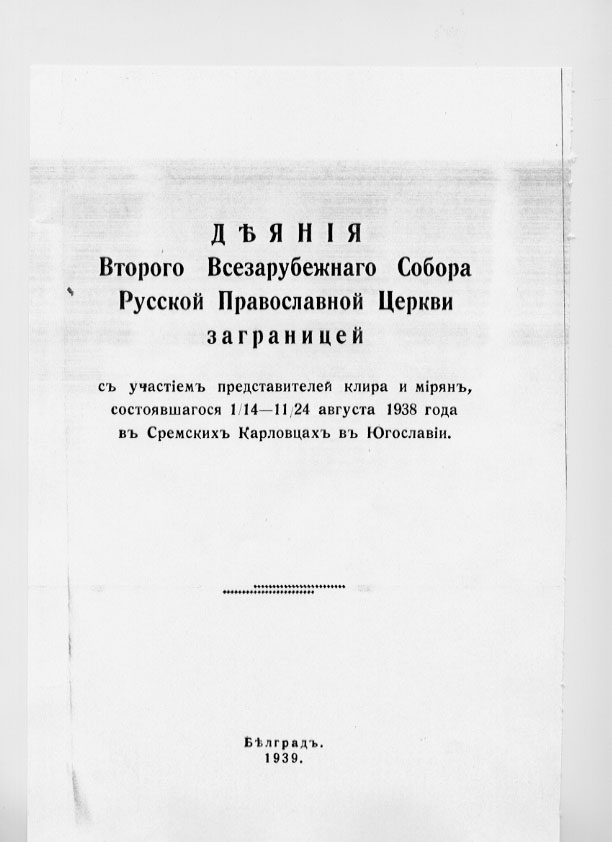
2. "ДЕЯНИЯ ВТОРОГО ВСЕЗАРУБЕЖНОГО СОБОРА РПЦЗ в 1938 г."
3. "ONE UNWORTHY ROCA PRIEST’S OPINION" Fr. Seraphim Stephens
4. "А НАС-ТО УПРЕКАЛИ В ЗЛОМ УМЫСЛЕ.." Протодиакон Др. Герман Иванов-Тринадцатый
5. "A DOGMATIC-CANONICAL ANALYSIS OF THE ROCOR-MP UNIA". Dr. Vladimir Moss.
* * *
Much-esteemed readers of the bulletin “Fidelity”!
I received a letter today from His Eminence, Bishop Daniel. I consider it my duty to share this letter with the readers of “Fidelity”.
It is imperative to add that the “Epistle” to which Vladika refers, was not approved by the publishing board of “Fidelity”, which is an official organ of the Society of The Most Blessed Metropolitan Anthony. It is extremely sorrowful that this essentially self-willed action, by two former members of our “Society”, has misled not only Bishop Daniel, but also many members of the clergy of ROCOR, as well as lay people.
Valentin Scheglovski
Translation from Russian: (See "Fidelity" No. 41)
* * *
RUSSIAN ORTHODOX CHURCH ABROAD
DANIEL, BISHOP OF ERIE
246 East Second Street
Erie, Pennsylvania 16507 TEL: (814)452-0845
March 24, 2006
TO: Mr. V. Scheglovski
Recently I received the text of the “Epistle to the faithful children of the Russian Orthodox Church Abroad to the Fourth Pan-abroad Sobor of ROCOR”, with the request to sign it, supposedly proceeding from the Committee of the Most Blessed Metropolitan Anthony. Having familiarized myself with the content of this “Epistle”, I found it impossible for me to sign it and was extremely surprised that writings of this sort are being disseminated on behalf of the Committee of the Most Blessed Metropolitan Anthony. Possibly some sort of misunderstanding lurks herein, or we are dealing with a simple forgery.
Comments on the “Epistle”
1. One must infer that “the loyal children of the ROCOR” means the laity. One can surmise from the content of the “Epistle” that it was composed by laity without the participation of clergy or hierarchs.
2. I am not certain that the time for our unification (and not “re-unification”, since we were never under the authority of the contemporary Moscow Patriarchate) has arrived, if such a unification is necessary at all.
3. I don’t consider the current separate existence of parts of the Russian Church to be an “unhealthy” phenomenon. On the contrary, I feel that we must thank God that He helped us to get away from the godless regime, thanks to which we have survived many decades safe from the godless persecutors. If the unification does not occur, then there will be two Russian Orthodox Churches. What is wrong with that? For there are many Greek churches! What is important is that they both be ORTHODOX.
4. It was sad to read that a new Pan-abroad Sobor is being planned, which will effect the self-dissolution of the ROCOR (that is the “self-annihilation” and even “suicide”), “leading to canonical subordination to the Moscow Patriarchate”. May God grant that it not come to this!
5. The documents which laid the beginning of the independence of ROCOR, speak of it as a “temporary” phenomenon. Who could have thought at the time, that this “temporary” phenomenon would exist for more than eighty years? To speak seriously now about the “temporality” of our situation is impossible. We cannot demand the gift of foresight from our founders. They did everything for the existence of our church in a condition of well-being, but they could not have known how long it would continue. Therefore, their thoughts about our independence being temporary, although understandable in the early 1920’s, do not represent, however, the essential part of these documents. These documents were providential in that they gave us the opportunity to establish our church life in emigree circumstances, for which we must thank God and the divinely-wise fathers who gave us this independence. Having become independent (it’s not important under what circumstances) we are not obliged to subordinate ourselves to ANYONE, and must only watch that we use that independence for the good of the Church, that is for the spiritual benefit of the souls of our flock.
6. The proceeding content of the “Epistle” does not yield any basis for optimistic hopes. And it is not surprising: how could that church authority (Moscow Patriarchate), which for so many years had been under complete subservience to the Soviet regime (including the current Patriarch), suddenly change in such a way as to earn our trust, to the extent that we would agree to complete subjugation by it. Even lay people have the right to choose their own spiritual father, yet they want to force our church, through coercion to submit to a church authority which does not have our trust.
7. There are people, who in the event of unification, wish to “negotiate” favorable terms of “autonomy” for our church. That is not what we need. For us it would be better for now not to think of any “unification” whatsoever. We have independence, that is, de facto autocephaly, something greater that any autonomy, and therefore we have no need for any autonomy.
8. Schism. This word has various meanings, which are often confused. As a canonical term, schism means separation from the Orthodox Church because of differences of opinion, not on the primary tenets of dogma, but on secondary ones. Deviations from the correct faith include: 1. Heresy – incorrect teaching on important issues of the faith; 2. Schism – deviation from the correct faith because of less essential issues, and 3. conventicles – an unlawful assembly which does not violate the faith (St. Basil the Great, first canon). Often this term is used (not quite correctly) to signify any division, with quite a negative shade of meaning, and sometimes it is purely denunciatory. The Church Abroad does not fit into any of these categories, even the “unauthorized assembly”, since it became independent not by its own will, but by the blessing of the indisputably lawful head of the Russian Church, Patriarch Tikhon. At that time no one could have anticipated that our existence away from the homeland could last more than eighty year. If changes for the better would occur now in Russia, then glory be to God, but that does not mean that everything has been set aright and that we must subordinate ourselves to the current church authority in Russia. The word “schism” has become a denunciatory word from which one cannot draw canonical conclusions. Therefore we should not fear that we are accused of “schism”, when we refuse to subordinate ourselves to the Moscow Patriarchate. In that case the “schism” will merely be name-calling, and it is known that names can never hurt us. Therefore I am surprised by exclamations in the “Epistle” such as “There can be no talk of independence from the Moscow Patriarchate!” and “We, the faithful children of the Russian Orthodox Church Abroad do not want to be schismatics!” We have not been under subjection to anyone for more than eighty years, and during that time have adapted to an independent existence. To reject this is very dangerous for we could jump from the frying pan into the fire, or rather directly into the flames which burn even without fire, from which we must save ourselves. Our church life proceeds in a normal fashion and as the saying goes, one does not seek good when all is well already.
9. The statements regarding actions not envisaged in the founding documents of the Church Abroad, that they must be viewed as a “schism” are strange. This steers us far from the patristic explanation of the meaning of the word “schism” and only obscures the matter. It is clear that in the 1920’s, church authorities in Russia could not have had an understanding of all the problems which the emigree church could potentially face. Therefore, we were forced to resolve these issues independently. And self-sufficiency and independence are essentially one and the same thing.
10. The “unhealthy” division of the Russian Church – a division did not take place on our initiative. Now we must recognize it and not dream about what could have been. First of all, we must be thankful to the Lord God, that he gave us an opportunity to live a church life outside of our homeland, at a time when it was enslaved by godless communism. Now there is no communist authority, but much of its “heritage” remains, which will require many years to die out. Even though our church was founded as a temporary entity, we cannot be certain that our unification with the Moscow Patriarchate can be desirable or possible. What must we do then? Since our church has independence, we must think how to use it to the good of the Church, that is to satisfy the spiritual needs of our sheep, and not to please church representatives of the other side. It is to no avail that they attempt to gain our sympathy by speaking about the “woeful” situation of our church. Indeed, our church in the homeland was in a woeful state during the reign of the Soviet regime, while we, who were outside her borders did not experience that, for which we must thank the Lord God.
11. If we have individuals among either the clerical or lay bodies, who want to belong to the Moscow Patriarchate no matter what, then this can be accomplished easily – they should simply leave us and join it (obviously without church property and without the flock).
12. The Orthodox Church consists of a large number of independent churches. That number was never an issue of dogma (unlike the Roman Catholics who recognize only one church – the Roman church, to which supposedly all others must be subject). Therefore it is no problem if our church will be independent and there will be not one but two Russian churches. What is important, is that they both confess the one Orthodox Faith. In this case relations between them must be amicable.
13. Further in the “Epistle” there is discussion of one Chalice, that is liturgical intercommunion, as though it were a nearly accomplished act. “If there will be one Chalice in the Russian Church, then there must be one hierarchy” – that is the Moscow Patriarchate. The word “hierarchy” implies, evidently, hierarchical subjugation. Other Orthodox churches were in liturgical communion amongst themselves, yet were not subject one unto another. Evidently the author of the “Epistle” is not well versed in the topic about which he writes. In speaking about our need to have one hierarchy, the Moscow Patriarchate, he exclaims, “There is no other path for the ROCOR!” Why? Speaking about concelebration with the Moscow Patriarchate clergy, one must bear in mind that first one must examine whether they have concelebrated with non-Orthodox clergy, as is practiced among ecumenists. If they have concelebrated, then for us to concelebrate with them is the same as concelebrating with Protestants and other sectarians. If we concelebrate with them, then we will cast doubt over the validity of our own consecrations. Who needs that?
14. What is said further, up to the very end of the “Epistle” contradicts the optimistic hopes expressed in the beginning of the “Epistle”, that supposedly the time for our unification has arrived. We quote next from the “Epistle”: “It is evident, that the obstacle separating the Russian church has not been overcome, and the Moscow Patriarchate is not ready yet to join with the Russian Orthodox Church Abroad.”
We will add on our own behalf: And maybe henceforth it will not be ready. That is not within our power. We, however, must fulfill our duty as best we can and treat another part of the Russian Church, which finds itself in different circumstances, with good will. Perhaps, with time, this will lead, if not to unification, but at least to reconciliation between us.
Bishop Daniel
* * *
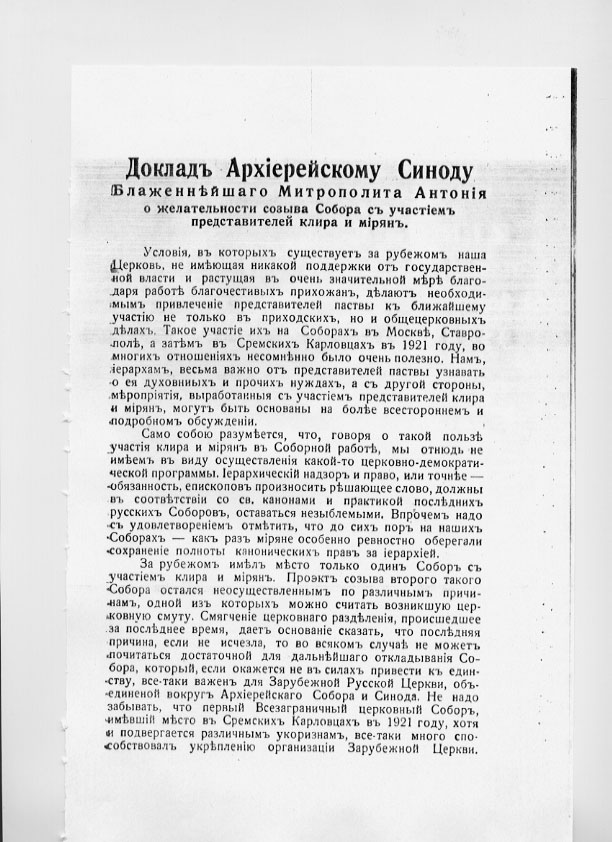
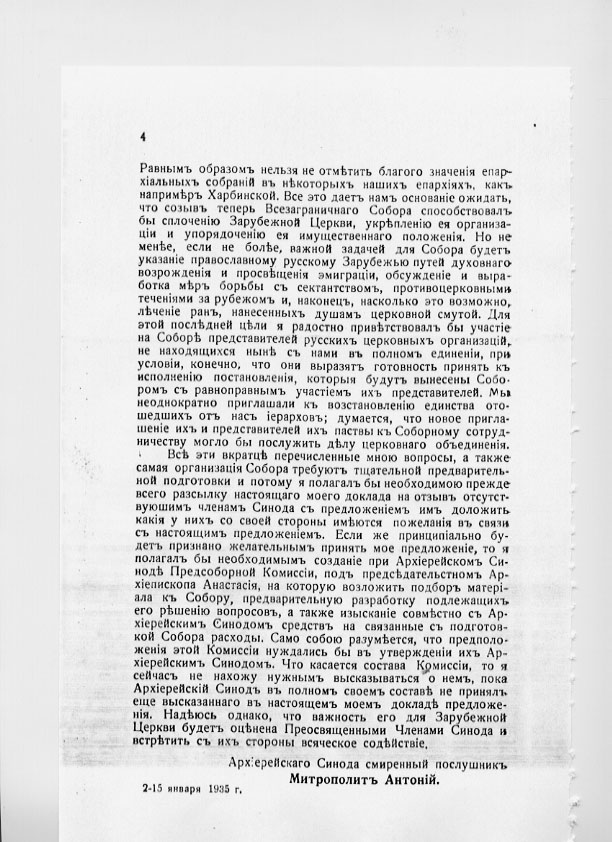
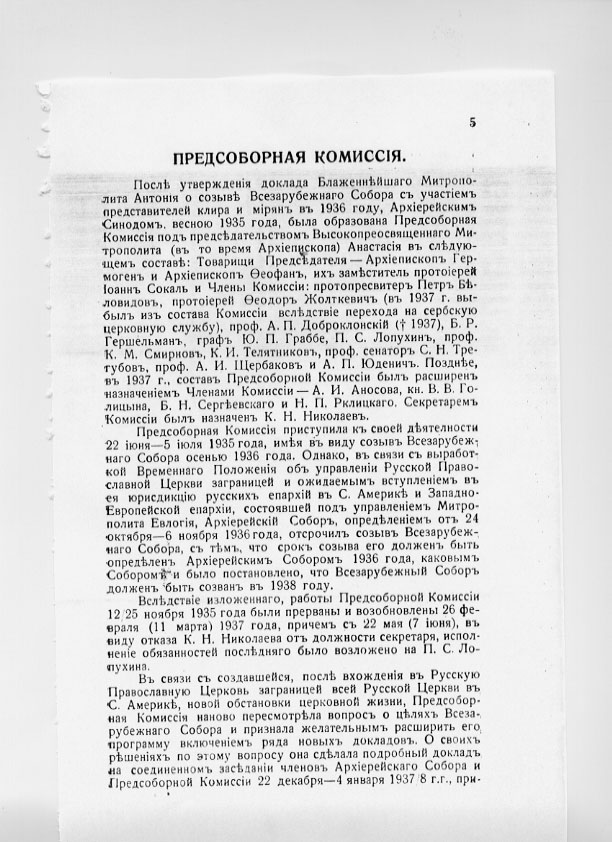
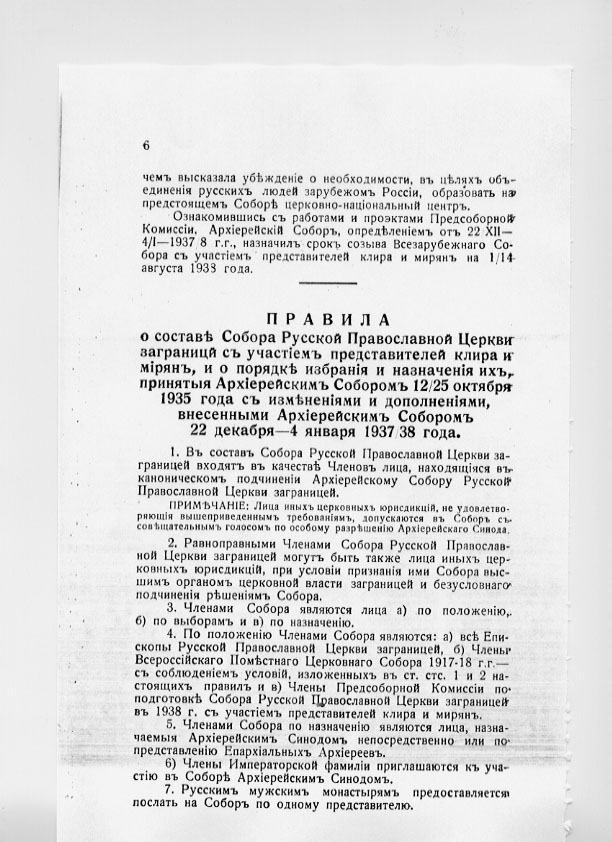
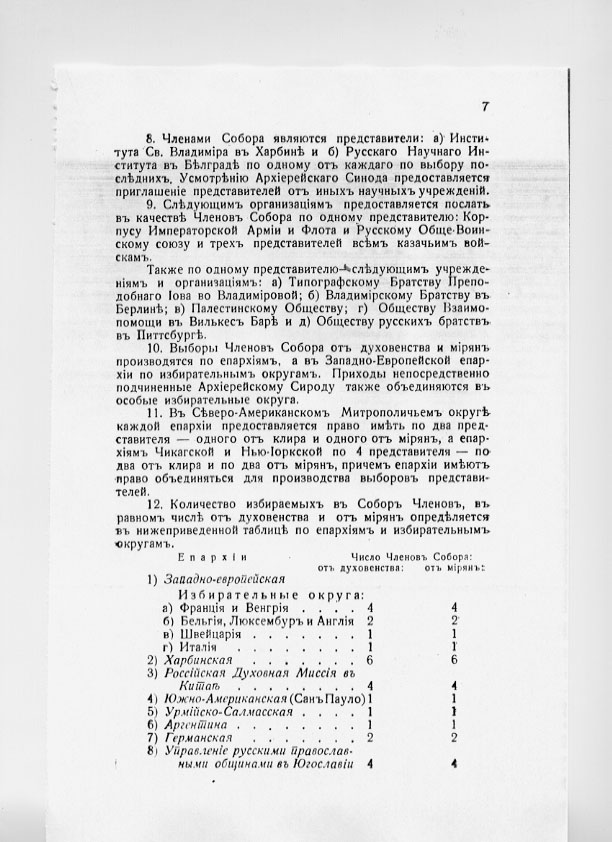
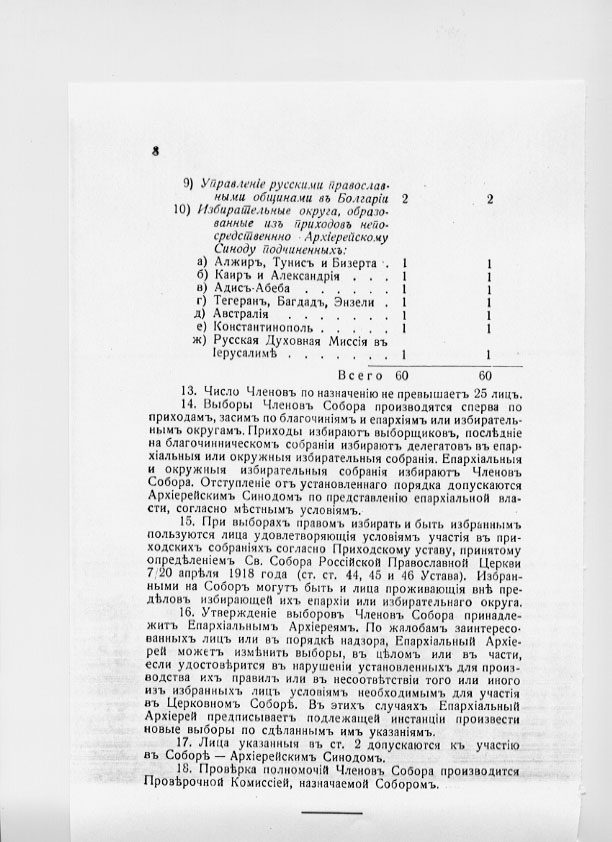
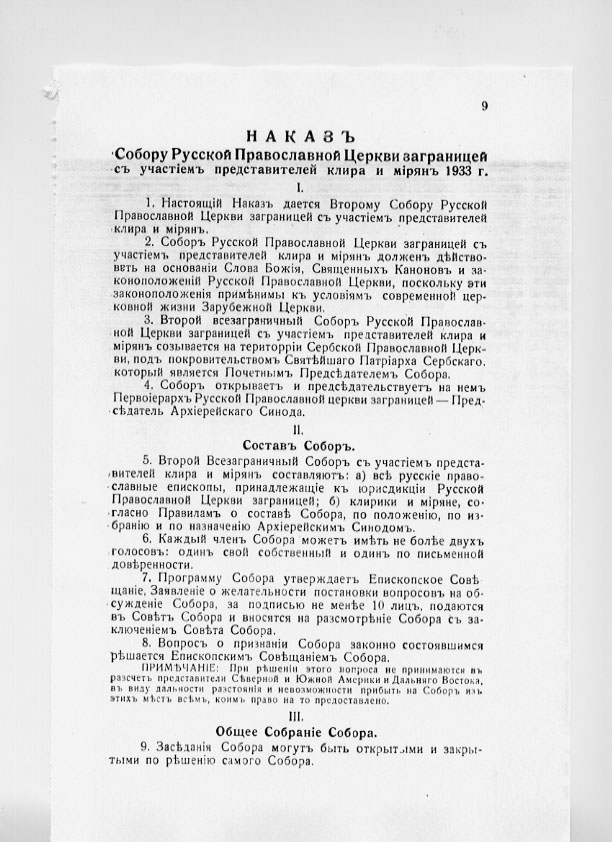
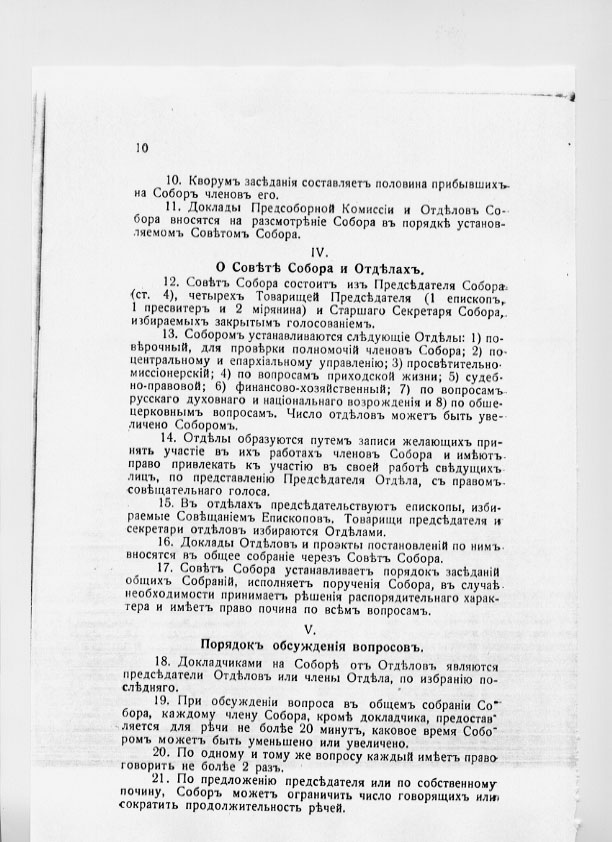
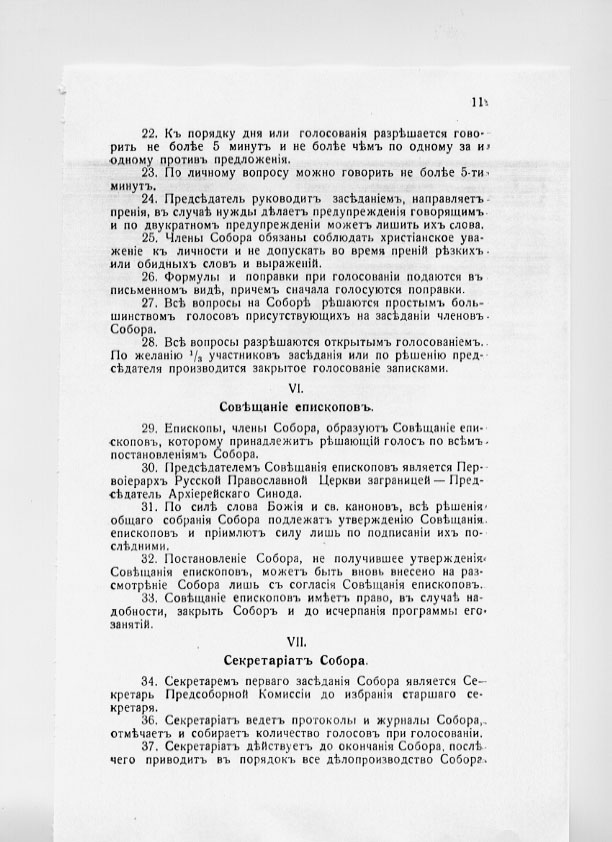
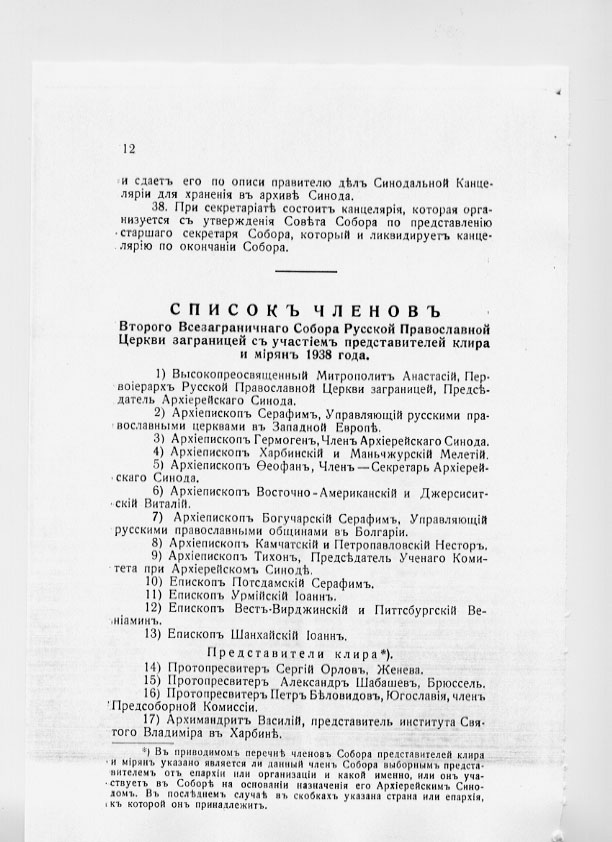
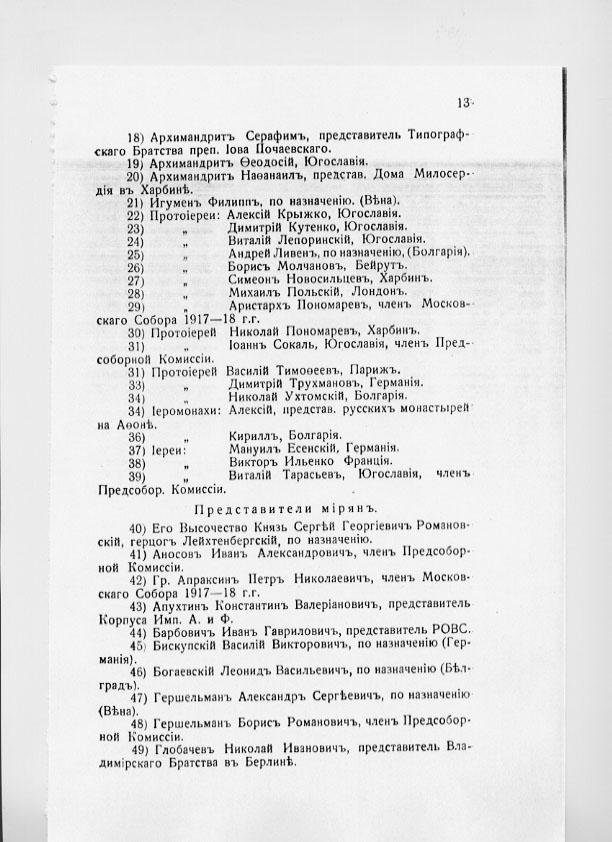
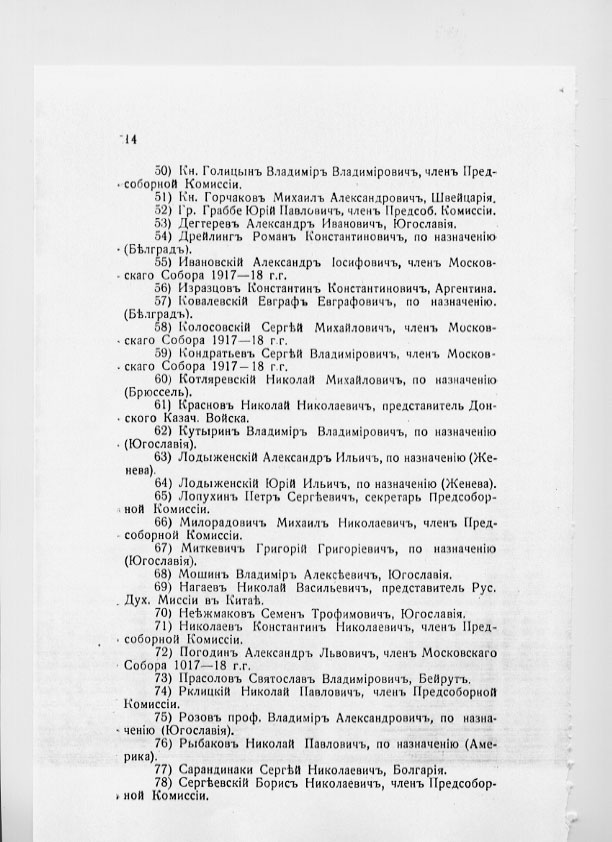
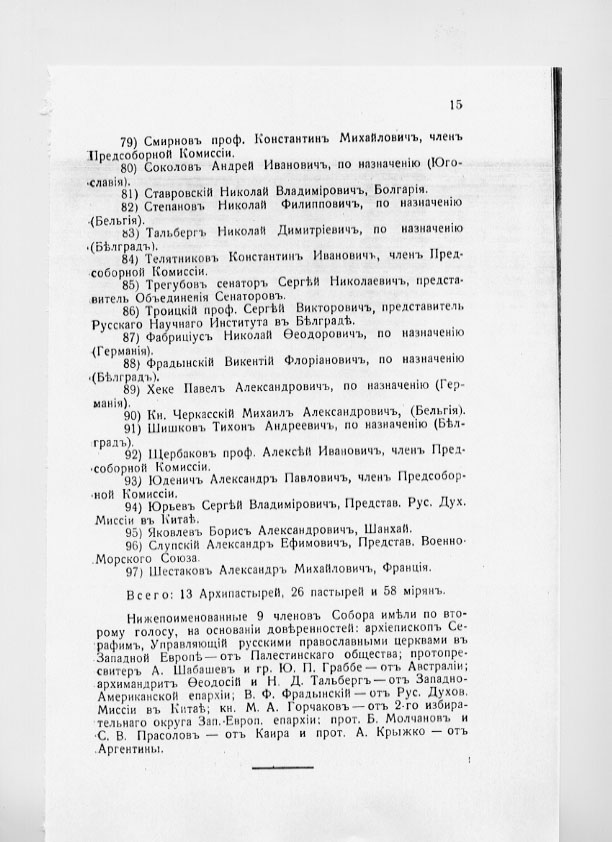
(Продолжение следует)
* * *
ONE UNWORTHY ROCA PRIEST’S OPINION
Fr. Seraphim Stephens, April1/March 19, 2006
Praise God—I don’t want to fight with the brotherhood of clergy in the Church Abroad, but I also am not going to stand for “one-sidedness” as the only acceptable position one is allowed to take. I love the Church Abroad and have suffered hours, if not years, over this business of union with the MP’s. I have not heard YET a single argument that has changed my mind. I do want union of the Orthodox Churches—all Orthodox Churches—not just the Russian—but not at the expense of arbitrarily sweeping lies and murder under the carpet and acting like it never happened. We have 80+ million martyrs murdered under the auspices of a godless soviet state with the direct collaboration of the MP’s—which I still believe to have been created illegally and non-Canonically. Our Synod repeatedly condemned the election of Patriarchs from sergius through alexii II—all of them alive and well in MY LIFETIME!!—others, like St. Tikhon of Moscow and St. Peter of Krutitsa and St. Joseph of Petrograd may have lived into my lifetime had they not been collaboratively murdered by the soviets and the MP!!!
I was born before WW II and therefore spent all of my life with the soviets looming murderously over the world. My childhood was spent fearing nuclear attacks and bomb-shelters and atomic bomb drills in school. Fire drills scared me, but bomb drills terrorized me. For the past 10-12 years those old fears of distrust, lying and murder have come back to mind. I have been a perpetual student of history, particularly recent history (I teach US History right now in the public schools). I cannot dismiss the fact that alexii II was a collaborator with the godless regime who should have stepped down as “patriarch” IN IGNOMINIOUS DISGRACE as soon as the godless regime fell. But now there is the potential that I will be called on to commemorate this vile man as patriarch and will use the Myrom he blesses to bring “new life” to those coming to the Lord. This seems to be hypocrisy to me. How can a murderer of life bless anything that brings life?
And how about the canonicity of 3 “canoncical” Russian jurisdictions on the same soil? I cannot fathom the thought that a Metropolia priest could walk into my church and expect to serve in our Altar after the offensive, obnoxious, contemptuous, filth launched in our direction by them. Their corruption has become a matter of public record with kondratick and theodosius incriminated for being thieves, not to mention the scornful disdain from herman against our Church Abroad. Here in Tidewater/Hampton Roads Virginia the metropolia priest is a teacher at the Hindu pagan hell-hole in Buchanan County Virginia—absolute blasphemy, not to mention the fact that he and a Serb chaplain got in a verbal cursing match in front of the entire congregation because he didn’t want to give the Serb chaplain’s father communion anymore because he was Alzheimered! Also, that theosophist had to walk with a cane on Sunday mornings because he was drunk and staggering—and he had the brazenfaced nerve to call our parish “non-Canonical” to a group of Bible-thumping Regent University (Pat Robertson) students! NO THANKS! They are balony-peddlers!!!
And, how can we hug-and-kiss the patriarchal parishes in the USA/Canada? Sergianist/ecumenist/modernist!!!!!!!!!! NO WAY!
I love the Russian Orthodox Church Abroad. I love the Russian Orthodox people of Russia. I love the Russian Orthodox Free Church of Russia (we’ve slapped them right in the face). I love the suffering and persecuted Russian Orthodox Church. I love the Russian culture-----------but I also love the United States of America. The Church Abroad is MY MOTHER CHURCH—not the MP. Every penny spent and every square inch built at St. Joseph of Optina Russian Orthodox Church ABROAD was paid for and built by American earned money. The MP’s do not in any-way-shape-or-form have any past, present or future ownership rights to this Church! The MP’s, the Patriarchal folks and the Metropolia are invited to convert to the TRUTH of the CHURCH ABROAD—I WOULD WELCOME THEM. BUT I DO NOT WANT THEM ON OUR PROPERTY DEFILING IT UNTIL THEY GET THEIR HERESIES, MURDER CONSPIRACIES AND FALSEHOODS STRAIGHT.
I may be labeled a strident fanatic—but I don’t see myself that way. I see myself as adhering to TRUTH that brought me into the Church Abroad in the first place. I have not altered my beliefs as taught by the Church Abroad and represented by such wonderful and saintly hierarchs as Vladyka’s Philaret, Anastasy, Averky, St. John, Anthony (Khrapovitsky), Vitaly (Maximenko)—and Frs. Pomozansky, Florovsky, Slobotskoy—and all of the present-day Confessors of the TRUTH like some of our senior Priests, i.e. Mitered Protopresbyter Valery Lukianov—are we just going to hang all of these people up by their ankles, riddle their bodies with fiery-darts until they vanish?????????
I pray to the Lord our God, through the intercessions of the Holy New Martyrs of Russia, All Saints of North America, The Optina Elders and St. Joseph of Optina that the IV All-Diaspora Sobor and the subsequent meeting of the Sobor of Bishops of the Russian Orthodox Church Abroad will see the light of TRUTH uncompromisingly and restore peace to the Church Abroad!
* * *
А нас-то упрекали в злом умысле...
Протодиакон Др. Герман Иванов-Тринадцатый
Совершенно безполезно, и до некоторой степени по-детски несерьёзно, сегодня, 5-6 лет спустя, трубить о том, что мы, мол, были правы... Отгораживаясь сами от проводимого “нового курса” сближения и слияния с МП, и призывая других не участвовать в предательстве нашей Церкви и всего Её 85-летнего стояния и свидетельства Истины, чего только мы не слышали и в чём нас не упрекали! Но самое удивительное, что по сей день встречаются ещё простаки будто убеждённые, что лучшая манера – если не единственная – защищать РПЦЗ это покорно оставаться в Ньюиоркском Сvноде! Понятно, что в обстановке, когда находятся такие “интеллектуалы-богословы” для усыпления совести и способностей суждения клира и паствы, то зачинщикам предательства, перехватившим власть в Синоде, нечего и стесняться. А по мере того, как приближаемся к роковой дате так называмого “Всезарубежного Собора”, на самом деле они всё меньше стесняются и даже, можно сказать, полностью распоясались.
Нам только на днях стало известно одно такое безобразие, совершенно незаметно прошедшее, имевшее место в особо дорогом нам и каждому истинно-русскому человеку, брюссельском Храме-Памятнике, воздвигнутом русскими эмигрантами в память Святого Царя-Мученика Николая и всех Русских людей, богоборческой властью в смуте убиенных, на собранные по копейкам со всего свободного мира средства.
Патриарх Иерусалимский Дамиан, пожертвовал частицу Животворящего Древа, с Афонской горы было пожертвовано 12 частиц святых мощей, Св. Патриарх Сербский Варнава, ставший Почётным Председателем Строительного Комитета издал грамоту 18/31 авг. 1933 г.: “Пусть же помогут скорейшему завершению постройки своими добровольными жертвами все русские, коим дорога память Своего Царя и миллионов замученных вместе с ним русских людей, и все православные славяне, которые не забыли ещё того, чем обязаны они русскому народу и его последнему Царю-Мученику Николаю Второму”. Генерал-лейтенант М. К. Дитерихс, принимавший близкое участие в расследовании злодейского убийства Царской Семьи и спасший, что мог собрать от обгоревших мученических мощей, писал : “Я сделаю всё возможное, дабы вызвать приток жертвенности на это святое историческое дело... Бог ведает, придётся ли нам сооружать таковой на своей родной территории, а поэтому для потомства мы обязаны это сделать теперь же, на чужбине… Только стоя перед остатками этого ужасного костра-пепелища в глухом углу Коптяковского леса, почувствовал я в полной мере весь тот страшный, кошмарный, непрощаемый грех нас всех, который мы совершили в1917 году. И не только перед этими безвинными Августейшими Мучениками, но и перед всей великой прошлой историей России”. Всех приветствий и пожертвований не пересказать в этой статье. Строительный Комитет, состоящий под августейшим покровительством родной сестры Государя, Великой Княгини Ксении Александровны, скрупулёзно издавал нескончаемые умилительные списки жертвователей – безымянные, титулованные, доблестные военные, воинские и общественные организации, приходы, – каждый долгом считал внести свою посильную лепту, несмотря на материально особо тяжёлые 30-ые годы.
Храм-Памятник был, как бы искупительной свечой, зажжённой от имени всей нашей Белой Эмиграции, немного на подобие того, как знаменитый игумен Даниил в 1106 году ”оть всея Руськыя земля” поставил лампаду свою на святом Гробе Господнем.
Необходимо было напомнить, с какой целью и как зарождался Храм-Памятник, чтобы понять чем он для нас является и почему так за него боролись с самого начала церковной смуты – не допустить, чтобы эта святыня попала в нечестивые руки.
Увы, храм потерян и не будем здесь разбирать все причины столь печального исхода нашей борьбы.
Зато, какими только приёмами не стыдились пользоваться победившие сторонники “нового курса”, говоря о тех, кто пытался удержать храм и не дать его на поругание, что это “горстка экстремистов, фантазирующих насчёт воссоединения РПЦЗ с МП”. Это уже не “интернетовская болтовня”, а официальные доводы, представляемые в письменной форме в суд. Сегодня, думаем, каждый способен дать оценку, на чьей стороне были вымыслы и фантазии, явная ложь и глупость.
Итак, – что имело место, какой скандал произошёл ?
13 ноября 2005 г., новой администрацией прихода было задумано праздновать 75-летие храма. Вернее было бы сказать 75-летие замысла. И по этому случаю, за два дня до этого состоялись доклады и концерт, а в воскресенье – Божественная Литургия возглавленная верным учеником вл. Марка, епископом Агапитом, под чей омофор перешёл брюссельский собор. А среди почётных приглашённых, как следовало ожидать и против чего столько лет мы боролись, советский – т.е. РФ – посол и советский местный патриархийный архиепископ, Вл. Симон, стоявший в алтаре и которого поминали на Великом Входе...
Будучи профессиональным дипломатом, известно какую школу прошёл посол и, какой богоотступный режим он представлял и защищал в течении долгих лет. Проявил ли он какое-либо покаяние после распада СССР? Поскольку архиереи не нашли нужным каяться, было бы странным, чтобы посол испытал такую нравственную потребность. Что касается присутствия Вл. Симона, то скандал и возмущение удесятеряются: его присутствие в Храме-Памятнике, посвящённом Св. Царю-Мученику, чью святость он открыто оспаривал ещё 10 лет после падения богоборческого режима, делает его присутствие в алтаре настоящим кощунством. Как низко пали новые хозяева Храма-Памятника, чтобы так глумиться над святым делом своих предшественников. Не только лгали в том, что никакого сближения с МП не преследуют, но отлично знали думы своих приглашённых, штатского и церковного. Когда в 2000 г. московский собор вынужден был “прославить” Царскую Семью, то “SOP” – официальный православный орган печати – писал, что “это решение не было единодушно принято. Так, архиепископ Симон, возглавляющий епархию МП в Бельгии, в своём выступлении перед Собором высказался против этой канонизации. Заявляя, что он высказывается, как “представитель православных Запада” он сказал, что это будет “политическим актом”, который “не будет понят” за границами России” (SOP N°251, сентябрь-октябрь 2000 г.).
Вот какого человека, в присутствии нашей Одигитрии, Курско-Коренной Иконы, поминали в храме и впустили в тот самый алтарь, в котором служили и проповедовали в Дни Скорби такие столпы Церкви, как Митрополиты Анастасий и Филарет, Св. Иоанн Шанхайский, Архиепископ Антоний Женевский и много, много других.
Являлся ли случай в Брюсселе досадной ошибкой, плодом заблуждения неопытного руководства ? Увы, никак нет, а скорее нормой поведения. “Горбатого могила исправит” – гласит пословица. А что исправит руководство РПЦЗ(Л) ? Трудно поверить, что попытка захвата Ниццкого собора не открыла им глаза и не затронула совесть. Приехавший на недавно на 75-летний юбилей патриархийного храма в Париже, митрополит Кирилл Гундяев был огорчён, что глава евлогианской архиепископии распорядился не открывать ему дверей храма на знаменитом кладбище Сент Женевьев де Буа, где он вероятно хотел “почтить память” Белых воинов, сражавшихся с большевиками. Зато, Вл. Марк прибыл в Париж на аудиенцию к тому самому Кириллу Гундяеву, с которым не так давно он отказывался разговаривать. После празднеств в Париже, митрополит Кирилл прямо отправился в Бразилию на IX Генеральную Ассамблею ВСЦ. Кто знает – на следующую экуменическую сходку поедет в сопровождении Вл. Марка? В этот раз “зарубежный святитель” был занят: должен был принимать в синодальном здании, всё в присутствии Святой Иконы, своих патриархийных коллег и будущих начальников.
А может ли кто сомневаться в том, что советских архиереев поминали в синодальном храме, даже если это умолчано в официальном объявлении ?
«Кто Бога не боится, тот и людей не стыдится».
Наша Страна, № 2792.
* * *
A DOGMATIC-CANONICAL ANALYSIS OF THE ROCOR-MP UNIA
Dr. Vladimir Moss.
May Satan not seize me, and tear me from Thy hand and fold.
Morning Prayers.
O Lord Who didst send down Thy Most Holy Spirit at the Third Hour upon Thine Apostles, take not Him, O Good One, from us…
Prayer of the Third Hour.
St. Gregory the Theologian said: not every ecclesiastical union is pleasing to God, and an honourable war is preferable to a shameful peace. In the political sphere this is well understood: the Munich agreement between Chamberlain and Hitler in 1938 has gone down in the annals of history as an example of a shameful peace that not only did not remove the threat of war, but made the war, when it came, much more costly than it would have been if the courageous and honourable course had been chosen at the beginning. If this is fully understandable in the political sphere, why is it so difficult to understand in the spiritual sphere, where so much more is at stake, where a dishonourable peace with a spiritual enemy leads not to the killing of bodies, but to the eternal death of thousands of souls? The answer is: because men have ceased to think spiritually, but instead are ruled by carnal categories, fallen emotions. And so the Lord says of them: “My Spirit will not always remain with these men, because they are carnal” (Genesis 6.4).
The proposed unia between ROCOR and the MP is a clear example of an ecclesiastical union propelled not by spiritual thinking, not by the overcoming of dogmatic and canonical obstacles through repentance and spiritual love, but first of all, by political and economic interests – the interests of the KGB leadership of the Russian Federation, which has been driving this unia from the beginning, and then by fallen emotions masquerading as spiritual motives – love of Russia (but which Russia do they love – Holy Rus’ or the neo-Soviet Russia of Putin?), and fear of isolation from the rest of Orthodoxy (but which Orthodoxy do they fear to be separated from – the KGB/Masonic/Ecumenist “Orthodoxy” of the World Council of Churches, or the True Orthodoxy of the Holy New Martyrs of Russia?).
This article seeks to examine the dogmatic and canonical obstacles that remain in the path of any honourable Church unia. It should be noted at the outset that, far from these barriers decreasing with time, they have actually increased since the original break in communion between ROCOR and Metropolitan Sergius’ MP in 1927. At that time only Sergianism separated the two. And yet Sergianism alone was enough to create the biggest schism in the Orthodox Church since 1054. Now there is also Ecumenism, to mention only the most important and intractable of all the obstacles…
I. Sergianism.
The nature of Sergianism is often misunderstood. In essence it is the sin of Judas. Judas was one of the closest disciples of Christ, who, having lost faith in the Divinity of His Teacher and in the ultimate victory of truth over falsehood, chose to betray Christ in exchange for thirty pieces of silver and immunity from persecution. Metropolitan Sergius did essentially the same through his Declaration of 1927. In exchange for some material benefits and immunity from persecution (he died in his bed), he betrayed Christ by identifying the interests of the Church with the interests of the God-hating Bolsheviks, whom the Church itself had anathematized in 1918. He did this not in word only (through his Declaration), but in deed also, by deposing his fellow-hierarchs who resisted him, and by labelling them as “counter-revolutionaries” – the equivalent of a death-sentence in the USSR.
It is sometimes argued that Sergius was justified because, as he himself put it, he was “saving the Church” by his actions. The idea that the Church, “the pillar and ground of the Truth” (I Timothy 3.15), to which the Lord has promised that it would “prevail against the gates of hell” (Matthew 16.18), needs to be saved by the lies of sinful men is in itself a fearsome heresy, a denial, as several Catacomb Hieromartyrs pointed out, of the One, Holy, Catholic and Apostolic Church. But in any case, Sergius saved nobody but himself (and that only in this temporal life). After most of the confessors of the Catacomb Church had been imprisoned or shot in the early 1930s, the majority of those who followed Sergius were imprisoned or shot in the late 1930s. By the beginning of the Second World War, there were only four sergianist bishops at liberty in the whole of the Soviet Union, most of the churches and monasteries had been destroyed, and the sergianist church presented a picture of complete moral and material devastation.
Another argument offered in defence of Sergianism is that similar compromises were made in the past by Orthodox hierarchs – in particular, by the Greeks under Turkish rule. But this is a slander against the Greek Orthodox. Were the Greek hierarchs, as a condition of the free functioning of their church administration, compelled to accept Islam and work for the triumph of Islam throughout the world? They were not. And yet Sergius and his followers welcomed the revolution, condemned its enemies and worked tirelessly in the interests of the world revolution.
Here is a variant on this argument: “Sergianism is supposed to be a violation of the 30th Apostolic Canon: ‘If a bishop, using secular authorities, receives through them Episcopal power in the Church: let him be deposed and excommunicated, and all those who commune with him.’ However, many Orthodox bishops received their power in this way, including very many in the pre-revolutionary Russian Church. Therefore they, too, were Sergianists by your reasoning. But they are not; so neither is Sergius.”
This argument ignores the vast difference between the secular authorities before and after the revolution, and between the ways in which these authorities worked. Before the revolution, the authorities were Orthodox and were genuinely interested in the flourishing of the Orthodox Church. While there were isolated cases in which the authorities imposed their will unjustly on the Church (for example, in the deposition of St. Arseny of Rostov), these were exceptions rather than the rule, and in general they did not prevent the promotion of pious and right-believing men to administer the Church. After the revolution, however, the “authorities” were not only not Orthodox, but anti-Orthodox and excommunicated from the Church; and they did everything in their power to impose unsuitable – that is, pro-communist - candidates for the episcopate. If, up to 1927, the bishops successfully resisted this pressure, after Sergius’ declaration (more precisely: from the time Sergius formed his first Synod in May, 1927) the resistance disappeared, and the way was open for complete domination of the Church by the antichristian authorities.
A much closer parallel to Sergianism, which the Sergianists do not like to admit, is with the renovationists who seized power in the Russian Church in 1922 on a pro-communist platform, and were anathematized by Patriarch Tikhon in 1923. In 1937 St. Cyril, Metropolitan of Kazan spoke about “the renovationist nature of Sergianism”[1]. It follows that Sergius himself, who, together with the second Soviet “patriarch”, Alexis, was a former renovationist, and had therefore already once fallen away from the Church, fell away a second time into essentially the same mortal sin.
The essential identity of renovationism and Sergianism is indicated by the fact that, after Sergius’ pact with Stalin in 1943, almost the whole of the renovationist “church” poured, without repentance, into the sergianist church in order to make up the latter’s depleted ranks.
Thus on October 12, 1943 Karpov, the KGB head of the Soviets’ Council for the Affairs of the Orthodox Church, wrote to Stalin and Molotov: “The renovationist movement earlier played a constructive role but in recent years has lost its significance and base of support. On this basis, and taking into account the patriotic stance of the Sergiite church, the Council for Russian Orthodox Church Affairs has decided not to prevent the dissolution of the renovationist church and the transfer of the renovationist clergy and parishes to the patriarchal, Sergiite church.” On October 16 Karpov sent secret instructions to the regions not to hinder the transfer of renovationists to the Sergianist church. [2]
Since Karpov wanted the renovationists to join the state church, the rules for their reception were relaxed. Thus in 1944 Metropolitan Alexis (Simansky), the future patriarch, severely upbraided Bishop Manuel (Lemeshevsky) for forcing “venerable” renovationist protopriests to “turn somersaults”, i.e. repent, before the people, in accordance with Patriarch Tikhon’s rules.[3]
As Roslof writes: “The relaxation of rules by the patriarchate reflected the needs of both church and state. The patriarchal synod had full backing from the government and expected to emerge as the sole central authority for the Orthodox Church. So it could afford to show mercy. At the same time, the patriarchate faced a scarcity of clergy to staff reopened parishes and to run the dioceses. Sergii’s bishops had problems finding priests for churches that had never closed. This shortage of clergy was compounded by the age and poor education of the candidates who were available. The patriarchate saw properly supervised red priests as part of the solution to the problem of filling vacant posts.”[4]
Another argument put forward in defence of the Sergianists is that this was a passing phenomenon dependent on the existence of Soviet power, which passed into history with the fall of the Soviet Union in 1991. This is a little like saying that after the death of Annas and Caiaphas, or the destruction of Jerusalem in 70 AD, the sin of Judas ceased to be a sin, and those who betrayed Christ were automatically exonerated! But sin is a spiritual phenomenon which is not expunged by external political changes, but can only be expunged by repentance.
“But the patriarch has repented!” the Sergianists declare - or rather, this is not said by the MP Sergianists, who see nothing to repent of in “Sergianism”, but by those defenders of the MP in ROCOR who are desperate to justify themselves. They point to an interview given in September, 1991 to 30 Dias, in which the patriarch said: “A church that has millions of faithful cannot go into the catacombs. The hierarchy of the church has taken the sin on their souls: the sin of silence and of lying for the good of the people in order that they not be completely removed from real life. In the government of the diocese and as head of the negotiations for the patriarchate of Moscow, I also had to cede one point in order to defend another. I ask pardon of God, I ask pardon, understanding and prayers of all those whom I harmed through the concessions, the silence, the forced passivity or the expressions of loyalty that the hierarchy may have manifested during that period”.[5]
This is closer to self-justification than repentance. It is similar to the statement of Metropolitan Nicholas (Corneanu) of Banat of the Romanian Patriarchate, who confessed that he had collaborated with the Securitate, the Romanian equivalent of the KGB, and had defrocked the priest Fr. Calciu for false political reasons, but nevertheless declared that if he had not made such compromises he would have been forced to abandon his post, “which in the conditions of the time would not have been good for the Church”. In other words, as Vladimir Kozyrev writes: “It means: ‘I dishonoured the Church and my Episcopal responsibility, I betrayed those whom I had to protect, I scandalized my flock. But all this I had to do for the good of the Church!’”[6]
In another interview in 1997 Patriarch Alexis said, referring to the Church in the time of Patriarch Tikhon: “The Church could not, did not have the right, to go into the catacombs. She remained together with the people and drank to the dregs the cup of sufferings that fell to its lot.”[7] Patriarch Alexis here forgot to mention that Patriarch Tikhon specifically blessed Michael Zhizhilenko, the future Hieromartyr Maximus of Serpukhov, to become a secret catacomb bishop if the pressure on the Church from the State became too great. As for his claim that the sergianists shared the cup of the people’s suffering, this must be counted as conscious hypocrisy. It is well known that the Soviet hierarchs lived a life of considerable luxury, while lifting not a finger for the Catacomb Christians and dissidents sent to torments and death in KGB prisons!
In its “Jubilee” Council of August, 2000 the MP approved a “social document” which, among other things, recognised that “the Church must refuse to obey the State” “if the authorities force the Orthodox believers to renounce Christ and His Church”. This was immediately seized on by supporters of the unia as “proof” that Sergianism had been repented of. However, on the very same page we find: “But even the persecuted Church is called to bear the persecutions patiently, not refusing loyalty to the State that persecutes it”.[8] We may infer from this that the MP still considers that its loyalty to the Soviet State was right and the resistance to it shown by the Catacomb Church was wrong. In fact, Sergianism as such was not mentioned in the document, much less repented of.
This is consistent with the fact that the MP has never in its entire history since 1943 shown anything other than a determination to serve whatever appears to be the strongest forces in the contemporary world. Until the fall of communism, that meant the communists. With the fall of communism, the MP was not at first sure whom she had to obey, but gradually assumed the character of a “populist” church, trying to satisfy the various factions within it (including nominally Orthodox political leaders) while preserving an appearance of unity.
In this connection Fathers Vladimir Savitsky, Valentine (Salomakh) and Nicholas Savchenko write: “The politics of ‘populism’ which the MP is conducting today is a new distortion of true Christianity. Today this politics (and the ideology standing behind it) is a continuation and development of ‘sergianism’, a metamorphosis of the very same disease. Today it seems to us that we have to speak about this at the top of our voices. Other problems, such as the heresy of ecumenism and ‘sergianism’ in the strict sense, while undoubtedly important, are of secondary importance by comparison with the main aim of the MP, which is to be an ‘all-people’ Church, In fact, in the ‘people’ (understood in a broad sense, including unbelievers and ‘eclectics’) there always have been those who are for ecumenism and those who are against. Therefore we see that the MP is ready at the same time to participate in the disgusting sin of ecumenism and to renounce it and even condemn it. It is exactly the same with ‘sergianism’ (understood as the dependence of the Church on the secular authorities). The MP will at the same time in words affirm its independence (insofar as there are those who are for this independence) and listen to every word of the authorities and follow them (not only because that is convenient, but also because it thus accepted in the ‘people’, and the authorities are ‘elected by the people’). In a word, it is necessary to condemn the very practice and ideology of the transformation of the MP into a Church ‘of all the people’.”[9]
This analysis has been confirmed by events since the former KGB Colonel Putin came to power in January, 2000. The MP has adopted a submissive role in relation to the neo-Soviet power, not protesting against the restoration of the red flag to the armed forces and approving the retention of the music of the Soviet national anthem. Nor does it discipline its priests who praise Stalin.
On November 9, 2001, the patriarch threw off the mask of repentance completely, stating in defence of Sergius’ Declaration: “This was a clever step by which Metropolitan Sergius tried to save the church and clergy. In declaring that the members of the Church want to see themselves as part of the motherland and want to share her joys and sorrows, he tried to show to those who were persecuting the church and who were destroying it that we, the children of the church, want to be loyal citizens so that the affiliation of people with the church would not place them outside the law.’[10]
There followed an official justification of Sergianism. Thus on July 18, 2002, the Moscow Synod ratified a document entitled “The relationships between the Russian Orthodox Church and the authorities in the 20s and 30s”, which declared: “The aim of normalising the relationship with the authorities cannot be interpreted as a betrayal of Church interests. It was adopted by the holy Patriarch Tikhon, and was also expressed in the so-called ‘Epistle of the Solovki Bishops’ in 1926, that is, one year before the publication of ‘The Epistle of the deputy patriarchal locum tenens and temporary patriarchal Synod’. The essence of the changes in the position of the hierarchy consisted in the fact that the Church, having refused to recognise the legitimacy of the new power established after the October revolution in 1917, as the power became stronger later, had to recognise it as a state power and establish bilateral relations with it. This position is not blameworthy; historically, the Church has more than once found herself in a situation in which it has had to cooperate with non-orthodox rulers (for instance, in the period of the Golden Horde or the Muslim Ottoman Empire).”[11]
However, as we have pointed out, Soviet power was very different from the Tatars or Ottomans, and “bilateral relations” with it, unlike with those powers, involved the betrayal of the Orthodox Faith and falling under the anathema of the Church. Moreover, if the Church at first refused to recognise Soviet power, but then (in 1927) began to recognise it, the question arises: which position was the correct one? There can be no question but that the position endorsed by the Russian Council of 1917-18 was the correct one, and that the Sergianist Moscow Patriarchate, by renouncing that position, betrayed the truth – and continues to betray it to the present day through its symbiotic relationship with a government that openly declares itself to be the heir of the Soviet State.
As recently as January 24, 2005 Metropolitan Cyril (Gundiaev) of Smolensk, head of the MP’s Department of Foreign Relations, confirmed that the MP does not condemn Sergianism: “We recognize that the model of Church-State relations [in the Soviet period] did not correspond to tradition. But we are not condemning those who realized this model, because there was no other way of preserving the Church. The Church behaved in the only way she could at that time. There was another path into the catacombs, but there could be no catacombs in the Soviet space…”[12]
In other words: “There is a wide path, the path of Sergianism; and there is a narrow path, the path of the Catacomb Church. We chose the wide path, and we will choose it again. There is ‘no space’ for the other path beside us…”
II. The New Martyrs
The problem of the New Martyrs is considered non-existent by many in the present debate. After all, has not the MP canonized the New Martyrs as ROCOR has? And if there are some differences in who they count as martyrs, what does that matter? They accept (almost) all our martyrs, so they think the same way we do. In any case, is this a dogmatic issue?
It is in the first place a canonical issue, but one that directly touches on dogmatic issues. The 20th canon of the Council of Gangra declares: “If anyone shall, from a presumptuous disposition, condemn and abhor the assembly [in honour of] the martyrs, or the services performed there, and the commemoration of them, let them be anathema….” For many years the MP fell under this anathema, ignoring the decree of the Council of 1917-18 on the commemoration of the holy new martyrs, rejecting and viciously slandering them as “political criminals” and denying the very existence of a persecution against Orthodoxy in the Soviet Union. Now, in the “Jubilee” Hierarchical Sobor that took place in August, 2000, it has attempted, it would seem, to rectify this disastrous error. To what extent has it succeeded?
The major problems here from the MP's point of view were the questions of the Royal Martyrs, on the one hand, and of the martyrs of the Catacomb Church who rejected Metropolitan Sergius, on the other. Non-royal martyrs killed before the schism with the Catacomb Church could be "safely" canonized. Thus in 1989, the MP canonized Patriarch Tikhon, and in 1992 it canonized three more martyrs and set up a commission to inquire into the martyrdom of the Royal Family, about which an MP publication wrote in 1998: “No less if not more dangerous as an ecclesiastical falsification is the MP’s Canonization Commission, headed by Metropolitan Juvenal (Poiarkov), which has suggested a compromise glorification of Tsar Nicholas Alexandrovich: ‘Yes, he was guilty of the tragedy on Khodynka field, he hobnobbed with Rasputin, he offended the workers, the country became backward. In general as a ruler of a state he was completely useless. Most important, he brought the country to revolution. But he suffered for Christ…’ Such a falsification will only continue that dirty stream of slander which the Christ-fighters began to pour out already long before 1917…”[13]
After nearly a decade of temporising, the MP finally, under pressure from its flock, glorified the Royal New Martyrs and many other martyrs of the Soviet yoke. The glorification of the Royal New Martyrs was a compromise decision, reflecting the very different attitudes towards them in the patriarchate. The Royal Martyrs were called “passion-bearers” rather than “martyrs”, and it was made clear that they were being glorified, not for the way in which they lived their lives, but for the meekness with which they faced their deaths. This allowed the anti-monarchists to feel that Nicholas was still the “bloody Nicholas” of Soviet mythology, and that it was “Citizen Romanov” rather than “Tsar Nicholas” who had been glorified - the man rather than the monarchical principle for which he stood.
This point will become clearer if we now turn to ROCOR’s canonisation of the Tsar in 1981, in which the Tsar’s feat is linked closely and explicitly with the position he occupied in the Christian State: “… The criminal murder of the Imperial Family was not merely an act of malice and falsehood, not merely an act of political reprisal directed against enemies, but was precisely an act principally of the spiritual annihilation of Russian Orthodoxy… The last tsar was murdered with his family precisely because he was a crowned ruler, the upholder of the splendid concept of the Orthodox state;he was murdered simply because he was an Orthodox tsar; he was murdered for his Orthodoxy!”[14]
Again: “The Tsar-Martyr, and his family as well, suffered for Christian piety. He was opposed to the amorality and godlessness of the communists, both on principle and by virtue of his position - on principle, because he was a deeply believing Orthodox Christian; by virtue of his position, because he was a staunch Orthodox Monarch. For this he was killed. To ask him anything concerning the faith was unnecessary, because he gave witness before the tormentors to his steadfastness in Christian principles by his entire previous life and works, and especially by his profoundly Christian endurance of the moral torments of his imprisonment. He was a staunch defender and protector of the Christian faith, preventing the God-haters from beginning a vicious persecution against believers in Christ and against the whole Orthodox Church. For this reason he was removed and slain...
"It is also known… that prior to the Revolution it was proposed that the Tsar repeal the strictures against anti-Christian secret societies, and it was threatened that if he refused he would lose his throne and his life. The sovereign firmly refused this proposal. Therefore, they deprived him of his throne and killed him. Thus, he suffered precisely for the faith."[15]
Protopriest Michael Ardov has examined another part of Metropolitan Juvenal’s report: “’In its approach to this subject, the Commission has striven that the glorification of the Royal Martyrs should be free from every political and other kind of time-serving. In connection with this it is necessary to stress that the canonisation of the Monarch can in no way be linked with monarchical ideology, and, moreover, does not signify the ‘canonisation’ of the monarchical form of government, in relation to which people’s attitudes may, of course, differ.’…
“Naïve supporters of the Moscow Patriarchate are in no way able to understand why the long-awaited glorification of his Majesty was carried out in such an unintelligible manner. I can suggest to those who are perplexed a completely satisfying explanation. In 1993, the superior of church ‘Nikola v Pyzhakh’, Protopriest Alexander Shargunov, placed a large icon of the Tsar Martyr in his church. Two days later he was phoned from the patriarchate and told to remove it, while the superior himself had to go to Chisty Pereulok [the headquarters of the MP] to sort out the question. There the secretary of the so-called Patriarch, the so-called Bishop Arsenius, had a talk with Shargunov. In a burst of sincerity the former declared: ‘We all, including the Patriarch, venerate Tsar Nicholas as a saint. But we cannot glorify him – both the communists and the democrats will rise up against us…’
“This phrase explains all the following events. Being in fear of the communists and the democrats, the ‘sergianists’ have for years dragged out the matter of the glorification of the Royal Martyrs. And the canonisation took place only now, in the year 2000, after the election of President Putin, when the chances of the communists returning to power have become zero – it is finally possible to stop fearing them. But the Patriarchate’s fear of the ‘democrats’ has remained, and has perhaps got even stronger. That is why, in the ‘Acts of the Jubilee Council’, they speak about the crime that took place in Ekaterinburg in 1918, but there is not a word about what took place in March, 1917. But we know: the Tsar-Martyr was forced to abdicate from the Throne, not by the Bolsheviks, not by Lenin and Sverdlov, but by the traitor-generals Alexeyev and Rutsky, by the conspirator-parliamentarians Rodzyanko and Guchkov - that is, by the ‘democrats’ of that time. And for fear of their last-born children, not a word was spoken about the ‘February revolution’ at the ‘Jubilee Council’…
“In his report, the ‘president of the synodal commission for the canonisation of the saints’, the so-called Metropolitan Juvenal said: ‘We have striven also to take into account the fact of the canonisation of the Royal Family by the Russian Church Abroad in 1981, which elicited a not unambiguous reaction both in the midst of the Russian emigration, some representatives of which did not see sufficient bases for it at that time, and in Russia herself…’…
“Again a hiatus. In fact in the Patriarchate itself the glorification of the Royal Martyrs and the whole host of Russian New Martyrs and Confessors elicited a reaction that was completely unambiguous: they decisively condemned the act of the Council of the Church Abroad and declared it to be a purely political act…”[16]
As regards the other martyrs, Sergius Kanaev writes: “In the report of the President of the Synodal Commission for the canonisation of the saints, Metropolitan Juvenal (Poiarkov), the criterion of holiness adopted… for Orthodox Christians who had suffered during the savage persecutions was clearly and unambiguously declared to be submission ‘to the lawful leadership of the Church’, which was Metropolitan Sergius and his hierarchy. With such an approach, the holiness of the ‘Sergianist martyrs’ was incontestable. The others were glorified or not glorified depending on the degree to which they ‘were in separation from the lawful leadership of the Church’. Concerning those who were not in agreement with the politics of Metropolitan Sergius, the following was said in the report: ‘In the actions of the “right” oppositionists, who are often called the “non-commemorators”, one cannot find evil-intentioned, exclusively personal motives. Their actions were conditioned by their understanding of what was for the good of the Church’. In my view, this is nothing other than blasphemy against the New Martyrs and a straight apology for Sergianism. With such an approach the consciously Sergianist Metropolitan Seraphim (Chichagov), for example, becomes a ‘saint’, while his ideological opponent Metropolitan Joseph of Petrograd, who was canonized by our Church, is not glorified. For us another fact is also important, that Metropolitan Seraphim was appointed by Sergius (Stragorodsky) in the place of Metropolitan Joseph, who had been ‘banned’ by him.”[17]
Other Catacomb martyrs were “glorified” by the MP because their holiness was impossible to hide. Thus the relics of Archbishop Victor of Vyatka were found to be incorrupt and now lie in a patriarchal cathedral – although he was the very first bishop officially to break with Sergius and called him and his church organization graceless and his betrayal “worse than heresy”! The same is true of the Catacomb Elder Theodosius of Minvody, who never set foot in a MP church, but whose holiness cannot be hidden. Again, the reputation of Metropolitan Cyril of Kazan was too great to be ignored, in spite of the fact that by the end of his life his position differed in no way from that of St. Victor or St. Joseph.
Some, seeing the glorification of the Catacomb martyrs by their opponents, remembered the Lord’s words: “Ye build the tombs of the prophets and adorn the sepulchres of the righteous, and say, ‘If we had been in the days of our fathers, we would not have been partakers with them in the blood of the prophets’. Therefore ye bear witness against yourselves that ye are sons of those who murdered the prophets. Fill up the measure of your fathers!” (Matthew 23.29-32).
This blasphemous canonisation of both the true and the false martyrs, thereby downgrading the exploit of the true martyrs, had been predicted by the ROCOR priest Fr. Oleg Oreshkin:“I think that some of those glorified will be from the sergianists so as to deceive the believers. ‘Look,’ they will say, ‘he is a saint, a martyr, in the Heavenly Kingdom, and he recognized the declaration of Metropolitan Sergius, so you must be reconciled with it and its fruits.’ This will be done not in order to glorify martyrdom for Christ's sake, but in order to confirm the sergianist politics.”[18]
The main thing from the MP’s point of view was that their founder, Metropolitan Sergius, should be given equal status with the catacomb martyrs whom he persecuted. Thus in 1993 the patriarch said: “Through the host of martyrs the Church of Russia bore witness to her faith and sowed the seed of her future rebirth. Among the confessors of Christ we can in full measure name… his Holiness Patriarch Sergius.”[19] By the time of the council of 2000, the MP still did not feel able to canonise Sergius – probably because it feared that it would prevent a union with ROCOR. But neither did it canonise the leader of the Catacomb Church, Metropolitan Joseph of Petrograd – which suggested that a later canonisation of both leaders was planned, but depended on the success of the negotiations between the MP and ROCOR...
The patriarch's lack of ecclesiastical principle and ecclesiological consistency in this question was pointed out by Fr. Peter Perekrestov: “In the introduction to one article (“In the Catacombs”, Sovershenno Sekretno, № 7, 1991) Patriarch Alexis wrote the following: ‘I believe that our martyrs and righteous ones, regardless of whether they followed Metropolitan Sergius or did not agree with his position, pray together for us.’ At the same time, in the weekly, Nedelya, № 2, 1/92, the same Patriarch Alexis states that the Russian Church Abroad is a schismatic church, and adds: ‘Equally uncanonical is the so-called “Catacomb” Church.’ In other words, he recognizes the martyrs of the Catacomb Church, many of whom were betrayed to the godless authorities by Metropolitan Sergius's church organization…, and at the same time declares that these martyrs are schismatic and uncanonical!”[20]
For in the last resort, as Fr. Peter (now a leading supporter of the ROCOR-MP unia) pointed out, for the MP this whole matter was not one of truth or falsehood, but of power: “It is not important to them whether a priest is involved in shady business dealings or purely church activities; whether he is a democrat or a monarchist; whether an ecumenist or a zealot; whether he wants to serve Vigil for six hours or one; whether the priest serves a panikhida for the victims who defended the White House or a moleben for those who sided with Yeltsin; whether the priest wants to baptize by immersion or by sprinkling; whether he serves in the catacombs or openly; whether he venerates the Royal Martyrs or not; whether he serves according to the New or Orthodox Calendar - it really doesn't matter. The main thing is to commemorate Patriarch Alexis. Let the Church Abroad have its autonomy, let it even speak out, express itself as in the past, but only under one condition: commemorate Patriarch Alexis. This is a form of Papism - let the priests be married, let them serve according to the Eastern rite - it makes no difference, what is important is that they commemorate the Pope of Rome.”[21]
The MP’s act of canonising both the true and the false martyrs has several serious consequences. First, it means that, if any one was still tempted to consider that the official acts of the MP had any validity at all, he can now be assured that even the MP itself does not believe in them. For consider: Archbishop Victor, Metropolitan Cyril and the whole host of Catacomb confessors were defrocked, excommunicated and cast out of the community of the “faithful” by official acts of Metropolitan Sergius and his Synod. But if these “defrocked” and “excommunicated” people are now saints in the Heavenly Kingdom, this only goes to show, as the MP now implicitly admits, that the actions of Metropolitan Sergius and his Synod were completely uncanonical and invalid! And yet in spite of all that, the patriarch can still assert that “among the confessors of Christ we can in full measure name… his Holiness Patriarch Sergius…”
Secondly, it also shows that the MP does not know what martyrdom is, and looks upon it in an essentially ecumenist spirit which deprives it of all meaning. Some years ago, a writer for the Anglican “Church Times” was reviewing a book on the “martyrs” of the Anglican Reformation. In the spirit of that ecumenism that has been at the root of Anglicanism for centuries, this reviewer claimed that both the Catholics who died for their faith at the hands of the Anglicans and the Anglicans who died for their faith died at the hands of the Catholics died for the truth as they saw it and so were martyrs! For it was not important, wrote the reviewer, who was right in this conflict: the only thing that matters is that they were sincere in their beliefs. And he went on to deny that heresy in general even exists: the only real heresy, he said, is the belief that there is such a thing as heresy!!
The present act of the MP presupposes a very similar philosophy. It presupposes that you can be a martyr whether you oppose the Antichrist or submit to him, whether you confess the truth or lie through your teeth, whether you imitate the love of Christ or the avarice of Judas. The perfect philosophy for our lukewarm times, which have no zeal, either for or against the truth!
Now lukewarmness is achieved when hot and cold are mixed together, so that that which is “hot”, zeal for the faith, is deprived of its essential quality, while that which is “cold”, hatred for the faith, is masked by an appearance of tolerance. But the Lord abominates this attitude even more than the “cold” hatred of the truth: “Because thou art lukewarm, and neither cold nor hot, I will spew thee out of My mouth” (Revelation 3.16).
This lukewarmness is identified, by Archbishop Theophanes of Poltava, with “the religious-moral fall of bishops, [which is] ….. one of the most characteristic signs of the last times. Especially terrible is the fall of bishops when they fall away from the dogmas of the faith, or, as the apostle puts it, they want to pervert the Gospel of Christ (Galatians 1.7). To such the apostle orders that we say anathema: Whoever will preach to you a Gospel other than that which we preached to you, he writes, let him be anathema (Galatians 1.9). And one must not linger here, he says: A heretic after the first and second admonition reject, knowing that such a one is perverted, condemning himself (Titus 3.10-11). Otherwise, that is, for indifference to apostasy from the truth, you may be struck by the wrath of God: because thou art lukewarm, and neither cold nor hot, I will spew thee out of My mouth."[22]
If the Lord Himself spews such lukewarmness out of His mouth, then so should we. And this is what the Kaliningrad parish of ROCOR commendably does in its epistle to the ROCOR hierarchs of November 1/14, 2000: “What throng of new martyrs was canonized by the Moscow Patriarchate if, in that multitude, there are ‘saints’ who fought against the Church, and who later suffered at the hands of their masters - but not for Christ, having become, rather, victims who were offered up upon the altar of the revolution, just as were thousands of other Bolsheviks and liberal dreamers? A throng of new martyrs where victims and executioners, holy martyrs and ‘Christians’ (at whose orders these new martyrs were shot and sent to prisons and labour-camps), find themselves side by side?”
It has been asserted by ROCOR that the glorification of the royal new martyrs by the MP “is an initial act of repentance; hence, one of the reasons for the division [between ROCOR and the MP] has been eliminated, for the most part.”
The problem is: an act of repentance must employ at least a few words expressing repentance – and there is not one such word in the MP’s statements. As Hieromonk (now Bishop) Vladimir and Protopriest (now Archbishop) Sergius write: “Has such a thing ever been seen, that the bishops of God would anticipate and justify heretics and schismatics in that of which the latter do not only not think to repent, but which they even exalt to the rank and honour of ‘saving the Church’? Throughout all history, the Church has not known examples of impenitent behaviour being covered over by ‘love’. On the contrary, the Holy Church has always condemned any acts of ‘glorification’ by heretics - especially those in which true martyrs for Christ are commingled into a single whole with pseudo-martyrs (e.g. Canons 9 and 34 of the Council of Laodicea; Canon 63 of the VIth Ecumenical Council). At the same time, there is no doubt of the legitimacy of the question: do heretics have a moral and legal right, without bringing forth repentance in the True Church, to glorify those very ones whom they had betrayed? If a murderer glorifies his victim; a robber and thief of what is sacred -- the one robbed; and a blasphemer -- God, without repenting of the given sin, then this act of ‘glorification’ is not simply an ‘atonement’ and a setting-forth upon the way of the Lord, but an even greater blasphemy, a more refined sacrilege. For ‘the virtue of heretics,’ says St. John Chrysostom, ‘is worse than any debauchery.’ ‘Not to confess one's transgressions means to increase them... Sin places upon us a blot which it is impossible to wash away with a thousand well-springs; only by tears and repentance can this be done,’ says that selfsame Bishop. ‘None is so good, and none so merciful of heart, as the Lord; but even He does not forgive those who do not repent.’ (St. Mark the Ascetic). Hence, is not this ‘glorification’ by the MP comparable to that when the Roman soldiers, having put a scarlet robe upon Christ, ‘glorified’ Him, saying: ‘Hail, King of the Jews!’?! Here we have in view not the entire Russian nation, but the very system of the MP.”
In conclusion, the MP has not only not delivered itself from the burden of its past apostasy by its decision on the new martyrs: it has significantly increased that burden. The early sergianists renounced the path of confession and martyrdom and condemned those who embarked upon it – but at least they did not change the concept of martyrdom itself. The later sergianists, while continuing to confess heresy and persecute the Orthodox, have added a further sin: by placing, in the spirit of ecumenism, an equality sign between martyrdom and apostasy, they have degraded the exploits of the true saints and presented false models for emulation.
And so they fall under the anathema of Canon 34 of the Council of Laodicea: “No Christian shall forsake the martyrs of Christ, and turn to false martyrs, that is, to those of the heretics, or those who formerly were heretics; for they are aliens from God. Let those, therefore, who go after them, be anathema.”
III. Ecumenism
Since the MP, led by KGB General Metropolitan Nikodim of Leningrad, entered the World Council of Churches in 1961, it has signed up to a long series of declarations renouncing the central tenet of Christian soteriology, namely, that salvation is in Christ alone. In the early, inter-Christian stage of ecumenism, the MP officially prayed with, and recognized the sacraments of, almost all the Catholic and Protestant heretics. From the early 1980s, it entered the stage of inter-religious, “super-ecumenism”, praying with Jews, Muslims, Hindus, Buddhists and others. In 1989 the MP’s Publishing Department slaked the spiritual thirst of the faithful by publishing – the Koran! In 1990 it signed the Chambésy agreement with the Monophysites, removing the anathemas on these so-called “Oriental Orthodox”.
Chambésy was followed by the Seventh General Assembly of the WCC in Canberra in 1991, in which the Orthodox delegates blasphemed against the Faith still more blatantly. Thus aboriginal pagans invited the participants to pass through a “cleansing cloud of smoke” uniting Aboriginal spirituality to Christian spirituality (!). In spite of this, Metropolitan Cyril (Gundiaev), head of the Department of External Relations of the MP, said that the WCC was “our common home and we want it to be the cradle of the one church”.[23]
On November 13, 1991, “Patriarch” Alexis made his boldest ecumenical step yet when he addressed the Rabbis of New York as follows: “Dear brothers, shalom to you in the name of the God of love and peace!… We are all brothers, for we are all children of the Old Testament on Mount Sinai, which, as we Christians believe, was renewed by Christ… Your law [the Talmud!] is our law, your prophets are our prophets.” Here the patriarch openly, in the name of the Orthodox Church, confessed that “we are one with the Jews [!], without renouncing Christianity and not in spite of Christianity, but in the name of and by dint of Christianity, while the Jews are one with us not in spite of Judaism, but in the name of and by dint of true Judaism. We are separated from the Jews because we are not yet completely Christian [!], while the Jews are separated from us because they are not yet completely Jews. For the fullness of Christianity embraces both itself and Judaism, while the fullness of Judaism is Christianity… The Jewish people are near to us in faith. Your law is our law, your prophets are our prophets.”
The patriarch called on the Jews to work together with the Christians to build “the new world order”…[24]
In March, 1992, the heads of the Local Orthodox Churches, including Patriarch Alexis, met in Constantinople and issued a communiqué in which they officially renounced proselytism in the Christian countries of the West (point 4), thereby demonstrating the main consequence of ecumenism for the heretics: a ban on their entry into the Orthodox Church even if they repent! …
Fr. Nicholas Savchenko has summed up the nature of the MP’s immersion in ecumenism as follows: “In an inter-confessional undertaking there are two degrees of participation. One case is participation with the authority of a simple observer, that is, of one who does not enter into the composition, but is only an observer from the side. It is another case when we are talking about fully-entitled membership in an ecumenical organization.
“Unfortunately, at the present time the ROC MP takes part in the activity of the WCC precisely as a fully-entitled member of the Council. It is precisely on this problem that I consider it important to concentrate attention. After all, it is the membership of the ROC MP in the WCC which most of all, willingly or unwillingly, encroaches upon the teaching of the faith itself and therefore continues to remain an obstacle to our [ROCOR’s] communion [with the MP]. It is possible to list a series of reasons why membership in the WCC is becoming such an obstacle.
“1. The first important reason consists in the fact that the ROC MP today remains in the composition of the highest leadership of the WCC and takes part in the leadership, planning and financing of the whole of the work of the WCC.
“Official representatives of the ROC MP enter into the Central Committee of the WCC. The Central Committee is the organ of the Council’s administration. It defines the politics of the WCC, make official declarations relating to the teaching of the faith and gives moral evaluations of various phenomena of contemporary life within those limites given to it by the church-members. The composition of the last CC of the WCC was elected at the WCC assembly in Harare in 1998. As is witnessed by the official list of the members of the CC of the WCC, five members of the Central Committee come from the MP, headed by Bishop Hilarion (Alfeyev). In all there are about 150 people in the CC, including 9 women priests, which we can see from the list of the members of the CC. The last session of the CC of the WCC with the participation of the representatives of the ROC MP took place at the end of August, 2003.
“Besides participating in the CC, the representatives of the MP go into the make-up of the Executive Committee of the WCC, one of whose tasks is the direct leadership of the whole apparatus of the Council and the organization of all its undertakings. There are 24 people in the official list of the members of the Executive Committee of the WCC, including the MP’s representative Bishop Hilarion (Alfeyev). Besides him, there are representatives of the Constantinopolitan Patriarchate, the Romanian Patriarchate and the American Autocephaly in the Executive Committee of the WCC. The last session of the Executive Committee with the participation of representatives of the MP took place at the end of August, 2003. At this last session a new ‘Committee for Prayer’ was formed. It was to occupy itself with the preparation of the text and rite of ecumenical prayers. There are 10 people in all in this committee, including a representative of the MP, Fr. Andrew Eliseev. Besides, the deputy president of the ‘Committee for Prayer’ is a Protestant woman priest. Because of this participation the ROC MP is inevitably responsible for all the decisions of the WCC that contradict the dogmatic and moral teaching of the Orthodox Church.
“2. The second reason for the incompatibility of membership of the WCC with the canons of the Church consists in the fact that the regulations of the Council presuppose the membership in it not of individual person-representatives, but precisely of the whole Local Church in all its fullness. Each Local Church in the WCC is considered in its complete fullness to be a member or a part of the heterodox community.
“In correspondence with the Basis of the WCC, it is a ‘commonwealth of Churches’. In this definition there is a significant difference from the original formulation offered by the commission on ‘Faith and Order’ in 1937, when the future WCC was offered as a ‘community of representatives of the Churches’. The difference is substantial. A community of the Churches themselves is not the same as a community of representatives of the Churches, as we said earlier. In the present case it turns out that the Orthodox Church is considered to be a part of a certain broader commonwealth under the name of the WCC. The legislative documents of the WCC even directly reject any other understanding of membership – after all, if it were not so, the Council would no longer be a Council of churches. And the declaration on entrance into the WCC is given in the name of a church, and not in the name of representatives. In the declaration the church asks that it itself be received into the composition of the WCC. The Council is not a simple association of churches. In the regulatory documents it is asserted that it is a ‘body’ having its own ‘ecclesiological meaning’, as is said about it directly in the heading of the Toronto declaration. The regulatory documents reject only the understanding of the Council as a ‘body’ in separation from the church-members. But in union with the church-members the Council is precisely a ‘body’ with its own ‘ecclesiological meaning’. And this ‘ecclesiological meaning’ of the WCC, by definition ‘cannot be based on any one conception of the Church’, as it says in point 3.3 of the Toronto declaration. That is, the Orthodox Church is considered in its fullness to belong to the ‘body’ with this ‘ecclesiological meaning’, which in accordance with the constitution cannot be Orthodox.
“Such an understanding of membership in the WCC as the membership of the whole Orthodox Church is contained in the documents on the part of the Local Churches. For example, we can cite the following quotation from the document ‘The Orthodox Church and the World Council of Churches’. This document was accepted at the session of the inter-Orthodoxy Consultation in 1991 in Chambésy. It says in point 4: ‘The Orthodox Churches participate in the life and activity of the WCC only on condition that the WCC is understood as a ‘Council of Churches’, and not as a council of separate people, groups, movements or religious organizations drawn into the aims and tasks of the WCC…’ (Journal of the Moscow Patriarchate, 1992, № 1, p. 62).
“Such an understanding of the membership of the whole of the Orthodox Church in the WCC was earlier officially confirmed by the Pan-Orthodox Conferences. Thus the Pan-Orthodox Conference of 1968 formulated its relationship with the WCC in the following words: ‘To express the common consciousness of the Orthodox Church that it is an organic member of the WCC and her firm decision to bring her contribution to the progress of the whole work of the WCC through all the means at her disposal, theological and other.’ (Journal of the Moscow Patriarchate, 1968, № 7, p. 51). The following, Third Pre-Conciliar Pan-Orthodox Conference confirmed this formulation in the same sense in the Russian translation. ‘The Orthodox Church is a complete and fully-entitled member of the WCC and by all the means at her disposal will aid the development and success of the whole work of the WCC’ (Journal of the Moscow Patriarchate, 1987, № 7, p. 53). Although these formulations elicited disturbances at the time, nevertheless they have not been changed to the present day, insofar as only the Local Church herself can be a member of the WCC. Any other interpretation of membership is excluded. Either a Local Church is a member or part of the WCC, or it is not.
“From what has been said it turns out that membership in the WCC is not simply observation of the activity of the Council. Membership is precisely becoming a part of the ecumenical commonwealth. The ROC MP must not be a member of the WCC since this signifies becoming a member of the ecumenical movement.
“3. The third reason why membership in the WCC contradicts Orthodoxy is that membership inevitably signifies agreement with the constitutional principles of the WCC and its rules. For example, it says in the Constitution of the WCC (chapter 3) that the Council is created by the church-members to serve the ecumenical movement. Does this mean that the church-members must, or obliged in their fullness, to serve the ecumenical movement? It appears so. Further the Constitution of the WCC (chapter 3) describes the obligations of those entering the Council of churches in the following words: ‘In the search for communion in faith and life, preaching and service, the churches through the Council will… facilitate common service in every place and everywhere and… cultivate ecumenical consciousness’. From these words it follows directly that common preaching with the Protestants is becoming a constitutional obligation of the Orthodox Church. Obligations still more foreign to Orthodoxy are contained in the Rules of the WCC – a separate document that directly regulates the obligations of those entering into the Council of churches. Chapter 2 of the Rules of the WCC is called ‘Responsibilities of membership’. The following lines are found in it. ‘Membership in the WCC means… devotion to the ecumenical movement as a constitutive element of the mission of the Church. It is presupposed that the church-members of the WCC… encourage ecumenical links and actions at all levels of their ecclesiastical life’. These words of the Rules of the WCC oblige the Orthodox Church to perceive the contemporary ecumenical movement with all its gross heresies and moral vices as a part of the life of the Orthodox Church.
“One more important constitutional document is the declaration ‘Towards a common understanding and vision of the WCC’. This document was accepted by the Central Committee of the WCC in 1997 with the participation of representatives of the Local Churches. It also contains views which are incompatible with the Orthodox teaching on the Church. In the first place this concerns how we are to understanding the term that is the cornerstone of the Basis of the WCC, that the Council is a ‘commonwealth of Churches’. In paragraphs 3.2 and 3.3 the meaning of the term ‘commonwealth’ is described in the following words: ‘The use of the term ‘commonwealth’ in the Basis really convinces that the Council is more than a simple functional association of churches… We can even say (using the words of the Resolution on ecumenism of the Second Vatican Council) that ‘real, albeit incomplete communion (koinonia) exists between them [the churches] already now’. From this quotation it follows directly that the church-members of the WCC are considered as entering into limited ecclesiastical communion with other members of the WCC with all their plagues and heresies. The document ‘Towards a common understanding and vision of the WCC’ in point 3.5.3 even directly extends this ecclesiastical communion to the whole Orthodox Church with all her people. The document says that this ecclesiastical communion in the Council ‘is not something abstract and immobile, it is also not limited by the official links between the leadership of the churches and their leaders or representatives. It is rather a dynamic, mutually acting reality which embraces the whole fullness of the church as the expression of the people of God’.
“The most important document of the WCC having a constitutional significance continues to remain the Toronto declaration – ‘The Church, the churches and the WCC’. On the basis of this document the Local Churches in the 1960s entered into the WCC. In it we also clearly see the principles that radically contradict Orthodoxy. Thus point 4.8 of the Toronto declaration declares: ‘The church-members enter into spiritual mutual relationships through which they strive to learn from each other and help each other, so that the Body of Christ may be built and the life of the Church renewed.’ Evidently, this principle of the ‘building of the Church of Christ’ contradicts the Orthodox teaching on the Church. However, it is precisely this, as we see here, that is inscribed in the foundation document of the WCC and can in no way be changed. Besides, the document in its conclusion says the following about the principles of the Toronto declaration, including the principle of the ‘building of the Body of Christ’: ‘Not one of these positive presuppositions which contain in themselves the basis of the World council are in conflict with the teachings of the church-members’.
“From what has been said we can draw the conclusion that membership in the WCC presupposes agreement with its constitutional principles, which contradict Orthodoxy. The ROC MP should not be a member of an organization whose constitutional principles contradict Orthodoxy… “[25]
However, from the 1990s the anti-ecumenist teaching of ROCOR was beginning to make inroads into Russia, and the ecumenical activity of the MP, while continuing without interruption, became less prominent. Thus at the 8th General Assembly of the WCC in Harare in 1999 the delegation of the MP was merely symbolic. However, at the recent (2006) General Assembly in Portu-Alegri, Brazil, the MP’s delegation was again representative. Evidently, the slight slackening in ecumenical activity in the late 1990s, caused mainly by ROCOR’s preaching of the truth, has been succeeded by a more confident resumption of this activity now that ROCOR has been neutralized…[26]
Proponents of the ROCOR-MP unia have attempted to make much of the Jubilee 2000 Council’s document on relations with the heterodox, which was composed by a small group of bishops and presented to the Council for approval on the first day. In this document a few concessions were made to the opponents of ecumenism, such as: “the Orthodox Church is the true Church of Christ, created by our Lord and Saviour Himself; it is the Church established by, and filled with, the Holy Spirit…” “The Church of Christ is one and unique…” “The so-called ‘branch theory’, which affirms the normality and even the providentiality of the existence of Christianity in the form of separate ‘branches’… is completely unacceptable.”
However, wrote Protopriest Michael Ardov, “the ‘patriarchal liberals’ will also not be upset, insofar as the heretics in the cited document are called ‘heterodox’, while the Monophysite communities are called the ‘Eastern Orthodox Churches’. And the ‘dialogues with the heterodox’ will be continued, and it is suggested that the World Council of Churches be not abandoned, but reformed…”[27]
Although there has been much talk about anti-ecumenism in the MP, as in the Serbian Church, it is significant that only one bishop, Barsanuphius of Vladivostok, voted against the document on relations with the heterodox (six Ukrainian bishops abstained).
The MP’s Fr. (now Bishop) Hilarion (Alfeyev) explained the origins of the document on ecumenism: “The subject of inter-Christian relations has been used by various groups (within the Church) as a bogey in partisan wars. In particular, it has been used to criticise Church leaders who, as is well known, have taken part in ecumenical activities over many years.” In Alfeyev’s opinion, “ecumenism has also been used by breakaway groups, such as the Russian Orthodox Church Abroad and the Old Calendarists, to undermine people’s trust in the Church.” Therefore there was a need “for a clear document outlining the theological basis of the Russian Orthodox Church’s attitude towards heterodoxy, i.e. the question of why we need and whether we need dialogue with the non-Orthodox confessions, and if so which form this dialogue should take.” Alfeyev refused to answer the question whether the Council would discuss the matter of the participation of the MP in the WCC, but said that the patriarchate felt obliged to continue negotiations with Protestant and Catholic representatives in the WCC and to be a part of the ecumenical committee.[28]
After the Council, there was no let-up in the MP’s ecumenical activities. Thus on August 18, 2000, Patriarch Alexis prayed together with the Armenian Patriarch. And on April 21, 2005, he congratulated the new Pope Benedict XVI on his accession, and expressed the hope that he would strive to develop relations between the two churches. When asked how he evaluated Pope John Paul II’s ministry, he replied:“His Holiness’ teachings have not only strengthened Catholics throughout the world in their faith, but also borne witness to Christianity in the complex world of today”[29]
All this heretical activity falls directly under the anathema against ecumenism hurled by the ROCOR in 1983 and confirmed by it in 1998; and there is no doubt that if it were to join the MP now, ROCOR would not only fall under the anathemas of the Ecumenical and Pan-Orthodox Councils against a whole series of heresies, but also under its own 1983 anathema…
Conclusion
We can see from the above that not only have the main conditions posed by ROCOR for union with the MP at the beginning of the 1990s – rejection of Sergianism, glorification of the Holy New Martyrs and rejection of Ecumenism – not been met: they are nowhere near to being met. Even the MP’s supposed glorification of the New Martyrs amounts more to their degradation than their glorification, and involves an understanding of martyrdom and the confession of the faith that amounts to a new heresy! By the criteria ROCOR has set herself, and leaving aside other important issues not discussed here (e.g. relations with other True Orthodox Churches, the betrayal of ROCOR members inside Russia who fled to ROCOR from the MP, the extreme moral corruption of the MP hierarchy, the political demands that will be imposed on ROCOR once inside the MP, etc.), ROCOR should not join the MP.
“Can two walk together unless they be agreed?” asks the Prophet Amos (3.3). The answer is clearly: no; for unity, for the Orthodox Christian, must be founded on unity in the truth and on no other basis. If, on the other hand, we mould our understanding of the truth in accordance with our need for some emotional or national or political unity, then we fall into that blasphemy against the Holy Spirit of Truth, union with Whom is the whole aim of the Christian life.
If ROCOR does join the MP, she will fall under a whole series of fearsome anathemas: the anathemas against the heretics of the World Council Churches, including ROCOR’s own anathema of 1983; the anathemas against Bolshevism and those who cooperate with it (for there can be no doubt now that Putin’s Russia is the successor of the Soviet Union); the anathema against renovationism (of which Sergianism is the heir); the anathemas of the Catacomb Church against the Sergianists; and the anathema against those who “forsake the martyrs of Christ, and turn to false martyrs” (whose crown, undoubtedly, will be the Russian Judas Metropolitan Sergius himself). Nor should the vainglorious thought that ROCOR within the MP can influence it to the better be taken seriously: ROCOR could influence the MP only when she was outside it and criticising it from a position of real independence. Once inside, she will simply be the salt that has lost its savour, of which the Lord of the Church said that “it is thenceforth good for nothing, but to be cast out, and to be trodden under the foot of men” (Matthew 5.13).
March 18/31, 2006.
St. Edward the Martyr, King of England.
*****
[1] Letter of Metropolitan Cyril to Hieromonk Leonid, February 23 / March 8, 1937, Pravoslavnaia Rus’, № 16, August 15/28, 1997, p. 7 ®.
[2] Karpov, in Edward E. Roslof, Red Priests: Renovationism, Russian Orthodoxy, and Revolution, 1905-1946, Indiana University Press, 2002, pp. 194-195.
[3] See Metrop. John (Snychev) of St. Petersburg, Mitropolit Manuil (Lemeshevsky) (Metropolitan Manuel Lemeshevsky)), St. Petersburg, 1993, p. 185 ®.
[4] Roslof, op. cit., p. 196.
[5] 30 Dias (Thirty Days), Rome/Sao Paolo, August-September, 1991, p. 23.
[6] Kozyrev, “[orthodox-synod] Re: The Orthodox Episcopate of the Russian persecuted Church”, orthodox-synod@yahoogroups.com. 28 November, 2002.
[7] Quoted by Anatoly Krasikov, "'Tretij Rim' i bolsheviki (bez grifa 'sovershenno sekretno')" (The Third Rome and the Bolsheviks), in Filatov, S.B. (ed.), Religia i prava cheloveka (Religion and Human Rights), Moscow: Nauka, 1996, p. 198 ®.
[8] Iubilejnij Arkhierejskij Sobor Russkoj pravoslavnoj tserkvi. Moskva 13-16 avgusta 2000 goda (The Jubilee Hierarchical Council of the Russian Orthodox Church, Moscow, 13-16 August, 2000), St. Petersburg, 2000, p. 159 ®.
[9] Protopriest Vladimir Savitsky, Hieromonk Valentine (Salomakh) and Deacon Nicholas Savchenko, “Pis’mo iz Sankt-Peterburga” (Letter from St. Petersburg), Otkliki (Responses), part 1, Paris, 2001, p. 92 ®.
[10] http://www.ripnet.org/besieged/rparocora.htm?
[11] Moskovskij Tserkovnij Vestnik (Moscow Church Herald), №№ 14-15, pp. 243-244; quoted by Fr. Michael Ardov, “’Sergians’ continue in the same spirit”, http://portal-credo.ru/site/?act=english&id=13.
[12] Gundiaev, in Vertograd-Inform, № 504, February 2, 2005 ®.
[13] Pravoslavie ili Smert’ (Orthodoxy or Death), № 8, 1998 ®.
[14] Quoted in Fr. Alexey Young, The Russian Orthodox Church Outside Russia, San Bernardino, CA: St. Willibrord’s Press, 1993, p. 84.
[15] Archbishop Anthony of Los Angeles, "The Glorification of the New Martyrs of Russia is Our Sacred Moral Duty", Orthodox Life, vol. 29, №. 3, May-June, 1979, pp. 24, 25.
[16] Ardov, “The ‘Jubilee Council’ has confirmed it: the Moscow Patriarchate has finally fallen away from Orthodoxy” (Report read at the 8th Congress of the clergy, monastics and laity of the Suzdal diocese of the Russian Orthodox [Autonomous] Church, November, 2000) ®.
[17] Kanaev, “Obraschenie k pervoierarkhu RPTsZ” (Address to the First Hierarch of ROCOR), in Otkliki, op. cit., part 2, Paris, 2001, pp. 3-4 ; Iubilejnij Arkhierejskij Sobor (Jubilee Hierarchical Council), op. cit., pp. 43, 44. ®.
[18] "Ierei o. Oleg otvechaet na voprosy redaktsiii" (The Priest Fr. Oleg Replies to the Questions of the Editors), Pravoslavnaia Rus' (Orthodox Russia), № 23 (1452), December 1/14, 1991, p. 7 ®.
[19] Quoted by Fr. Peter Perekrestov, “The Schism in the Heart of Russia (Concerning Sergianism)”, Canadian Orthodox Herald, 1999, № 4.
[20] Perekrestov, "Why Now?" Orthodox Life, vol. 44, № 6, November-December, 1994, p. 44. It is open to question whether the patriarchate's canonisation of even the true martyrs is pleasing to God. Thus when 50 patriarchal bishops uncovered the relics of Patriarch Tikhon in the Donskoj cemetery on April 5, 1992, witnesses reported that "it was even possible to recognise the face of the Patriarch from his incorrupt visage, and his mantia and mitre were also preserved in complete incorruption. Witnesses also speak about a beautiful fragrance and an unusual feeling of reverential peace at that moment. But then, as some patriarchal clerics confirm, on contact with the air the relics crumbled, or - as the Catacomb Christians remark - the relics were not given into the hands of the Moscow Patriarchate. Then they buried them in plaster - a blasphemous act from an Orthodox point of view..." (Eugene Polyakov, personal communication, April 5, 1992).
[21] Perekrestov, “Why Now?” op. cit., p. 43.
[22] Pis’ma Arkhiepiskopa Feofana Poltavskogo i Pereyaslavskogo (The Letters of Archbishop Theophanes of Poltava and Pereyaslavl), Jordanville, 1976, p. 29 ®.
[23] Christian News, April 1 and 8, 1991; reprinted in "Ecumenism down under", Orthodox Christian Witness, vol. XXIV, № 45 (1149), August 5/18, 1991, p. 3; Keston News Service, № 370, March 7, 1991, p. 2.
[24] Rech’ Patriarkha Aleksea II k rabbinam g. Nyu Yorka (S.Sh.A.) i Eres’ Zhidovstvuyushchikh, (The Speech of Patriarch Alexis II to the Rabbis of New York (U.S.A.) and the Heresy of the Judaisers) U.S.A., 1993 (MS, in Russian), TOO “Pallada”, Moscow, 1992, pp. 8-10 ®.
[25] Savchenko, “Tserkov’ v Rossii i ‘Vsemirnij Soviet Tserkvej” (The Church in Russia and the World Council of Churches), Pravoslavnaia Rus’ (Orthodox Russia), № 2 (1743), January 15/28, 2004, pp. 10-12 ®.
[26] Igumen Gregory Lourié, “O natsionalizatsii prekrasnogo. Mysli po povodu IX General’noj Assemblei VSTs (On the Nationalization of the Beautiful. Thought on the 9th General Assembly of the WCC), http://portal-credo.ru/site/print.php?act=comment&id=924 ®.
[27] Ardov, op. cit.
[28] Church News, vol. 12, № 6 (88), July-August, 2000, p. 8. Alfeyev had already shown his ecumenist colours in his book, The Mystery of Faith (first published in Moscow in Russian in 1996, in English by Darton, Longman and Todd in 2002), which was strongly criticised from within the MP by Fr. Valentine Asmus.
[29] Associated Press, April 21, 2005; Corriere della Sera, April 24, 2005.
=============================================================================
ВЕРНОСТЬ (FIDELITY) Церковно-общественное издание
“Общества Ревнителей Памяти Блаженнейшего Митрополита Антония (Храповицкого)”.
Председатель “Общества” и главный редактор: проф. Г.М. Солдатов.
President of The Blessed Metropolitan Anthony (Khrapovitsky) Memorial Society and Editor in-Chief: Prof. G.M. Soldatow
Сноситься с редакцией можно по е-почте: GeorgeSoldatow@Yahoo.com или
The Metropolitan Anthony Society, 3217-32nd Ave. NE, St. Anthony Village, MN 55418, USA
Secretary/Treasurer: Mr. Valentin Wladimirovich Scheglovski, P.O. BOX 27658, Golden Valley, MN 55427-0658, USA
Список членов Правления Общества и Представителей находится на главной странице под: Contact
To see the Board of Directors and Representatives of the Society , go to www.metanthonymemorial.org and click on Contact
Please send your membership application to: Просьба посылать заявления о вступлении в Общество:
Treasurer/ Казначей: Mr. Valentin Wladimirovich Scheglovski, P.O. BOX 27658, Golden Valley, MN 55427-0658, USA
При перепечатке ссылка на “Верность” ОБЯЗАТЕЛЬНА © FIDELITY
Пожалуйста, присылайте ваши материалы. Не принятые к печати материалы не возвращаются.
Нам необходимо найти людей желающих делать для Верности переводы с русского на английский, испанский, французский, немецкий и португальский языки.
Мнения авторов не обязательно выражают мнение редакции. Редакция оставляет за собой право редактировать, сокращать публикуемые материалы. Мы нуждаемся в вашей духовной и финансовой поддержке.
Any view, claim, or opinion contained in an article are those of its author and do not necessarily represent those of the Blessed Metr. Anthony Memorial Society or the editorial board of its publication, “Fidelity.”
==============================================================================================
ОБЩЕСТВО БЛАЖЕННЕЙШЕГО МИТРОПОЛИТА АНТОНИЯ
По-прежнему ведет свою деятельность и продолжает издавать электронный вестник «Верность» исключительно за счет членских взносов и пожертвований единомышленников по борьбе против присоединения РПЦЗ к псевдоцеркви--Московской Патриархии. Мы обращаемся кo всем сочувствующим с предложением записаться в члены «Общества» или сделать пожертвование, а уже ставшим членам «Общества» напоминаем o возобновлении своих членских взносов за 2006 год.
Секретарь-казначей «Общества» В.В. Щегловский
The Blessed Metropolitan Anthony Society published in the past, and will continue to publish the reasons why we can not accept at the present time a "unia" with the MP. Other publications are doing the same, for example the Russian language newspaper "Nasha Strana"(N.L. Kasanzew, Ed.) and on the Internet "Sapadno-Evropeyskyy Viestnik" ( Rev.Protodeacon Dr. Herman-Ivanoff Trinadtzaty, Ed.). There is a considerably large group of supporters against a union with the MP; and our Society has representatives in many countries around the world including the RF and the Ukraine. We are grateful for the correspondence and donations from many people that arrive daily. With this support, we can continue to demand that the Church leadership follow the Holy Canons and Teachings of the Orthodox Church.
Советуем нашим читателям читать газету "Наша Страна" а также на узлах интернета: Западно Европейский Вестник - www.karlovtchanin.com и Церковные Ведомости РИПЦ - www.catacomb.org.ua
=============================================================================================

БЛАНК О ВСТУПЛЕНИИ - MEMBERSHIP APPLICATION
ОБЩЕСТВО РЕВНИТЕЛЕЙ ПАМЯТИ БЛАЖЕННЕЙШЕГО
МИТРОПОЛИТА АНТОНИЯ (ХРАПОВИЦКОГО)
с семьи прилагаю. Учащиеся платят $ 10. Сумма членского взноса относится только к жителям США, Канады и Австралии, остальные платят сколько могут.
(Более крупные суммы на почтовые, типографские и другие расходы принимаются с благодарностью.)
I wish to join the Society and am enclosing the annual membership dues in the amount of $25 per family. Students
pay $ 10. The amount of annual dues is only for those in US, Canada and Australia. Others pay as much as they can afford.
(Larger amounts for postage, typographical and other expenses will be greatly appreciated)
ИМЯ - ОТЧЕСТВО
- ФАМИЛИЯ _______________________________________________________________NAME—PATRONYMIC (if any)—LAST NAME _______________________________________________________
АДРЕС И ТЕЛЕФОН:___________________________________________________________________________
ADDRESS & TELEPHONE ____________________________________________________________________________
Если Вы прихожан/ин/ка РПЦЗ или просто посещаете там церковь, то согласны ли Вы быть Представителем Общества в Вашем приходе? В таком случае, пожалуйста укажите ниже название и место прихода.
If you are a parishioner of ROCA/ROCOR or just attend church there, would you agree to become a Representative of the Society in your parish? In that case, please give the name and the location of the parish:
_________________________________________________________________________ __________
Если Вы знаете кого-то, кто бы пожелал вступить в наши члены, пожалуйста сообщите ему/ей наш адрес и условия вступления.
If you know someone who would be interested in joining our Society, please let him/her know our address and conditions of membership. You must be Eastern Orthodox to join.
=================================================================================================